


On the Dorset coast, in England, hope did not arrive with a summit, a white paper, or a billionaire promising to reinvent water. It arrived as beavers, which is honestly a much stronger start. A year after their licensed release into the wild at Little Sea in Studland, one pair has already done what humans with clipboards, funding battles, and deeply cursed municipal timelines often struggle to do: they built a 35 metre dam, slowed a stream, and turned a patch of tangled woodland into a wetland that can actually hold life.
This matters because the beavers are not doing “cute woodland content,” and I think we all deserve better than reducing every useful creature to a meme with whiskers. They are doing repair. They are opening the canopy by coppicing trees, pulling more light into the landscape, reshaping the movement of water, and making room for other beings to return. Trail cameras have already picked up an otter fishing there and a barn owl hunting there, and volunteers have seen birds like redpolls and water rails using the area, which means the story is not simply that the beavers are back, but that they are making it easier for life around them to come back too.
There is something almost offensively moving about that, especially now, when so much of public life feels built around extraction, humiliation, and the worship of speed. We live in an age that keeps confusing disruption with wisdom, noise with authority, and domination with competence. We are asked, over and over, to accept a worldview in which the people doing the most damage are somehow the adults in the room, while anything patient, reciprocal, or tender is treated as unserious, as if care itself were a kind of weakness. Then along come these thick little hydrologists with their soggy determination, and suddenly the whole script looks ridiculous.
Because what the beavers are demonstrating, without speeches and without a branding strategy, is that repair is not glamorous at first glance. Repair looks slow, looks muddy, it looks like water moving differently through a place than it did before. Repair looks like a stream no longer rushing headlong as if urgency were the highest virtue. Repair looks like a creature doing the same necessary thing again and again until the landscape changes its mind about what is possible.
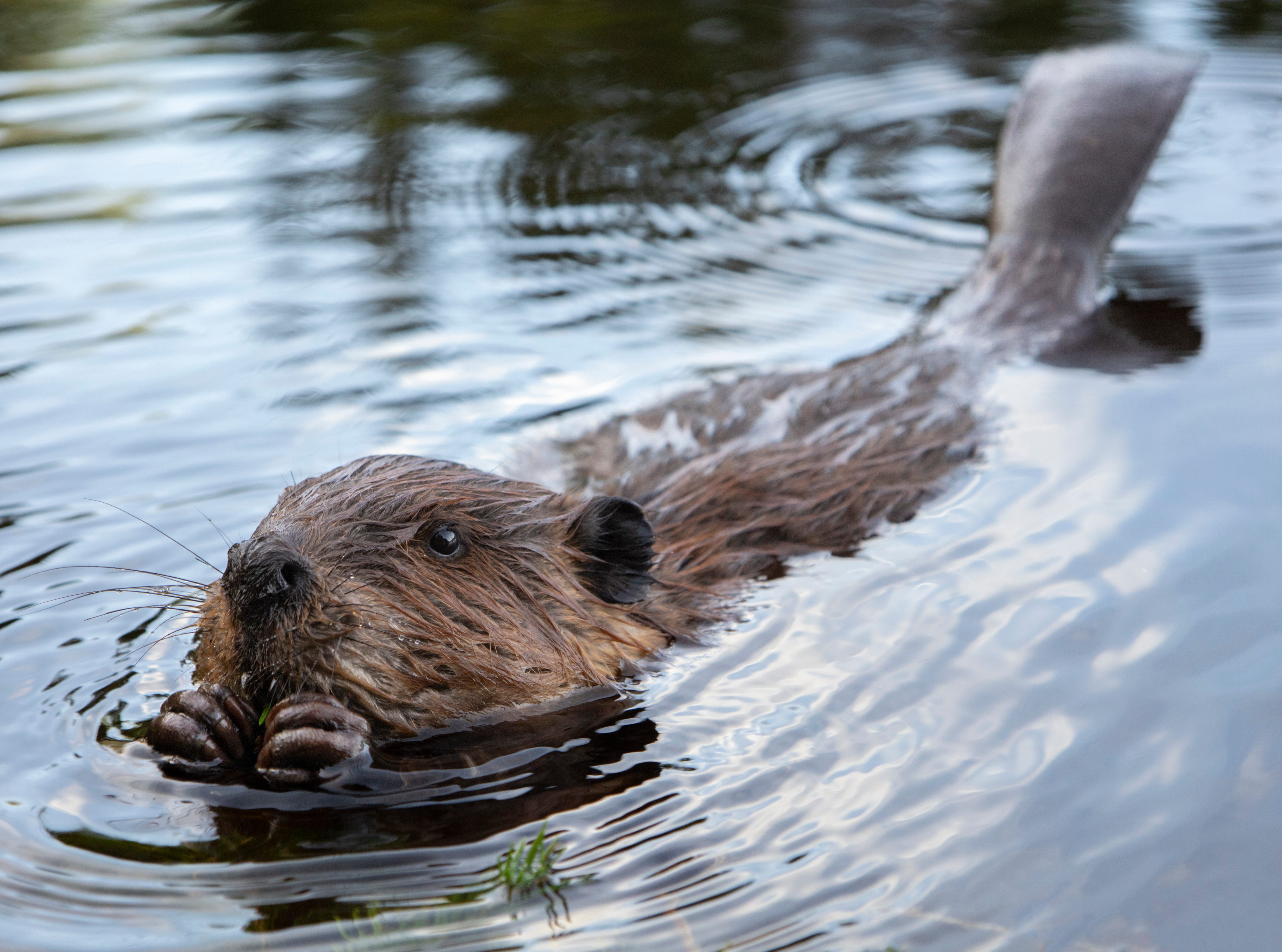
I think that is what made this story land in my chest so hard. It is not just that humans reintroduced a species that had been wiped out in England centuries ago, although that alone is enough to stir the soul a bit. It is that once given the chance, the beavers immediately began doing the work they were made to do, and that work turned out to be deeply aligned with what the rest of the living world needed. The new wetland may even help reduce flooding on a nearby road during heavy rain, which feels almost rude in its efficiency. The beavers were released in March 2025 under the first licence of its kind in England, and by March 2026 the National Trust was already reporting visible habitat gains.
And yes, the project has had losses and complications, because nothing alive is ever as tidy as a headline. One beaver wandered to Swanage and had to be brought back, another male was later found dead, and the whole effort is being carefully managed rather than left to some magical fantasy of nature sorting everything out by vibes alone. That also feels important to say, because hope that cannot survive contact with complexity is not hope, it is merch. The good news here is not that repair is simple. The good news is that repair is still possible even when it is messy, monitored, imperfect, and vulnerable to setbacks.
That, for me, is the Sunday reminder. Not that everything is fine, because obviously it is not. Not that cruelty has packed up and gone home, because have you seen literally any headline lately. The reminder is that destruction is not the only force at work on this earth, and it is not even the most interesting one. There are still people choosing to mend what was torn, to return what was erased, to make room for life where convenience once bulldozed it flat. There are still forms of intelligence that do not announce themselves as intelligence, forms of leadership that look less like domination and more like making conditions better for others to exist.
So no, I am not putting all my faith in beavers as a political philosophy, although I will admit the comparison is not flattering to most elected officials. I am saying that a pair of animals in Dorset have spent the last year quietly disproving one of the great lies of our age, which is that the world can only move toward collapse. Sometimes the world moves toward restoration, the water slows down, the trees part and the light gets in, sometimes a place remembers how to hold more life than it did before. And sometimes, if you are lucky, the hope arrives low to the ground, soaking wet, absolutely unbothered by the news cycle, and gets on with the job.
Jeez, you're a good writer!
Lovely.🫶