


Asked how the Pentagon decided to execute Nidal Hasan by firing squad, Defense Secretary Pete “No Quarter” Hegseth had a two-word answer: “No-brainer.”
It’s an odd choice of words for the one decision the American legal system has spent centuries insisting requires every brain in the room. A jury of 13 officers weighed Hasan’s sentence. Courts spent more than a decade reviewing it. Army regulations require an execution to be scheduled no sooner than 60 days after presidential approval. Trump approved the sentence on October 2. Four days later, the Army scheduled the execution for December 3.
Day 62.
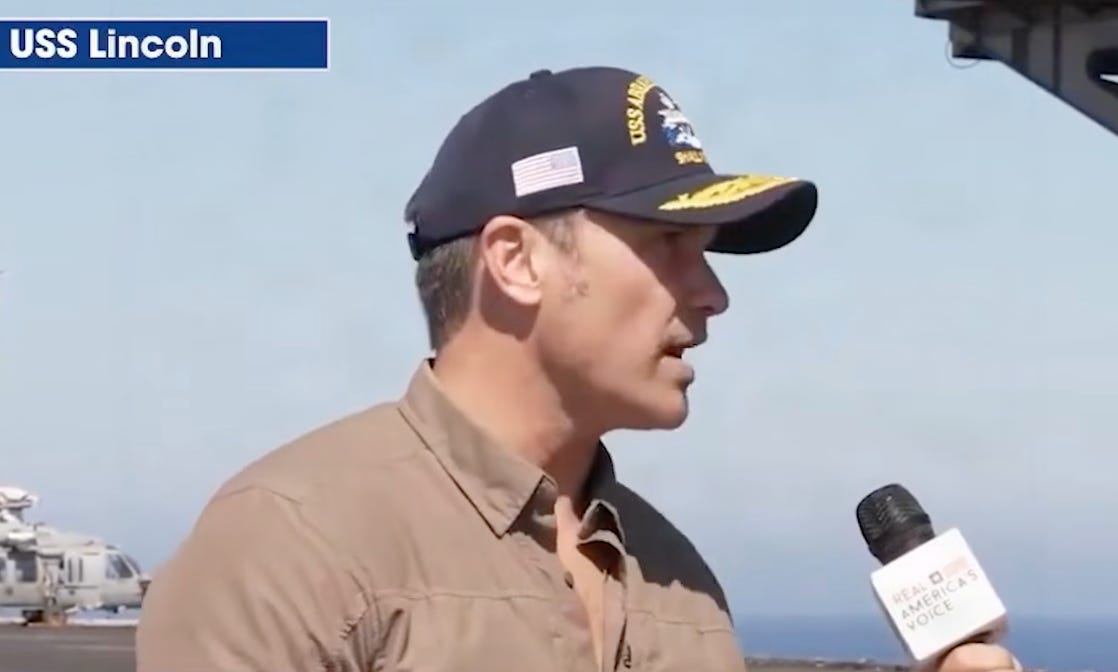
Then, in an interview with Real America’s Voice, Hegseth announced that the public would be able to watch. The Pentagon subsequently confirmed that the execution would be livestreamed.
Let’s settle one thing before anyone reaches for the reply button. On Nov. 5, 2009, Hasan, an Army psychiatrist, walked into a medical processing center at Fort Hood and opened fire. Thirteen people died and 32 were wounded. He had exchanged emails with Anwar al-Awlaki, an al-Qaeda propagandist, and told his court-martial he acted to stop American soldiers from deploying to Afghanistan. His guilt and the horror of what he did are not in dispute.
I have never believed that taking a human life is a decision to be made lightly, even when the person has committed an unspeakable crime. I can imagine circumstances in which I might kill to protect a child or another person in immediate danger. But there is an enormous moral distance between acting in desperation to save a life and deliberately extinguishing one when the threat has already been contained.
To me, the power to take life belongs to something approaching a state of grace, a realm of moral authority I do not believe human beings can confidently claim for themselves. I am not a religious person, but I have enough reverence for life to distrust anyone who treats its destruction as a simple administrative decision.
Moral conviction does not mean moral authority, which brings us back to Hegseth’s “No-brainer.”
This essay is about whether Hasan’s death should become programming.
Army regulations contemplate something quite different. They establish a limited group of authorized witnesses, including representatives of victims’ families and members of the press, and prohibit anyone under 18 from attending as a witness.
Considering those families have endured something unimaginable, I’m not sure they should have to share this moment with an unlimited internet audience, including people who may clip it, caption it, and set it to music before the body is cold.
Listen to how Hegseth describes it, and you hear a former weekend television host blocking a scene. “Army major betrays his country, radical Islamist, kills a bunch of Americans at Fort Hood. Of course, we’re going to do it at Fort Hood. Going to do it on a Thursday. We’re going to do it at 1:00, which is when he did it.”
Twelve soldiers and an Army civilian employee become “a bunch of Americans.” The venue, the weekday, and the hour get a sentence each. Asked whether Hasan had made a final request, he said: “Don’t care. We’ll see him on December 3.” Even the symbolism is approximate; Army accounts place the shooting closer to 1:30. But the point was never precision. It was the poster.
The rules were not written with this in mind. Justice Department regulations prohibit photographing or recording federal civilian executions. The Army’s regulations establish a tightly controlled witness process, but whether their restrictions extend to a military-produced broadcast is less clear. As CBS legal contributor Jessica Levinson explained, the distinction between outsiders recording an execution and the government recording and distributing it could matter. The regulatory framework was designed around people physically attending an execution, not a government delivering one to an unlimited digital audience.
The Pentagon has not explained who will operate the cameras, where the feed will go, or how it intends to prevent children from watching. Hegseth announced the plan in an interview with Jack Posobiec on Real America’s Voice. Those questions never came up.
Hegseth told his interviewer he likes “the mentality we had in World War II.” In 1945, Pvt. Eddie Slovik was executed by firing squad for desertion. He had killed no one. Of 49 American soldiers sentenced to death for desertion during the war, he was the only one executed. His punishment became a lasting controversy over military justice and making an example of a man. It is an odd tradition to invoke so approvingly.
Public executions have their own history. In 1936, some 20,000 spectators gathered in Owensboro, Kentucky, to watch Rainey Bethea hang. Vendors sold food. Spectators took pieces of his hood as souvenirs. The spectacle helped bring public hangings in Kentucky to an end two years later.
And what does spectacle accomplish? In 2012, the National Research Council found that decades of research could not establish whether capital punishment increases, decreases, or has no effect on murder rates. There is even less reason to assume broadcasting an execution adds a deterrent benefit. Hasan justified his murders through extremist ideology. Footage of his death could become extremist propaganda or inflame anti-Muslim hostility against people entirely innocent of his crimes. An execution intended to demonstrate the consequences of violence could instead help provoke more of it.
Hegseth is not, as a rule, opposed to secrecy. He is opposed to it selectively.
On Sept. 2, 2025, U.S. forces struck a boat in the Caribbean that the administration said was carrying drugs. The first strike killed nine of the eleven people aboard. Two survived, clinging to the wreckage. The military struck again and killed them. The Pentagon’s own Law of War Manual recognizes protections for shipwrecked people who are out of the fight and prohibits declaring that no quarter will be given. Whether the administration’s disputed legal framework permits these particular operations remains a consequential, unresolved question.
Hegseth has also publicly invoked the very principle the Pentagon’s manual forbids. During a March 13 Pentagon briefing on Iran, he promised American forces would advance with “no quarter, no mercy for our enemies.” In military law, refusing quarter means denying surrendering enemy combatants the protection to which they are entitled. That is precisely the declaration the manual prohibits.
Senator Mark Kelly, a retired Navy captain, wrote to Hegseth asking him to explain what he meant. At an April 30 Senate Armed Services Committee hearing, Kelly read him the definition and asked whether he stood by the statement. Hegseth did not clarify. “We have untied the hands of our war fighters,” he said.
Who was responsible for the second strike has been the subject of conflicting accounts. The Washington Post initially reported that Hegseth had given a verbal directive to kill everyone. Adm. Frank “Mitch” Bradley later told lawmakers there was no such order. Hegseth said he watched the first strike, then left the room, and did not initially know that anyone had survived. Bradley made the decision to attack the survivors. Hegseth has defended that decision.
The military recorded the operation. The administration released footage of the initial strike, but not the follow-up attack. In December 2025, Hegseth invoked longstanding policy and refused to release what he described as a top-secret, unedited recording. Trump had previously indicated that releasing the footage would not be a problem. Lawmakers who viewed the complete video disagreed sharply about what it showed and whether the attack was justified.
Releasing the footage, or a version that protects genuinely sensitive operational information, would allow the public to examine crucial evidence of what American forces did in its name.
Here is the policy, as best anyone can reconstruct it. Longstanding tradition says executions are not public, and Hegseth wants to discard it. Longstanding policy says operational strike footage stays classified, and Hegseth invokes it.
They will show you the execution, but not the evidence.
What is planned for Fort Hood on December 3 is the opposite of a desperate act: decided in advance, timed to the minute, assigned to a firing squad, and now prepared for broadcast. Albert Camus observed that a murderer does not ordinarily tell his victim the date of death and then hold him for months awaiting it. The state does.
The day after Hegseth made his announcement, the Norwegian Nobel Committee awarded the Peace Prize to Navi Pillay, the South African jurist who served as the U.N.’s top human rights official, sat on the Rwanda genocide tribunal and the International Criminal Court, and spent a career insisting that war crimes be investigated and prosecuted. The committee cited exactly that. In 2014, addressing the U.N., she argued that the death penalty can’t be reconciled with the right to life, a right she said no thirst for vengeance could cancel. The timing was coincidence. The contrast is not.
None of this requires waiting until January, or until 2029. The footage of the September 2 boat strike exists, and members of Congress can continue demanding its release, or at least a version that permits meaningful public scrutiny without compromising legitimate security interests. Ask your representatives who will produce the December 3 livestream, who will have access to it, and what purpose broadcasting a prisoner’s death is supposed to serve.
Hegseth says people need to understand that killing has serious consequences. They do. And the government’s use of lethal force deserves scrutiny whether it is carrying out a sentence imposed by a military court or conducting an operation whose legality remains in dispute.
The power to kill is not the same thing as the moral authority to do so.
P.S. News that he has again been passed over for the Nobel Peace Prize may well have Trump’s knickers in a twist. Personally, I think his decision to put someone like Pete Hegseth in charge of the Defense Department is reason enough to disqualify him from the honor, even before we get to the considerably longer list of other reasons.
If some future court were ever to convict Hegseth of war crimes and sentence him to death, I suspect I would find watching his execution just as unbearable, despite the contempt I have for him. Then again, perhaps I could watch. I’d like to believe my principles are stronger than my feelings, but I’ve lived long enough to know better than to claim that kind of moral certainty.
I see this public execution by firing squad as another example of Hegseth’s attempt to transform military culture. He’s not just after “No beardos, no weirdos.” He also wants “No hearts, no smarts.” Just people with a taste for violence who will obey unquestioningly.
This is insane. It will only make him a martyr. I hope SOMEONE is suing to stop this.