


This week has been county fairs, broken water lines, kids’ camping trips, and pure chaos, because apparently summer reviewed our schedule and found a few dangerously unoccupied minutes.
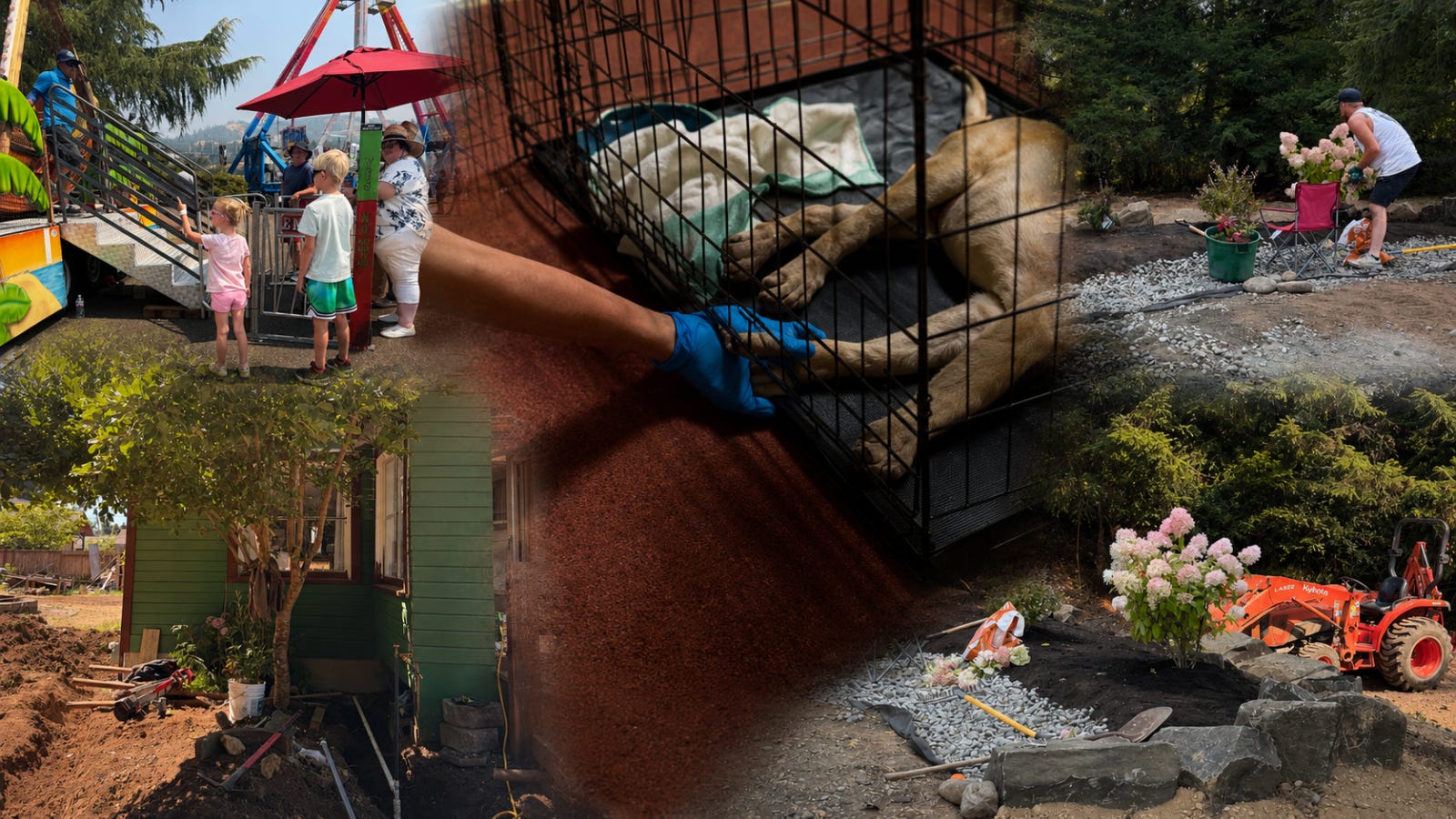
When it was time for the county fair, my daughter’s great-grandma and great-grandpa came because they knew how much it would mean to her. Pa has ALS, and every outing requires an amount of effort most of us will never completely understand, but he got into his electric wheelchair and endured 104-degree weather just to be there, to make her feel included, and to see her smile.
When our water line broke, my husband immediately began working his tush off, digging into our front yard and trying to restore one of those modern conveniences you don’t fully appreciate until you turn the faucet and the faucet offers nothing but a mocking little cough. My brother came to help late in the evening, even though he had already lived an entire day of his own and almost certainly had better things to do than stand beside a trench discussing pipes. He came anyway.
Later, when my daughter decided she didn’t want to stay at the campsite because she missed us, the same great-grandma made the hour-and-a-half drive to bring her home late at night. Then she brought our son home the following day because we were still dealing with the broken water line and the increasingly ambitious trench occupying our front yard.
There were so many opportunities this week to mistake the chaos for the only part of our story, but what a disservice that would be. The real story was the people who kept showing up inside the chaos. It was my husband refusing to stop until the problem was solved, my brother arriving after dark, Pa crossing a county fair beneath a 104-degree sun, and Grandma driving Oregon roads late at night because a little girl wanted her parents. It was one person after another deciding that someone they loved needed them, and then doing whatever was required to get there. Sometimes hardship reveals the cracks beneath our feet, but sometimes it also reveals just how many hands are waiting to reach for us when the ground gives way.
Just a few months ago, we were facing the possibility of losing this place. I walked through these rooms trying not to think about everything our family might have to leave behind, from the memories already living here to the dreams we hadn’t yet managed to build. Now we have the privilege of digging a 36-inch-deep trench across the front yard to replace a broken water line.
Homeownership, as it turns out, is the breathtaking realization of a lifelong dream, followed occasionally by two days without a shower and several intense conversations about underground plumbing. Fingers crossed, I may get to shower today.
Yet even standing beside that trench, tired, dirty, and increasingly aware of my own aroma, I cannot help feeling grateful. The ground being torn apart is ours to repair, the home temporarily without water is still our home, and the people arriving with tools and open hands are the same people who helped remind us, when everything felt impossible, that we would never have to face any of it alone.
Somewhere in the middle of all that noise, my husband and I also planted the mystical rock garden. It’s the first real piece of the fairy garden we have been dreaming about for so long, back when it existed only in our imaginations and in increasingly elaborate conversations that may have sounded like municipal planning meetings for a population of very small magical residents.
We placed the column rocks we brought home from a local quarry, stones formed millions of years before we arrived with our shovels, our children, and our unreasonable confidence that we could turn a patch of Oregon ground into something enchanted. Slowly, an idea that had lived only inside our minds began to cast a shadow in the real world. A few months ago, I couldn’t bear to think about that garden because it belonged to a future I was afraid our family would never have. This week, we stood together and placed its first plants into the earth.
At the same time, another future that once felt impossibly far away has finally started moving toward us. Ezra is next in line for his MRI. They are supposed to call tomorrow to confirm the scheduling, and after all these months, we may finally get some answers about the mark on his back. I don’t know what the scan will show, and hope doesn’t require me to pretend I’m not afraid. I’m his mother, which means my imagination can produce seventeen catastrophic possibilities before breakfast and still have time to revise them before lunch. Still, we are moving forward.
Only a few months ago, we didn’t know whether we would be able to remain in our home, and we couldn’t get the testing that might tell us what was happening with our little boy. Now the house is ours, the first plants of our fairy garden are in the ground, and Ezra is finally at the front of a line that once seemed endless.
None of this happened because we wished hard enough or because the universe suddenly decided to become reasonable. It happened because people helped us, doctors kept fighting, friends, family, readers, and people who had never met us stepped forward and refused to let us face everything alone. Maybe hope isn’t passive at all, but the profoundly un-passive act of remembering to fight for one another.
Hope digs trenches and answers late-night phone calls, it climbs into an electric wheelchair beneath an unforgiving sun because a little girl is waiting, it drives an hour and a half through the dark, arrives carrying tools, writes another letter to the insurance company, and stands beside frightened people until they can see the future again. That may be why this story from Greece affected me so deeply.
It is, unquestionably, a story born from tragedy. The land burned, families fled, and lives were lost. Nothing about that should be softened into a fairy tale merely because something beautiful also emerged from the smoke. Yet hardship has a way of calling the best people out of the woodwork.
When the fires came, ordinary people remembered to fight for lives that couldn’t save themselves. They entered dangerous places, gathered frightened animals into their arms, turned a stadium into a shelter, and reached through wire crates to comfort creatures who couldn’t understand why their world was burning.
Sometimes hope carries a shovel through your front yard, sometimes it drives through the night because a child wants to come home, and sometimes, hope enters the smoke carrying an animal crate.
At the end of July, wildfires began tearing through western Attica, Greece, burning across mountains, forests, and coastal communities west of Athens. The flames moved on multiple fronts, driven by extreme heat and powerful winds that could change direction without warning. Homes were destroyed, evacuation orders were issued, and people were forced to leave with little time to gather what they loved. In that kind of emergency, not every animal can be reached.
Some pets panic and hide, some dogs are chained in yards, farm animals can’t be placed in the back seat of a car, no matter how firmly one asks them to cooperate, and strays may have no person coming for them at all. As families fled the fire, hundreds of animals were left somewhere between the advancing flames and an evacuation system built primarily for human beings.
So volunteers went looking for them. The nonprofit Dogs’ Voice worked with veterinarians, municipalities, emergency responders, and smaller animal-welfare groups to enter threatened areas and bring animals out. They searched through smoke, brutal heat, and shifting winds, knowing that the fire could turn toward them at any moment. By August 5, rescuers said they had saved more than 280 animals, most of them dogs.
The rescued animals were taken to emergency centers in Vilia and Megara. An indoor court at the Megara Olympians Municipal Stadium became a temporary shelter, its floor filling with wire crates, bowls of water, bags of food, medicine, frightened animals, and exhausted volunteers.
In one photograph, a volunteer sits beside a crate and holds a rescued dog’s paw. That small gesture has stayed with me. The world outside that stadium was still burning. Homes had been lost, forests had been scorched, and there were animals the rescuers had not been able to reach. There was no way to explain any of that to a terrified dog trembling inside a wire crate.
There was only a hand reaching through the bars. Perhaps that is one of the purest forms hope can take. It can’t undo the fire, promise a happy ending, or guarantee that everything lost will be restored. It can only say, in the language available to it, you are not alone now.
Among the rescued animals was a mixed-breed puppy named Sasa, who waited in a collapsible cage with a rubber ball and a metal bowl. Even after the immediate danger had passed, rescuers couldn’t simply return her home. They first had to determine where she belonged, whether her family was searching for her, and whether the place she had come from was still standing.
Volunteers and local officials began comparing the rescued animals with missing-pet notices while others searched for foster homes. The rescue didn’t end when the animals reached the stadium because salvation, inconveniently, tends to involve paperwork, logistics, medicine, transportation, and a great many people asking whether anyone has seen the owner of a floppy-eared puppy. There is real grief within this story, and I don’t want to polish it away.
The rescuers know there were animals they couldn’t save, they know some were left behind, and they can only hope those animals found a way to escape. The wildfire still destroyed homes and habitat. Hundreds of rescues do not erase the lives that were lost or the families who returned to find their communities changed. That is precisely why what these volunteers did matters, they went because there were lives they could save, and those lives were worth the danger, the exhaustion, and the heartbreak.
We often speak about hope as if it were a feeling we must summon before we can act, but I’m beginning to think we have it backward. Perhaps hope is what appears after someone decides to act without any guarantee that the ending will be kind.
It’s the volunteer entering an evacuation zone with an empty crate, the veterinarian waiting inside a gymnasium, and the stranger holding a frightened paw while the sky is full of smoke. It’s the doctor who keeps arguing that a little boy deserves answers, the community that helps a family remain in the home where their children have grown, and two exhausted parents standing in the dirt, placing ancient stones and plants into the first corner of a garden they were once afraid they would never get to build.
Our mystical rock garden can’t stop a wildfire or tell me what Ezra’s MRI will show. It’s not proof that hardship has ended, because life has already demonstrated a deep and frankly unnecessary commitment to plot twists. That said, it is proof that a future can disappear from view without disappearing entirely. It can wait beneath the fear, the uncertainty, all the noise and broken water lines, until enough hands come together to help uncover it again.
This week, hundreds of animals are alive because people entered the smoke, our little boy is finally next in line for answers, and in a quiet piece of Oregon ground, my husband and I planted the first real roots of a dream we nearly lost.
Hope didn’t make any of these stories painless, but it carried them forward. Sometimes that’s the miracle, not that nothing burns, breaks, or frightens us, but that even then, someone reaches through the bars, someone brings the tools, someone stays beside us, and together we begin building what comes next.
P.S. Our subscription rates for new paid subscribers will increase on 08/15/2026. Upgrade before then to lock in our current price of $7/month or $70/year. Existing paid subscribers will keep their current rate. Learn more here:

What a magnificent, powerful, profound essay—thank you for sharing your thoughts and insights. It’s very brave and also very reassuring that such humanity is flourishing. The same with the animal rescue efforts— again thank you!!
Once again, you capture the essence of the humanity that keeps me going through the constant barrage of discouraging events that are seemingly beyond my ability to impact. A reminder that the power we have is the ability to help those most immediate to us, whether they be family, friends or members of our community (friends we have not yet met).