


The cryptocurrency industry has remembered that Congress is up for election, and it has arrived with a shopping list. According to the Associated Press, Fairshake is backing 32 House candidates this November, nineteen Republicans and thirteen Democrats, all of whom supported legislation the industry wanted. Six will receive $1 million each in outside support, including Oregon Democrat Janelle Bynum. The group has also announced nearly $30 million in spending against Democratic Senate candidate Sherrod Brown in Ohio.
Apparently, we are still capable of bipartisan cooperation when someone brings enough money. Fairshake is a super PAC, and the distinction is important: this is independent spending supporting or opposing candidates, rather than money handed directly to their campaigns. Its own website describes its mission as helping make the United States a home for blockchain innovation through a clearer regulatory framework. The industry wants rules it can operate under, and it is spending heavily to help elect the people who will write them.
Voters should be at least as interested in those job openings. The legislation behind this fight is the Digital Asset Market CLARITY Act, which would establish a federal framework for digital assets and divide responsibilities between the Securities and Exchange Commission and the Commodity Futures Trading Commission. It passed the House, but a September 15 Senate procedural vote failed to advance it. That left the bill stalled, rather than enacted or permanently disposed of.
Its supporters argue that clearer oversight would protect consumers, prevent fraud, and keep financial innovation in the United States. Senate Banking Committee chairman Tim Scott says he will continue working to protect Americans’ money. Senator Elizabeth Warren argues that the legislation leaves dangerous gaps in investor protections and safeguards against political self-dealing. Those are substantive disagreements about who would be protected and how. They deserve more attention than a campaign commercial featuring someone walking purposefully through a warehouse.
You don’t have to own cryptocurrency to care about whether financial rules protect ordinary people. You also don’t have to assume every candidate receiving industry support has been bought. What we do have to ask is what those candidates supported, why they supported it, and whether their explanation makes sense for the people they want to represent. That includes Democrats. A familiar party label should help us understand a candidate’s priorities, not excuse us from checking them.
I have been considering the importance of checking things because my immune system has recently abandoned its post. The first illness of the back-to-school season has breached our defenses. Saturday passed in a haze of snot, headaches, and sweat, I was moving roughly two tons of bricks and I didn’t really notice until I stopped moving for a second. Yesterday I felt awful but soldiered on, potting houseplants and putting a few other plants in the ground outside. This morning I woke up with the voice of a solemn man who has spent forty years smoking cigars in a study with no opening windows.
Somewhere in this respiratory coup, I forgot my bonus son’s science assignment. We were supposed to read a recent science article together so he could summarize it in class today. I had picked the dates in advance, which apparently gave my brain permission to consider the entire matter resolved. At two in the morning, it returned the file to my desk and woke me from my snotty slumber.
I found an article, and we read it together over breakfast while I quizzed him. We kept going throughout the morning, and he’s going to do great, even on short notice. When I stopped at his mom’s, I mentioned that I had also forgotten to photograph the paper with the dates on it. She had made copies, providing the administrative competence my household was temporarily outsourcing.
There is something useful about asking a child to read an article and then explain what it actually says. He has to understand it well enough to describe the important parts and answer questions. A title and a confident tone will only get him so far. It seems reasonable to expect at least that much from the adults asking us to give them legislative authority.
Before November, we can ask candidates to explain their votes in language that makes sense outside a fundraiser. Who benefits from this bill? What protections does it create? What does it weaken? Why should a family trying to keep its savings safe believe this is a good idea? An answer consisting entirely of “innovation” should receive the same follow-up as a science summary consisting entirely of “science.”
Meanwhile, Brazil has given us a new reminder that elections remain undecided until people have actually voted. On Saturday, we discussed its presidential election and the environmental stakes. Sunday’s first round has now produced a runoff. Brazil’s electoral court reported Flávio Bolsonaro at 47.03% of valid votes and President Luiz Inácio Lula da Silva at 45.16%, with virtually all ballots counted. Neither secured the majority needed to win outright. They will face each other again on October 25.
Bolsonaro says the result shows Brazilians want change. Lula acknowledged that he had expected to win in the first round and said he would begin a new campaign. Confidence, it turns out, is not a substitute for ballots. Brazil’s presidential election and our congressional midterms work differently, and Brazilians have their own needs, frustrations, and decisions to make. But both elections ask voters to examine what the people seeking power intend to do with it.
Folha de S.Paulo reports that Bolsonaro has campaigned on loosening environmental restrictions and expanding mining and tourism in Indigenous territories. Lula’s campaign defends environmental protections, though his government also faces criticism for encouraging oil exploration near the mouth of the Amazon. Supporting the stronger environmental candidate doesn’t require pretending every decision that candidate makes is beyond criticism.
For Indigenous communities, those choices concern their homes, rights, and livelihoods. For everyone beyond Brazil, the health of the Amazon gives us a stake in decisions we can’t vote on. Borders don’t contain all the consequences of political power. That should make us more attentive to the choices we can influence.
At home, I’m finding it particularly difficult to live with questions I can’t answer. When Ezra had his MRI last Wednesday, the nurse told us we would have the results within twenty-four to forty-eight hours. It is Monday now, which, unless illness has also taken my ability to count, is considerably longer. My anxiety has treated that discrepancy as an invitation to convene an emergency committee. Did they need to consult someone? Are they uncertain about what they are seeing? Why is it taking so much longer than we were told?
I don’t know why we are still waiting, and I am trying not to turn the wait into an answer. I hope we hear today. In the meantime, there are plants to put in the ground, a yard to clean, and children who still need breakfast while their mother refreshes her phone.
My husband is finishing the last touches of paint, and progress continues, even with the sniffles. He also bought me more pastels, oil ones this time, so I can make all kinds of ridiculous and beautiful things. I know there are woodworking projects and tools he would enjoy spending that money on. But he thought about what would make me smile, and he chose that. It makes my heart melt. Being considered is such an ordinary thing to want. Someone notices what matters to you and makes room for it in their decisions.
We should be able to ask something related of the people we elect: that the lives they govern matter when they make choices, even when those lives come with no advertising budget attached.
That is why the midterms deserve our attention as elections for Congress, not simply as another season of the Trump show. We are choosing people who will write legislation, scrutinize the administration, and decide which problems deserve their time. Industry groups understand that perfectly well. They are already studying the candidates and spending accordingly.
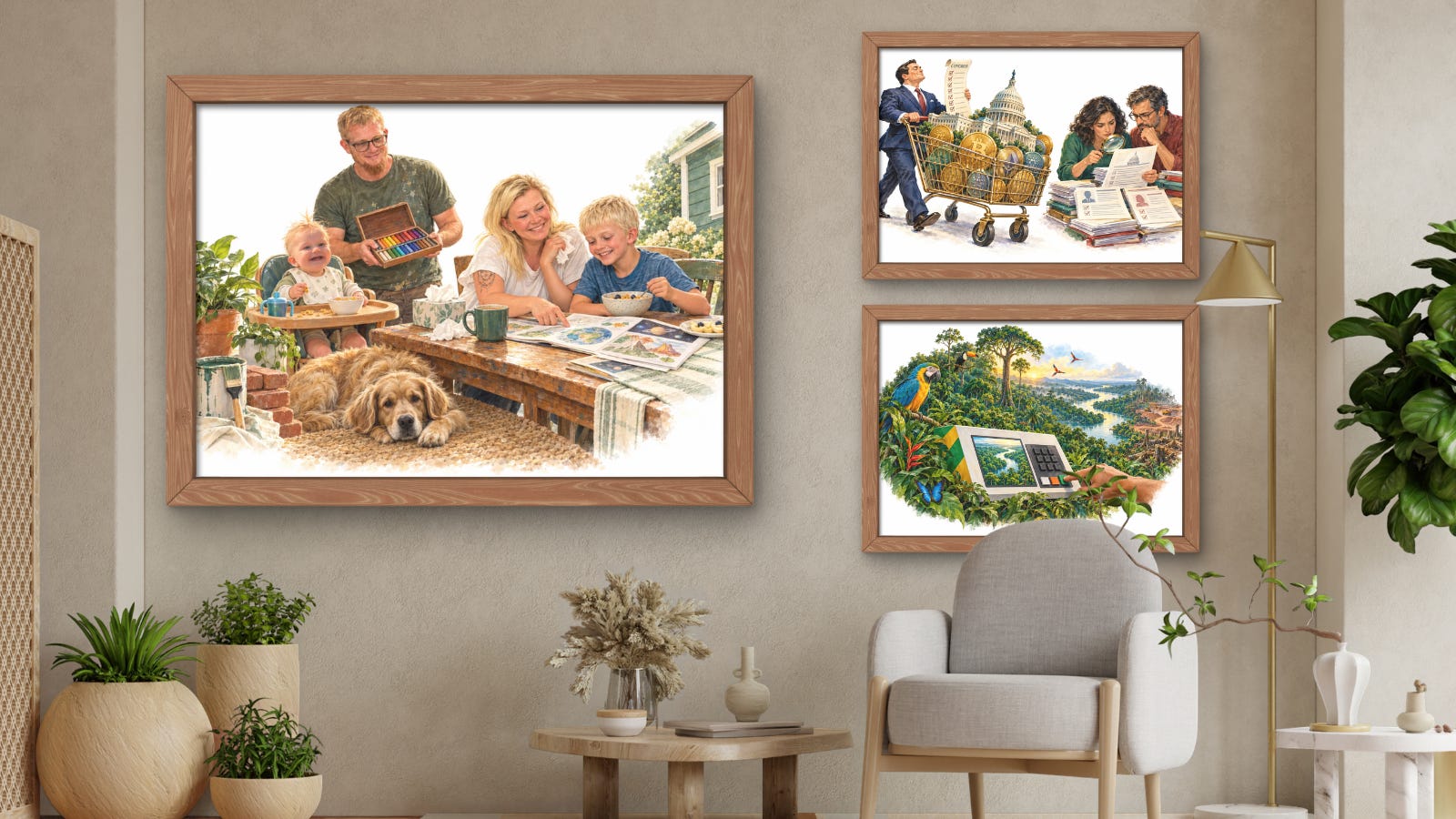
Our responsibility is to do our own homework and cast our own votes. Responsibility also means helping someone else participate when we can, whether that requires a reminder, a ride, childcare, or help finding reliable election information. People shouldn’t need a quiet life and an empty calendar to exercise their rights.
For some readers, the first deadline is today. Texas’s voter-registration deadline is October 5, and Arizona’s is tonight at 11:59 p.m. Texas officials warn that mailed applications may not receive a same-day postmark; they recommend asking for a manual postmark at a USPS retail counter. Here in Oregon, the registration deadline is October 13, and counties begin mailing ballots October 14. Check your state’s official election office for the rules that apply to you. Then give yourself time to read beyond the advertisements. Look at the votes, the proposals, and the explanations. A candidate asking for your trust should be able to withstand your questions.
Around here, we are making progress with a sick mother, an unfinished yard, a science assignment rescued at two in the morning, and a phone that has yet to deliver the news we are waiting for. I know how easily one more obligation can disappear beneath everything else. But November’s choices will enter our lives whether we find time for them or not.
The people seeking to influence Congress have already decided what they want from it. We deserve representatives who can explain what they intend to do for us.
If this report gave you something useful to think about, please restack it or share it with someone deciding how to vote.
Paid subscriptions support The Homefront Report and Mom’s clearly superior work, which I continue to insist is a hereditary skill that simply hasn’t activated yet. She brings the incisive analysis; today I bring the voice of a retired tobacco baron. Your support keeps us both researching, writing, and making our pieces available to everyone.
If you would like to leave a little extra love for our family’s projects, plants, and everyday adventures, you can chip in here:
This week the adventure includes freshly potted plants, the last touches of paint, and a box of oil pastels from a husband who wanted to see me smile. The resident tobacco baron is touched, although you’ll have to take her word for it until her voice returns.
could you list those 13 democrats so I can make sure im not voting for one?
Disgraceful that our government, "of the People, by the People, and for the People", is being bought by industries and interests with deep pockets-- a million here, a million there-- while candidates with integrity must drop out of races because they run out of money. It's just a crying shame!
So sorry you've been kept waiting for little Ezra's MRI results. I'm praying that "no news is GOOD news!"
And, Oil Pastels are AMAZING! Their brilliance can spoil you for other media. Enjoy! You'll have fun with all the shades of green you can try blending.