


There is something so weirdly comforting to me about the fact that even now, even with so much cruelty and idiocy and chest-thumping nonsense in the air, there are still people willing to stand in the rain at night and help a toad cross the road.
Not because it is glamorous, which I regret to inform you, it is not. Not because anyone is making a fortune in the very competitive field of amphibian relocation. Not because somebody figured out a way to turn Frog Patrol into a luxury lifestyle brand. But because these small, vulnerable creatures are trying to get where they have always gone, to the marshes where they breed, to the water that has been calling them long before humans showed up with asphalt and bad judgment, and a road built across that migration route turned an ancient spring ritual into a slaughter.
So, in Otrębusy, near a forest west of Warsaw, people put on reflective vests and headlamps and go out on rainy evenings with buckets and gloves and patient hands. They pick up frogs and toads from the roadside and carry them across to safety. They do it with their kids. They do it after dark. They do it on a road that would be incredibly easy to ignore if they were the sort of people who could ignore it. But apparently they are not, and thank God for that.
What gets me is how unnecessary this kindness is in the eyes of the world, which is maybe exactly what makes it so beautiful. Nobody has to do this. Nobody is getting famous from it. There is no giant global prestige attached to bending over in the rain to scoop up a damp little creature with a terrible survival strategy. They are doing it because at some point they looked at the carnage and decided they did not want to live like that. They did not want to be the kind of people who just drove through the aftermath and called it normal. And honestly, I think that matters more than we sometimes let ourselves admit.
Because what is hope, really, if not the decision to remain reachable. What is hope if not refusing to become so numb that suffering stops registering just because it is small or inconvenient or easy to step over. We talk about hope as though it is a feeling that arrives when circumstances improve, but I think hope is often just a way of behaving when circumstances have very much not improved. Hope is what people do. Hope is showing up in a fluorescent vest for a creature that cannot say thank you and will never know your name.
Also, and this is important, the frogs themselves make the whole thing even more ridiculous and therefore more perfect. The female toads do the hard work of the journey while the males cling to their backs the whole way, which is such an incredible little detail that it almost feels written by a bitter female novelist. These exhausted girls are hauling themselves toward the future with some freeloading little man literally attached to them, and meanwhile human volunteers are out there trying to make sure everybody gets to the marsh in one piece. It is comedy, it is tragedy, it is heterosexuality, it is nature.
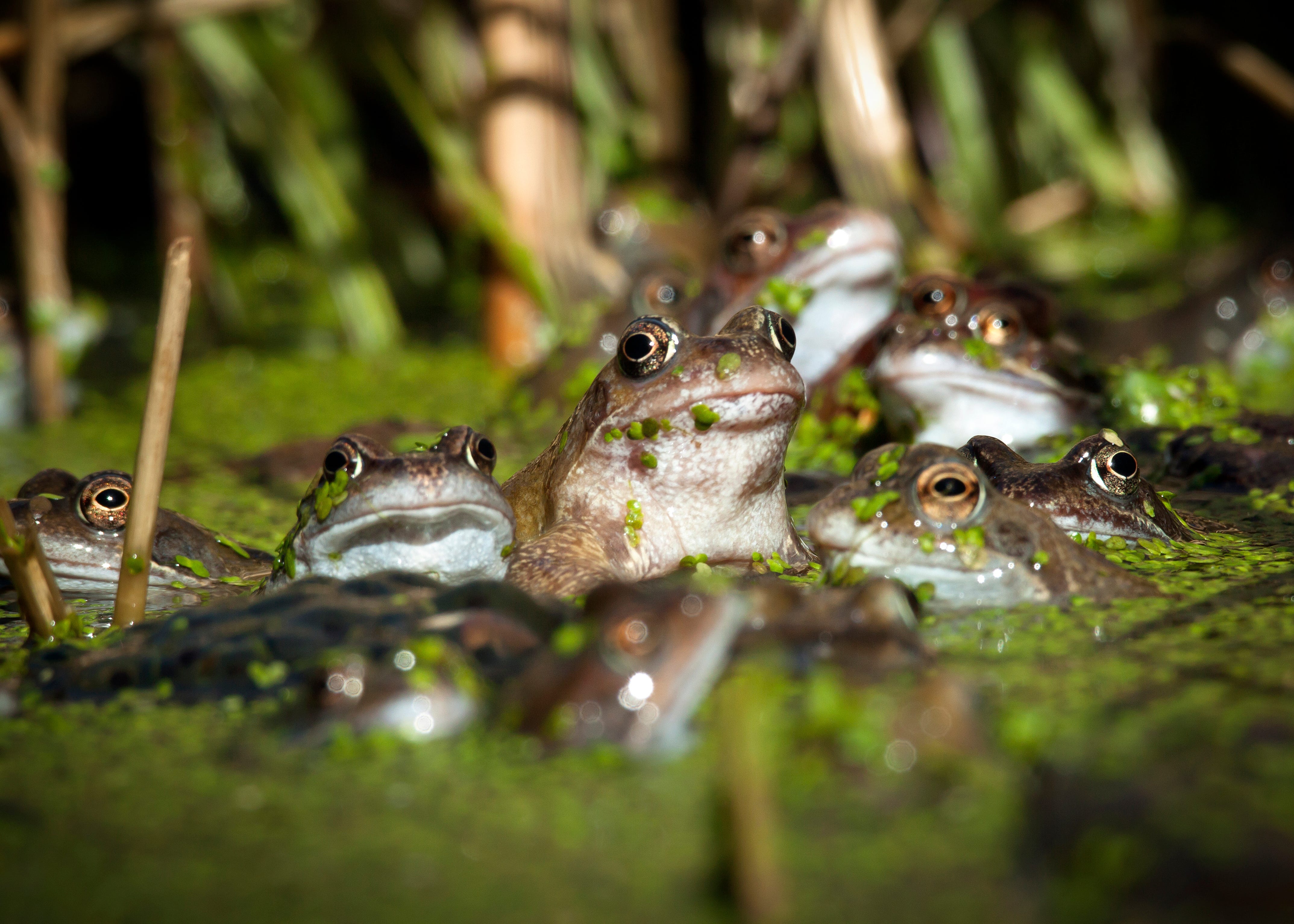
But beneath the absurdity there is something deeply moving about it, because the volunteers are not saving an abstract idea. They are saving actual animals with cold skin and tiny hearts and a very old instinct telling them where to go. They are protecting continuity, a pattern, one of those ancient rhythms of the world that existed long before us and will, with any luck and some help, continue after us.
I think maybe that is why this story hit me so hard. We are so often forced to witness human beings at our worst. We see the vanity, the greed, the cruelty, the endless performance of power by people who think the only thing that makes a life matter is whether it can dominate something else. We are given so many examples of what humans can ruin that it becomes dangerously easy to forget what humans can also protect. But then along comes a story like this, and it reminds you that our species also contains people who will spend a rainy night helping toads get laid. And yes, that is funny, but it is also kind of holy.
Because it means the world is still full of people who look at something small and vulnerable and think, not my problem, but let me help. It means there are still people teaching their children, by example, that care is not embarrassing and tenderness is not weakness and that being civilized should probably involve more than inventing problems and then acting detached about the consequences. It means that somewhere in Poland there are ordinary people in wet shoes participating in a form of goodness so pure and unmarketable that it almost feels radical.
That is the part I keep coming back to. The goodness of it is so unshowy. It is not grand, loud, or trying to win an argument on the internet. It is just people deciding that a road humans built does not get to be the end of the story for these creatures if they can help it. It is people using the little power they have to interrupt harm. It is care in its most practical form.
And maybe that is where hope lives now. Not in slogans. Not in branding exercises. Not in the loud men who always seem desperate to be mistaken for strength. Maybe hope lives in the quiet refusal to become indifferent. Maybe it lives in buckets and gloves and reflective vests. Maybe it lives in the people who still understand that the world is full of lives that do not belong to us and yet are still somehow our responsibility. I don’t think that is sentimental, I think it is evidence.
The world is still full of people who will head out into the dark for something breakable. It is still full of people who have not let cynicism flatten their capacity for care. It is still full of people who, when faced with suffering, do not waste time wondering whether the creature in front of them is important enough to save, they just save it. And in a moment this coarse and noisy and mean, that feels like more than a nice story. It feels like proof that there are still people among us who know exactly what it means to be human, and are trying, in the rain, to live up to it.
In a world where we are inundated with stories filled with people expressing so much hate and lack of compassion of late, this is a wonderful, beautiful and important reminder for us all.
A month or two ago I read about people doing this around Portland and there was a mention of a plan to build a frog crossing culvert under a highway there.