


In what may go down as one of the most expensive economic lessons in modern American history, a federal trade court judge has ordered the government to begin refunding more than $130 billion in tariffs that were declared unlawful by the Supreme Court last month.
You read that correctly. The same tariffs that were endlessly promoted as brilliant economic policy, the ones that were supposedly making other countries “pay,” must now be paid back by the United States government to American companies. So much for free money.
Judge Richard Eaton of the Court of International Trade delivered the kind of blunt judicial reality check that economists have been patiently trying to explain for years. When Justice Department lawyers suggested that issuing refunds would be complicated because Customs and Border Protection would need to review millions of import entries, Eaton was unimpressed.
“We live in the age of computers,” the judge said.
In other words: don’t pretend this is rocket science.
The order came during a hearing over one company’s refund claim, but it immediately applies far more broadly. More than 2,000 lawsuits have already been filed by businesses seeking to recover the tariffs they paid under the now-invalid policy. The court has directed Customs to begin recalculating the duties importers paid and issue refunds excluding the unlawful tariffs.
Trade lawyers watching the case were stunned. One attorney admitted the ruling was “the order I hoped for, but never expected to see.”
Even the lawyers who wanted this outcome assumed the government would manage to stall the process for years. Instead, the court effectively told the administration to get moving.
Of course, the administration is expected to appeal in an attempt to slow things down. Because if there is one thing Washington can do faster than collecting money, it’s delaying giving it back.
The deeper irony here is almost painful. For years, the tariffs were sold to the public as a kind of economic cheat code, a magical revenue machine where foreign countries would foot the bill while America got rich. Economists repeatedly explained that this was nonsense. Tariffs are taxes paid by importers, meaning American companies. Those companies then pass the costs along to American consumers.
Now the courts have stepped in and confirmed the obvious: not only were Americans paying the tariffs all along, but the government wasn’t legally allowed to collect them in the first place.
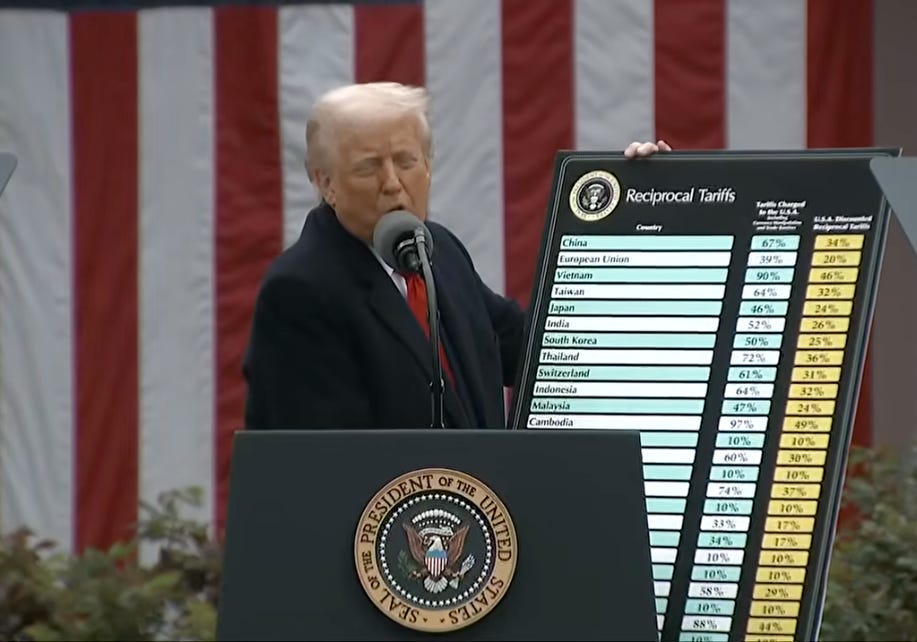
The Treasury is now on the hook for returning one of the largest piles of money ever collected under a trade policy. And that $130 billion figure may not even be the final price tag. If interest is added, something government lawyers previously acknowledged could happen: the total could climb significantly higher.
To put that in perspective, this isn’t just a bureaucratic cleanup. It’s a massive financial reversal. Tens of billions of dollars that were touted as evidence of economic strength now have to be pushed back out the door.
The logistical challenge is enormous. Customs and Border Protection will need to review and recalculate millions of import transactions, issue refunds to thousands of companies, and navigate an avalanche of litigation that is still pouring into the court.
Judge Eaton was clearly not in the mood for excuses. When a Justice Department lawyer suggested the government had not yet finalized its position on refunds, Eaton responded with a line that should probably be framed and hung in every federal courtroom:
“The Supreme Court told you what your position is.”
The episode also exposes a broader problem with the tariff narrative that dominated political rhetoric for years. If tariffs were really “money paid by foreign countries,” there would be no need to refund American businesses today. Foreign governments would be lining up to demand their cash back.
Instead, it’s American importers filing lawsuits. Which is understandably awkward.
For the moment, the administration’s most realistic strategy may be delay. Appeals could drag out the refund process while courts wrestle with questions about interest, calculation methods, and administrative procedures.
The core reality has already been decided. Trump’s tariffs were unlawful. The money collected must now be returned. Turns out tariffs weren’t free money after all.
This entire episode deserves a word that doesn’t quite exist yet. The closest thing we have is kakistocracy, government by the worst, least qualified, or most unscrupulous people. But what we’re watching unfold here feels like something slightly different: the cascading disasters that follow when bad governance is allowed to run unchecked.
I’m suggesting a new word: Kakistrophic.
Technically, it’s not in the dictionary. Not yet! It should be, because what else do you call a situation where an administration imposes sweeping tariffs under a dubious reading of a decades-old emergency law, Congress shrugs and looks the other way, and the courts eventually step in years later to announce that the entire thing was illegal?
At which point the government must now refund more than $130 billion it never should have collected in the first place. That’s not just catastrophic. That’s kakistrophic.
The deeper lesson here isn’t just about tariffs. It’s about what happens when Congress decides not to do its job. The Constitution gives Congress two powers that are supposed to anchor the entire system: the power of the purse and the power to declare war. Those authorities exist precisely to prevent the executive branch from unilaterally reshaping the economy or dragging the country into conflicts without democratic accountability.
Over the past several decades, Congress has increasingly behaved like a spectator sport league. When presidents stretch emergency economic authorities to impose sweeping tariffs, lawmakers complain on cable news and then… do nothing. When presidents expand military actions under vague or outdated authorizations, Congress again prefers to issue sternly worded press releases rather than reclaim its constitutional authority.
The result is a pattern that should be familiar by now. An administration pushes its powers further than the law allows. Congress avoids the political risk of confronting it. The policy runs and the damage accumulates. Eventually the courts arrive with the constitutional equivalent of a clipboard and say, in effect, Well… this was illegal.
By that point, the bill has already come due. In this case, the price tag happens to be $130 billion and counting.
Which brings us back to our new vocabulary word. Because when a government system allows massive policies to proceed without oversight, accountability, or basic constitutional discipline, the outcomes are rarely just messy. As the Middle East can now attest, they’re kakistrophic.
I understand importers initially paid these, but most importers and retailers raised their prices. Refunding to them would now be a windfall and another wealth transfer from consumers to the business class. I still feel the refunds should be made to consumers. If they could issue stimulus checks in short order during the pandemic, they could do the same with tariff funds. Has anyone filed a class action suit?
It would be great if Trump had to pay out of his own pockets. Maybe his family and Elon could help.