


Just days before Christmas, Trump announced that Louisiana Governor Jeff Landry would serve as his “special envoy” to Greenland. Trump explained on Truth Social that Landry “understands how essential Greenland is to our National Security” and would “strongly advance our Country’s Interests for the Safety, Security, and Survival of our Allies, and indeed, the World.”
That’s the kind of sentence Trump uses when he wants to wrap something indefensible in the language of destiny. Also, notably, it’s the same kind of language Vladimir Putin has used to justify Russia’s invasion of Ukraine: expansive appeals to “security,” civilizational survival, and the protection of others as a pretext for erasing borders. When leaders start talking this way, sovereignty becomes a technicality, and international law is recast as an obstacle rather than a constraint. This is how authoritarian politics makes territorial expansion sound not just acceptable, but inevitable.
Landry wasted no time clarifying what the job actually entailed. “It’s an honor to serve you in this volunteer position,” he wrote on X, “to make Greenland a part of the U.S.” He helpfully added that this would “in no way” affect his role as governor of Louisiana, as though casually threatening the territorial integrity of a NATO ally were just a side hustle between ribbon cuttings and culture-war press releases. There it was, in plain English. Annexation.
Greenland, for the record, is not a rogue territory in search of a strongman. It is a semi-autonomous nation of about 57,000 people, part of the Kingdom of Denmark, with its own government and decades of self-rule. While many Greenlanders favor eventual independence from Denmark, opinion polls show overwhelming opposition to becoming part of the United States. This is not a people begging for rescue, this is a people being talked over.
Denmark understood the significance immediately. Prime Minister Mette Frederiksen and Greenland’s Prime Minister Jens-Frederik Nielsen issued a rare joint statement that could not have been clearer: “National borders and the sovereignty of states are rooted in international law. Greenland belongs to the Greenlanders, and the U.S. shall not take over Greenland. We expect respect for our joint territorial integrity.”
Denmark’s foreign minister, Lars Løkke Rasmussen, went further, summoning the U.S. ambassador for an explanation and describing the appointment as “deeply upsetting” and “completely unacceptable.” The president of the European Council and the president of the European Commission publicly declared full solidarity with Denmark and the people of Greenland. This was not a misunderstanding, it was a line being drawn.
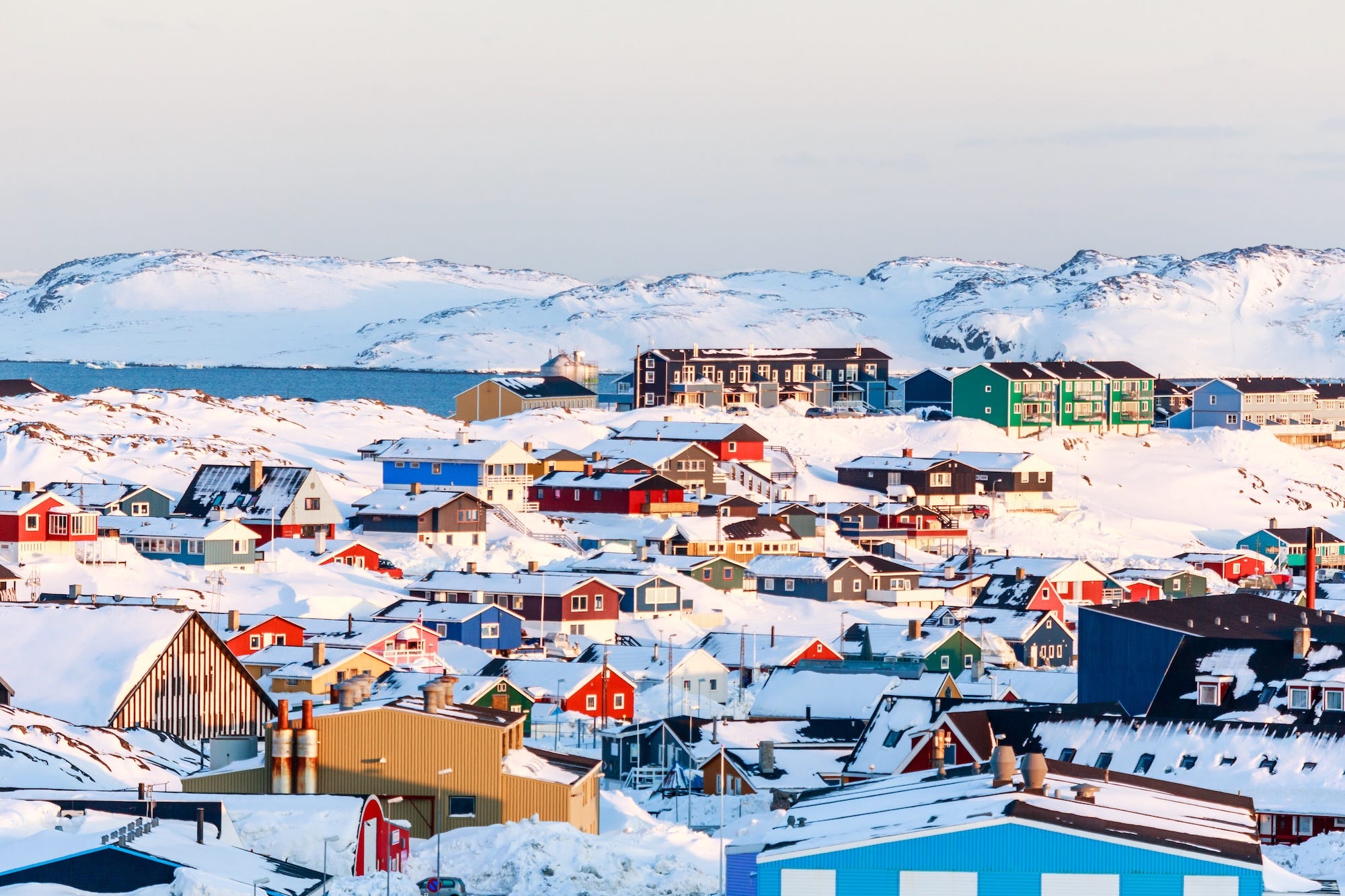
What makes this moment different from Trump’s earlier Greenland stunt in 2019, when he tried to buy the island like an unclaimed golf course, is that he is no longer pretending it’s a joke or a real estate fantasy. Since returning to office, Trump has refused to rule out the use of force to secure Greenland. Denmark’s own intelligence services have now taken the extraordinary step of identifying the United States as a potential national security threat, citing concerns about economic and military coercion even against allies. That is almost an unthinkable statement in NATO terms. It is also entirely rational in context.
Trump’s justification, as always, is “national security.” Greenland sits astride key Arctic routes, hosts a U.S. military base dating back to World War II, and is rich in minerals newly accessible as ice melts. The strategic value is real; what is not real is the idea that strategic value nullifies sovereignty. International law was written specifically to prevent that logic from swallowing the world.
Denmark’s response cut straight to the heart of the matter: “No one can annex other countries, not even by invoking arguments of international security.” That sentence should sound familiar, because it is the same argument democracies have made against Russia’s invasion of Ukraine and China’s claims over Taiwan. Borders are not suggestions, they are the difference between order and brute force.
Trump, however, increasingly sees the world not as a network of alliances but as a set of spheres to be claimed. His own National Security Strategy speaks openly about asserting control over the “Western Hemisphere.” Greenland fits neatly into that worldview, just as Venezuela does when he talks about oil, and just as Canada does when he jokes, less jokingly than before, about trade, water, borders, and leverage.
This is why Canada has been watching Trump’s second term with growing alarm. For years, Canadian officials have warned quietly about U.S. overreach: weaponized trade, resource pressure, Arctic militarization, and a White House that treats treaties as inconveniences. When those concerns were raised during Trump’s first term, they were often dismissed as overwrought. After all, the United States doesn’t annex allies. Until it starts appointing envoys whose stated mission is to do exactly that.
The choice of an “envoy” rather than a formal diplomat is not accidental. Envoys do not require approval from the host country. They exist in a gray zone, plausibly deniable, norm-skipping, tailor-made for a president who prefers pressure without paperwork. It allows Trump to bypass Danish consent while signaling intent, the diplomatic equivalent of leaning over a fence and measuring your neighbor’s yard.
The Greenlandic prime minister has tried to lower the temperature, saying the appointment “does not change anything” and that Greenland will cooperate with the U.S. on the basis of mutual respect. That restraint is understandable. Small nations do not escalate with superpowers; they document, align, and hope the rules still hold. The problem is that Trump is openly testing whether they do.
Seen in isolation, the envoy appointment might look like another Trumpian provocation, destined to burn out in a news cycle or two. Seen alongside Denmark’s intelligence warnings, Trump’s refusal to rule out force, his hemispheric rhetoric, and his pattern of treating borders as negotiable, it looks like something else entirely: a rehearsal.
Canada understands this instinctively. If Greenland can be framed as “essential to national security,” so can Arctic shipping lanes, freshwater resources, energy corridors, and supply chains north of the 49th parallel. If sovereignty becomes conditional on Washington’s threat perception, then no neighbor is truly exempt.
Trump is not hiding the ball. He is saying, out loud, that territory can be claimed if power and “security” demand it. Denmark heard him. Greenland heard him. Europe heard him. Canada would be wise to listen too.
I do hope Denmark /Greenland demands the “envoy” provided all his internet history bla, bla, and then refuses him entry.
In the olden days when we used pull down a shade, occasionally one would suddenly spin up, shutting around the holder with a loud “snap.” That’s what this article was for me. God, we need him out of office.