


There is something moving about a country deciding, after a very long time, that an absence it created should no longer be treated as normal. This week, England moved closer to bringing back golden eagles, birds that once lived there and then disappeared more than 150 years ago after persecution, habitat loss, and the usual human talent for making a place less alive and then pretending that nothing meaningful has been lost. And what makes this story land, I think, is that it is not just nostalgia for a magnificent bird. It is a serious effort to answer a harder question, which is what it would actually take to make room for that bird again, not in theory, but in the real world.
And what a creature to make room for. The golden eagle is not merely a bird in the way a thunderstorm is not merely weather, it is one of those beings that makes the world feel larger and older and less centered on us. A span of wing so wide it seems invented by myth, dark feathers lifting into air, that burnished gold at the back of the head catching the light like a last bit of sun on a hillside. It hunts with terrifying grace, it lives in pairs, and it claims a vast territory to make room for its majesty. Even the name sounds like something from a story meant to remind us that the world did not begin with our arrival.
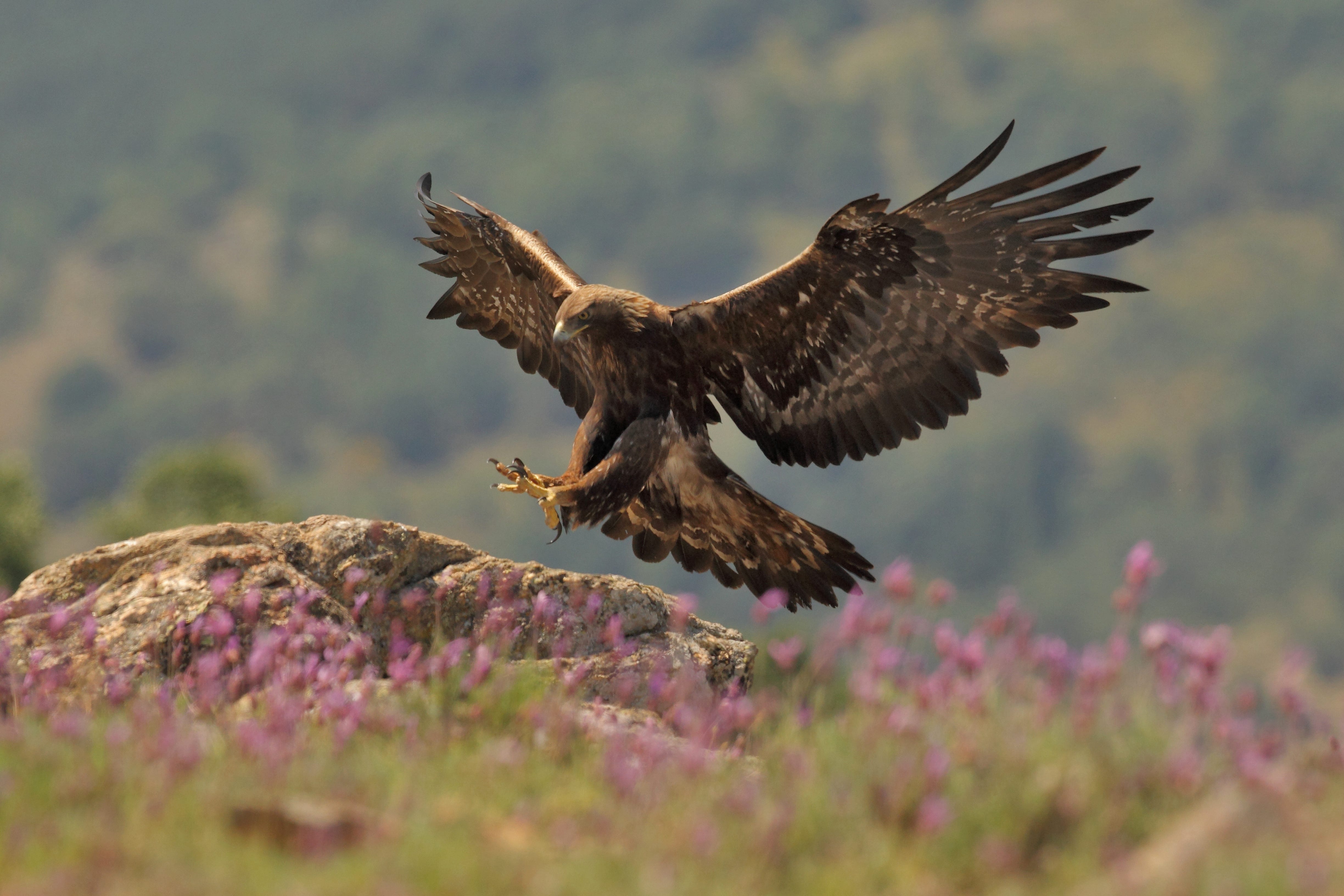
Forestry England commissioned a full feasibility study, and the study did not just ask whether golden eagles are beautiful, or symbolically important, or the sort of animal people enjoy imagining back in the landscape. It broke the work into habitat and risk, population viability, and social feasibility, then looked at where in England the birds could genuinely live and breed, what routes they might use, what conditions would support them, and what might get in the way. It assessed 28 potential recovery zones and identified eight areas with the strongest ecological potential: the Cheviots, North Pennines, the Lake District, Yorkshire Dales, Bowland, the South Pennines, the North York Moors, and the South West. That is the part I find unexpectedly reassuring, someone is not just daydreaming about eagles, someone has done the maps, the modelling, the fieldwork, and the deeply unsexy administrative labor that sits underneath any real attempt to repair a landscape.
And the path back, if it happens, is not simple. The study says there are really two ways this could go. One is the slower way, which is natural recolonization from southern Scotland, where golden eagle numbers have been rebuilt through years of conservation work and where satellite tracking has already shown some birds crossing the border and exploring northern England. The government says Scottish birds could be seen more regularly across northern England within about ten years, though breeding pairs would likely take much longer to establish. The other option is a planned reintroduction, and this is where the story gets even more concrete. The report says Scotland would be the best source population for any translocation, and that a credible release program would likely involve at least five birds a year for five years, with satellite tagging and monitoring for a decade or more afterward. It also recommends prey surveys before any release, because if you want golden eagles to stay, and not simply pass through, the land has to be able to feed them.
There is also something refreshingly sane in the fact that the people behind this are not talking as though you can just place a few birds into the sky and call the job done. Forestry England is being pretty direct that the next phase is about consultation, trust, and local support, which means landowners, farmers, gamekeepers, land managers, conservation groups, and local communities all getting brought into the conversation early. Their own guidance says this only works if concerns are taken seriously from the start and if people feel they have a stake in what is being built. Any release would come after those studies and conversations, not before, and only if there is enough backing on the ground. Which is exactly as it should be, the hopeful part is not that everyone will instantly agree, the hopeful part is that people are trying to do this carefully enough that it might last.
And that, honestly, is what gets me. Not just the eagle, though the eagle is doing plenty by simply being the kind of creature that makes the world feel older and less trivial. It is the fact that so much of this work is patient and procedural and almost comically unglamorous. Habitat assessments, population modelling, prey surveys, stakeholder meetings, monitoring plans, and a lot of people giving a lot of time to the idea that a landscape should be able to hold a great wild bird again. There are louder stories, there always are, but I never quite believe the loud ones tell the whole truth about us. Somewhere underneath the noise, people are still doing this kind of work, still trying to return something we once drove out, still deciding that empty skies are not inevitable and are not good enough.
So, this is my Sunday reminder that hope for humanity does not always arrive looking radiant or grand. Sometimes it looks like a feasibility study, a list of eight possible landscapes, a plan to monitor birds for ten years, and a room full of people trying to figure out how to make a place more livable for something other than themselves. Sometimes it looks like the slow, slightly bureaucratic, absolutely necessary work of making room. And maybe that is one of the better things we do, when we are at our best, not just admire what is wild from a distance, but put in the long effort required to let it come back.
Thanks for this.
A very well done, and heartwarming piece.
A hopeful reminder of what can be and what is possible.
Just what I needed after reading yesterday’s “Oldest Debt” essay.
This is great. I am reminded of the story of the reintroduction of the bald eagle to the eastern United States, in the 1970s, told by the woman who did the cutting edge work. Tina Morris, Return to the Sky. https://www.forbes.com/sites/grrlscientist/2025/01/21/return-to-the-sky-by-tina-morris---review/