


Good morning! Across Britain and France, reaction to Trump’s war on Iran has settled into something more damning than ordinary criticism. It is not simply that European commentators disagree with Trump’s conduct of this war. It is that they increasingly sound as if they no longer regard his words as a trustworthy guide to reality at all. Behind that skepticism sits a harder truth voiced even by establishment security figures: however bruised Iran may be, it still appears to retain enough leverage to deny Trump a clean win. It can keep Hormuz under threat, keep energy markets on edge, and keep turning American boasts of progress into a kind of diplomatic pantomime. That is what makes his rhetoric so unbelievable abroad. Trump talks as though he is dictating terms. The outside world hears a man trying to narrate control he does not fully possess, and the disbelief never remains merely comic. Yes, there is ridicule. When Trump bragged about a mysterious “very big present” and “a very significant prize,” even sympathetic interviewers sounded as if they could hardly keep a straight face. “Do we have any sense of what it might be?” one asked, only for Sally Lockwood to reply, “Oh my goodness… we have no idea what it is,” before describing “some sort of understanding via all of the word salads coming out of the White House.” Another host could only ask, “Do we have any idea what this present relating to the Strait might be?” prompting the answer that everyone was “scratching their heads” over the latest burst of Trumpian babble. France 24 was just as dry, contrasting Trump’s insistence that “they’re talking to us and they’re talking sense” with Iran’s acid response that the U.S. was “negotiating with itself.” That is the deeper humiliation running through all of this. The “present” is treated abroad not as evidence of statesmanship, but as one more absurd fairy tale, a shiny invisible trinket waved around in the Oval Office while the rest of the world tries to work out whether he is describing a diplomatic breakthrough, a tanker transit, or an imaginary prize from the world’s most unstable gift shop. Once the laughter fades, what remains is worse: analysts in Britain and France increasingly dismiss the words and watch the troop movements instead. They hear the boasts, the “15-point plan,” the hints of progress, the talk of victory, and conclude not that Trump is in command, but that he is improvising plot twists while trying to disguise the fact that Iran still has enough leverage to keep the war dangerous, costly, and unresolved. But beneath the mockery is something much darker. European commentators have begun separating Trump’s rhetoric from the only evidence they still trust: troop movements, aircraft, Marines, airborne units, rapid reaction forces, special operations elements, logistics. They are rightly treating Trump’s public language as noise and the military buildup as signal. Once you reach that point, the implications are grim. A president who speaks constantly of progress and peace while stacking forces in the region does not look like a master strategist. He looks like either a man improvising cover stories while events race ahead of him, or a man using the performance of diplomacy to buy time for escalation. The confusion is no longer viewed as a side effect of his style, but to look like the operating system itself: contradictory statements, theatrical “plans,” vaporous claims of success, possible market-moving announcements, and real-world military preparations all swirling together into a fog thick enough to conceal almost anything. Perhaps the most humiliating indictment of all is the simplest one: Europe is now openly entertaining the possibility that, on specific factual questions in the middle of a war, the President of the United States may be less credible than the regime he claims to be confronting.
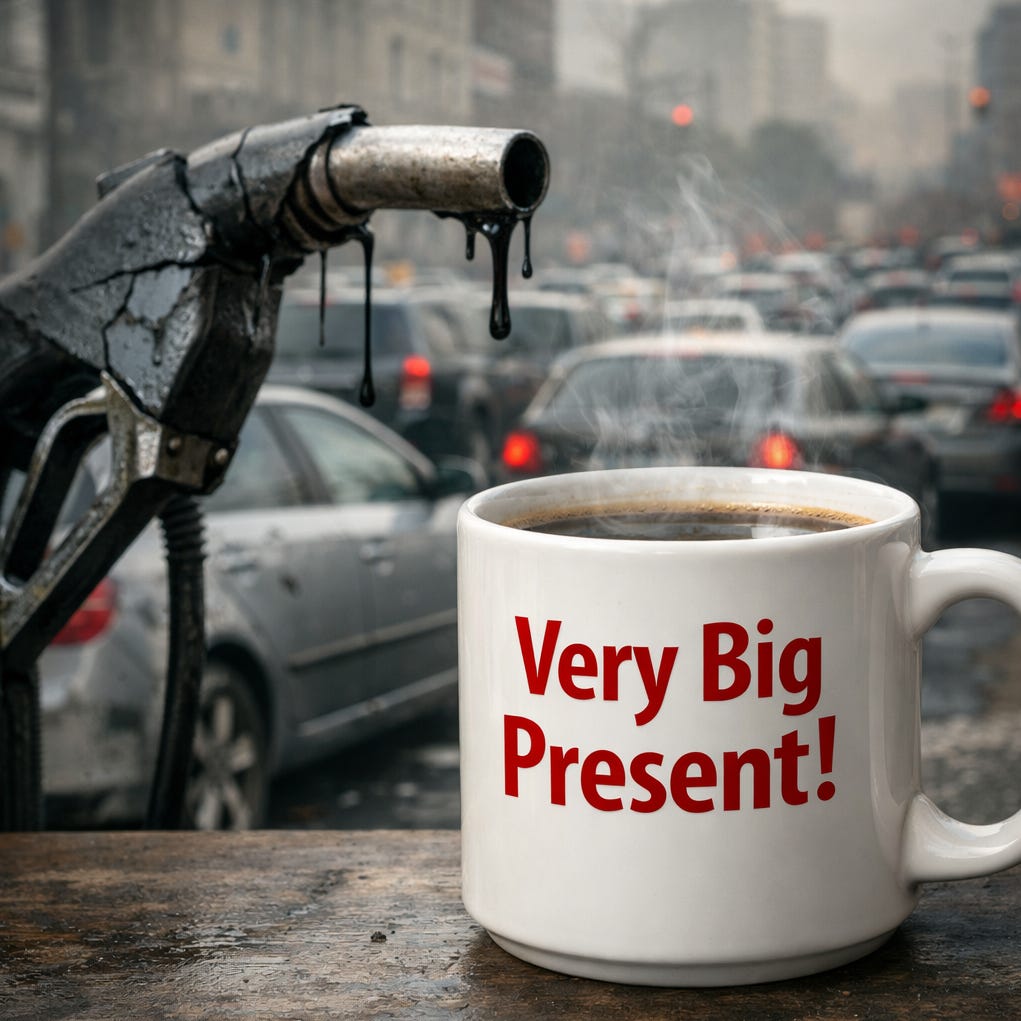
The economic consequences are no longer confined to oil traders sweating through their suit jackets in Houston while pretending volatility is just another exciting market opportunity. The strain is now radiating outward into the real world, where the Philippines has now formally declared a national energy emergency as war-driven fuel disruption threatens supply, after earlier in the month publicly insisting stockpiles were still sufficient. Effectively, that is the whole story in miniature. First comes the soothing official language, then the contingency committees, anti-hoarding measures, and emergency planning once reality barges through the press release. The markets may still swing on Trump’s latest improv monologue, but countries that actually need fuel to keep the lights on do not have the luxury of treating this as theater.
The oil industry’s reaction has been revealing. Even the people who usually greet high prices the way cartoon wolves greet a steak dinner seem rattled. Executives do not sound triumphant. They sound stunned, angry, and deeply unconvinced that anyone in Washington has a coherent plan for replacing disrupted supply or stabilizing the region. The closure threat hanging over the Strait of Hormuz is not just another cable-news graphic; it is the nightmare scenario energy analysts have spent years gaming out and quietly praying would remain hypothetical. Instead, here we are, with the White House promising that everything will flow more freely than ever once its objectives are complete, which is a very inspiring sentence if you are writing fan fiction and a somewhat less persuasive one if you are running an economy. The result is a war that keeps widening its blast radius: tankers, prices, shipping, public confidence, and the increasingly threadbare idea that Trump is in command of events rather than just narrating over them while the machinery lurches ahead.
One of the more revealing stories in the middle of all this chaos is the simple fact that large sections of the American economy still run on labor the political class prefers to criminalize while quietly depending on it. A recent Financial Times report from south Texas laid it out with brutal clarity: immigration crackdowns and ICE raids have been disrupting construction projects, delaying housing builds, hitting real-estate transactions, and creating ripple effects through agriculture and hospitality as workers disappear, stay home, or are caught up in enforcement sweeps. A fantasy sold to the public is that there is some waiting bench of American labor ready to rush in and replace the people being terrorized off jobsites and out of communities. The reality, as the builders and growers keep saying, is that this replacement workforce does not magically exist, and the void is not being filled. What we’re observing, then, transcends mere cruelty for its own sake, even though such cruelty is abundant. It is also economic self-sabotage in which the same administration that claims to be defending prosperity is punching holes in the labor force that keeps housing, food, and services functioning.
Amid the usual parade of official sadism, there was at least one small act of human decency this week. A humanitarian aid ship arrived in Havana carrying solar panels, bicycles, food, and medicine as Cuba’s economic and energy crisis deepens under blackouts, fuel shortages, and a tightening U.S. energy squeeze. Organizers themselves admitted the shipment is a drop in an ocean of need, but that is precisely what gives it moral force. When a state is trying to make suffering into policy, even modest solidarity starts to look radical. Cuba has reportedly gone months without vital fuel imports, and regional governments and aid groups are increasingly warning that the island is edging toward a humanitarian disaster. The aid convoy does not solve that, but it demonstrates that cruelty is not the only possible international language, which already makes it more serious than most of what comes out of Washington.
Over at the Pentagon’s Church-and-State demolition derby, Pete Hegseth has apparently decided that what the U.S. military really needed in the middle of a volatile war was not better oversight, clearer strategy, or even basic competence, but a more aggressively theatrical fusion of command structure and divine branding. Hegseth announced military chaplains will no longer display rank insignia, only religious insignia, because nothing says “healthy civil-military order” quite like making spiritual authority look separate from the ordinary chain of command while assuring everyone it is totally fine because the officers still technically keep their rank. As Stars and Stripes reported, Hegseth framed the move with the line, “No rank outranks God,” which is the sort of statement that might play well in a revival tent but lands quite differently when uttered by the Defense Secretary inside a pluralistic democracy. It is the kind of idea that sounds cooked up halfway through a podcast rant and then shoved into Pentagon policy by people who think the First Amendment is more of a light suggestion.
He also said the military will slash its recognized faith codes from more than 200 down to just 31, which is a charming way of telling a pluralistic force that its religious diversity has become administratively inconvenient. The problem with modern military life is not endless deployments, political extremism, or the small matter of being dragged toward war by maniacs, but that too many service members have beliefs that do not fit neatly into one of Pete’s approved dropdown menus. Just to make the vibe fully unsettling, Hegseth lamented that the chaplaincy had drifted too far toward “self-help and self-care,” insisting warfighters need “truth, big-T truth” and “a shepherd.” When you want to reassure troops of every faith and no faith that the Pentagon is not being turned into a sectarian fever swamp, the obvious move is to have the defense secretary start sounding like a man auditioning to be youth pastor at the apocalypse.
Taken together, it is hard not to see this as part of a broader effort to remake the military into a more openly ideological and explicitly religious institution, one where diversity is tolerated only until it becomes inconvenient and where spiritual theater is elevated over constitutional seriousness. At a moment when service members have already raised alarm bells about religious overreach in the ranks, this feels like fanatic chic wrapped in bureaucratic language, with a salute and a Bible verse slapped on the side.
Since repression is apparently being run as a kind of whole-of-government subscription service, the same administration keeps finding new ways to test how openly it can abuse power before somebody in a courtroom notices. In Minnesota, state officials are now suing the administration after federal agencies withheld evidence tied to the deaths of Renée Good and Alex Pretti during ICE-related operations in Minneapolis. At the Pentagon, a federal judge ruled that the department’s press restrictions violated constitutional protections, only for the building to respond by making press access harder anyway and moving journalists out of the traditional correspondents’ corridor. It is the same pattern over and over again: lose in court, keep pushing, repackage the retaliation, and dare anyone to stop you twice. Constitutional limits are treated less as law than as customer feedback.
Since the last big No Kings outing on October 18, the country has not exactly been basking in the restraining wisdom of polite assembly. Two days later, Trump began demolishing the East Wing in defiance of the usual oversight process, like a man renovating the monarchy to suit the drapes. In the months that followed, federal power was used in increasingly alarming ways: ICE operations in Minneapolis left Renée Good and Alex Pretti dead, Minnesota is now suing the administration for withholding evidence, the Pentagon moved against journalists after a court ruled its press restrictions unconstitutional, and the administration kept testing how far it could push detention, deportation, and secrecy before someone in a robe slammed the brakes. Meanwhile, DOJ actions and Pentagon investigations increasingly looked like a rolling grudge operation against people on Trump’s enemies list, from Democratic officials to Senator Mark Kelly.
Go to the protest on Saturday. Meet people, be counted, and be loud. But let’s not flatter ourselves that one more carefully permitted weekend parade is, by itself, going to stop any of this. Since the last protest, they have kept escalating. They did not see the crowds and decide to rediscover constitutional modesty. They kept bulldozing, censoring, detaining, threatening, and retaliating. Protest is an important beginning, but only if it becomes something more than a ritualized release valve. The point is not just to gather in public and prove we are horrified. The point is to build the kind of sustained, nonviolent disruption that makes this machinery harder to run. More on next steps to come soon.
Where does the alleged big present fit in the oil insider trading timeline?
It’s great to learn that some countries are finally learning that 🍊🤡 lies. He lies a lot!
Do not trust what he says. I don’t trust the members of Congress to actually do anything. Except talk. A lot. It’s past time for WE THE PEOPLE to do more. Yes I will protest. Loudly. But seriously it’s time for MORE!!