


This is part two in the “Sibling of War” series. Part one can be found at the link below:

I woke up this morning with that old, unwelcome feeling in my chest, the one that arrives before the mind has caught up, the one that says something has shifted in the world and it will not shift back. I was standing in the kitchen with my hands in soapy water, turning a cup in slow circles as the sun came through the window, while my daughter moved around the house in the loud, bright way kids do when they are safe. She was asking for breakfast with the particular urgency that makes hunger feel like an emergency. The baby was in awe at the sight of his own feet, delighted by the simple miracle of being able to touch his toes. I felt grateful for that ordinary chaos, and then I felt guilty for how quickly my mind tried to protect it.
I do not know how to live in a world where a child’s morning can be treated like collateral, where backpacks and lunch boxes and braids and small shoes can be turned into a line item in someone else’s strategy. I do not know how we keep calling it defense when the first images out of a new war include a school that has been turned into rubble, and I do not know how we ask anyone to believe that we are liberating people while the dust settles over a place where children were learning to read.
I keep thinking about a girls’ school in Minab, and I keep thinking about how no one is ever prepared for the moment when childhood becomes a target. I imagine the things that fill the minutes before a school day begins, the quiet that exists before the hallway becomes a river of voices, the small rituals that tell a child she belongs somewhere. I imagine the way a mother tugs a sleeve down and smooths a collar and checks a backpack one more time, because love makes you reach for control in a world that offers none. I imagine a teacher stacking papers and trying to make order out of a room full of questions. I imagine the normal arguments between friends, the shy smiles, the pencil marks and eraser crumbs on a desk. I imagine, in other words, a life that is not political until someone decides it is.
When I was four years old, my oldest brother was becoming a Marine, and I was learning my ABCs while the adults around me carried a grief I could not name. The memory I have from before he shipped out is Chinese food, a dinner that felt like laughter until I grew old enough to recognize the weight beneath it. We were all sitting at the same table, but only some of us knew we were living inside a final ordinary night. That is what war steals first, not only bodies, not only buildings, but the ability to trust that ordinary days will remain ordinary.
A strike is reported and politicians begin shaping the story immediately, and the vocabulary arrives on cue like a uniform pressed and ready. There are words like precision and necessary and imminent, and there is always the suggestion that something clean is happening, something controlled, something that will not touch the children who are not supposed to count. People repeat phrases like “targeted operation” as if the word itself can hold back fire, as if the label can protect a classroom, as if language has ever been strong enough to stop a bomb once it is released. The truth is simpler and far more brutal, because the moment a war begins, children and civilians become the most predictable casualties of adult and political certainty.
I think of my brother when I think of the word targeted, because it was a word that followed him home like smoke that never fully clears from clothing. He did not come back from Iraq with the tidy story people like to tell about service and sacrifice, and he did not come back with a clear division between good and evil, and he did not come back untouched. He came back with a kind of moral injury that hollowed him out from the inside, and he came back with memories that did not care whether he wanted them.
One day in Iraq, he and his sergeant misread a father’s movement as a threat, and in the space of a decision made too quickly for anyone’s heart to keep pace, a young girl lost her father. My brother has carried that image for years, because war does not end when the plane lands and the uniform is hung up, and because the mind does not accept a clean explanation for a moment that can never be corrected. The father’s love, the child’s sudden absence of protection, my brother’s permanent knowledge that he cannot put it back, all of it lives in him now. If people want to speak honestly about war, then they have to speak about the way it makes human beings into instruments that create grief on command, and the way it trains young men to survive by flattening empathy until it can fit inside a trigger pull.
When my brother returned home, the damage did not stay politely inside him, and it did not confine itself to therapy sessions or private tears. It spilled into our house, it appeared in yelling, in drinking, in a temper that went from zero to volcanic over something as small as a pair of boots left in the wrong place. It appeared in the way my sister learned to make herself smaller, and in the way I learned to watch his face for signs of a storm. The war had ended on paper, but it continued in our living room, and we lived with the results of choices made by leaders whose names we would never speak at the dinner table.
This is why I cannot listen to the language of new strikes without hearing the older echoes underneath, because I have seen what happens when a country convinces itself that force will be quick and contained. I have watched the way the first hours are narrated as though the ending is already known, and I have watched the way the public is asked to admire the spectacle before it has counted the cost. I remember what happened after Iraq, when there was talk of success long before there was reckoning, and I remember how quickly triumph became occupation, how quickly occupation became insurgency, and how quickly all of it became a permanent scar on people who did not choose it.
Today, with Iran, the story is still forming, and that uncertainty is part of what makes it dangerous, because uncertainty is where escalation breeds. In the middle of all this, there were also reports that diplomacy was alive, that negotiations had produced progress, that there was a path that did not require children’s bodies to prove anyone’s resolve. Then the strikes came anyway, and we were asked to believe that violence was the only remaining language, even though there were people still speaking. We were asked, again, to accept that war is what happens when adults run out of patience, even though patience is exactly what human life requires.
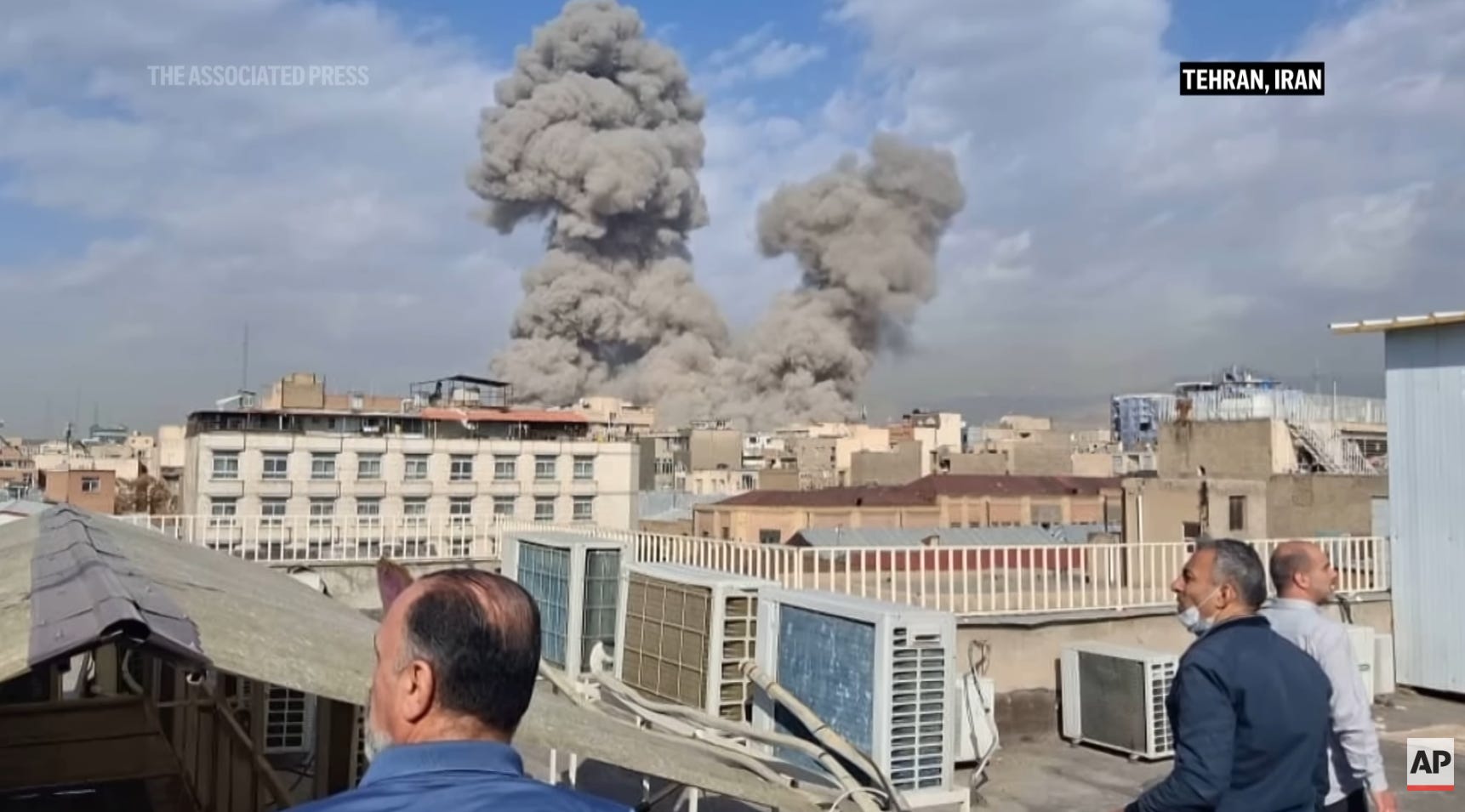
The stolen childhood is not only the childhood taken from the children under the bombs, although that is the most immediate theft, the most visible cruelty. It is also the childhood stolen from the children who grow up in countries that fight these wars, because they inherit the consequences whether they understand them yet or not. They inherit the budget priorities that always seem to find money for weapons but cannot find money for schools and healthcare and food security. They inherit the fear that settles in immigrant communities whenever a new enemy is named, the fear that makes neighbors look at each other through the lens of suspicion. They inherit the way a nation teaches itself to accept suffering as normal, as long as it happens far enough away.
I look at my own children and I see how fragile their sense of safety really is, not because our home is unsafe, but because the world beyond our home makes promises it cannot keep. My children are still young enough to believe that adults do things for reasons that make sense, and that there is a moral logic behind the choices of powerful people. They are still young enough to believe that if someone says a thing is meant to protect people, then people will be protected. I want to keep that innocence for them as long as I can, and I also know that innocence is not something you can lock in a drawer, for it is what war consumes.
There is another way childhood gets stolen, and it happens quietly, years after the headlines move on. It happens when a young person comes home from war and cannot return to the person he was before, and it happens when his family becomes the place where all the unsaid horror finally has room to speak. It happens when a child watches a parent unravel and learns that love does not always keep you safe. It happens when a spouse becomes a caretaker and learns the shape of hypervigilance. It happens when an entire generation learns to treat trauma like background noise.
I know that some people will say this is the cost of security, and that there are threats that must be confronted. I am not naive about the world, and I am not pretending that regimes cannot be brutal or that violence does not exist outside our borders. I am saying that if we are going to claim moral seriousness, then we should be willing to measure security by something more honest than the temporary satisfaction of retaliation. We should be willing to look directly at the children who die first and the families who fracture later, and we should be willing to ask whether the people who ordered the strikes will ever sit at a table like the one my family sat at, smiling through grief, pretending that the night is normal.
We should ask whether Donald Trump, the man who stood up and said these words: “The lives of courageous American heroes may be lost, and we may have casualties. That often happens in war. But we’re doing this not for now. We’re doing this for the future. And it is a noble mission. We pray for every service member as they selflessly risk their lives to ensure that Americans and our children will never be threatened by a nuclear-armed Iran. We ask God to protect all of our heroes in harm’s way. And we trust that with his help, the men and women of the armed forces will prevail. We have the greatest in the world, and they will prevail.”, would ever be willing to fight in this war himself, or whether courage is something he only expects from other people’s children.
He speaks about casualties as if they are an inevitable footnote, a cost that belongs to someone else’s body and someone else’s family, even though when he had the opportunity to serve, he received not one, not two, but five deferments. He says we are doing this to protect America’s children, and then, only hours later, a school is bombed in Iran, as if children are sacred in one country and expendable in another.
When my brother enlisted, he thought he was choosing a path toward a better life, and in some ways he was, because he eventually did earn the education he wanted, and he eventually built a life that includes purpose instead of numbness. Today, he has completed a master’s degree and is working toward becoming a counselor specializing in PTSD, and I am proud of him in the bone-deep way you are proud of someone who has survived himself. But I also know how much time it took to get here, and how much pain he had to drag through the years to reach something like peace. If you want to know what war does, then look at the long timeline, not the first press conference.
The first time I felt this kind of déjà vu, it was when the United States invaded Venezuela and I looked at my children and wondered what kind of future we are building when we keep reaching for force. Today, the feeling is sharper, because the region is larger, the consequences more volatile, and the human cost already stained into the first day. I think of mothers in Iran who will never again pack a school bag for a daughter who should have come home. I think of the way grief becomes a permanent resident in a house, taking up space at every meal. I think of the way a nation tells itself it did what it had to do, while families learn to live with what was done to them.
I do not have a neat solution, and I do not trust anyone who claims they do, because neat solutions are one of the most seductive lies war depends on. What I have is the memory of a dinner table, the knowledge of what my brother carried home, and the sight of my children laughing in a room that still feels safe. I know how quickly safety can become a story we tell ourselves, and I know how quickly the world can demand a price for our complacency.
So today, I am asking for the same thing I asked before, and I am asking it with more urgency than I ever wanted to feel. Please see. See the children whose names you will not learn because their deaths will be summarized as numbers. See the mothers who will lie awake in the same exhausted panic my mother carried, waiting for a phone call that could change everything. See the soldiers who will be asked to do impossible things and then return home to families who will carry the secondhand shrapnel for years. See the way we are taught to accept stolen childhoods as inevitable, and refuse that lesson with everything you have. Because clarity is still an act of resistance, and because the first thing war steals is the part of us that believes we have to look away in order to survive. The true measure of our strength should be the lives we refuse to spend, especially the small ones.
We are a nation sustained by wars and all who benefit from them. A trillion dollars here, a trillion dollars there - who’s counting? Who’s even counting the consequences: we haven’t actually won a war since World War 2.
The disproportionate expenditures on the military are sickening.
Dead children and families, dead soldiers who hoped the military would open doors to a better future: we even have antiseptic names for them - “collateral damage” and “casualties”.
Israel might claim necessity, but this is a war of choice for the U.S. no matter how much Trump claims Iran is a direct threat. In reality, Trump’s choice increases risks for Americans. Iran has proxies around the world - retaliation can be expressed over years. Moreover, the Iranian regime is not just a few bad leaders at the top - it’s embedded throughout the society and is not close to being dislodged.
We can deduce Trump’s motives: not losing midterm elections and personal greed. Bibi long ago exposed his zeal for war as a ticket to perpetual power. The human cost is simply not in their equation.
I had friends that served in Vietnam and if they came back they were seriously damaged.