


Minneapolis is a cold city in January, the kind of cold that makes breath look like smoke and turns every sidewalk into a test of balance and patience. But this month the cold isn’t the point. The point is the shape of the story: a death, a justification, a uniformed perimeter, and a public told to calm down.
On January 24, 2026, a federal immigration officer shot and killed Alex Pretti, 37, an ICU nurse, during a federal operation in Minneapolis. Federal officials called it “defensive shots,” claiming he approached with a handgun and resisted. Minneapolis’ police chief said police believe he was a lawful gun owner with a permit to carry. Bystander videos circulated that appear to show him holding a phone, not a visible weapon.
It happened in a city already raw, because this was not the first death. Reports describe daily protests in the Twin Cities since the Jan. 7 shooting of Renée Good, 37, killed when an ICE officer fired into her vehicle. So, people poured into the streets anyway, into the kind of weather where your eyelashes freeze if you stand still too long. The Minnesota National Guard was activated to assist local police amid growing protests. Protesters kept coming; federal officers used batons and flash bangs.
And over all of it, over the asphalt and the sirens and the stunned quiet after a body falls, hung the language of escalation: 1,500 active-duty soldiers placed on standby for possible deployment, in case the President chose to respond with active-duty military personnel. President Donald Trump threatened to invoke the Insurrection Act to send federal military forces to Minneapolis.
This is what makes the moment feel older than it is. Not just because someone died. Not just because officials offered their familiar explanations. But because the government reached reflexively for the same old tools: fear, force, and a promise that the violence is for our own good.
Why this matters
Two U.S. citizens are dead in the span of weeks amid federal immigration operations.
Official narratives and public video diverge, and the state demands you pick the uniform’s story.
Escalation is the point: Guard activated, troops on standby, Insurrection Act talk.
History isn’t repeating. It’s rhyming, and rhyme is how we miss the next verse.
America has been here before. We like to think those chapters were sealed shut by shame and legislation and time. We tell ourselves we learned. We tell ourselves the modern state, trained, reformed, observed, would not do what the old state did. But history doesn’t stay in the past just because we want it there. It waits in the structure of power, in the habits of institutions, in the language a leader uses when crowds gather and the question becomes not “What happened?” but “Who gets to define what happened?”
So, let’s look at three mirrors, labor, civil rights, and the bridge that lives in our national conscience, because each one shows us what it looks like when authority meets dissent and chooses punishment over protection.
The Fire at Ludlow
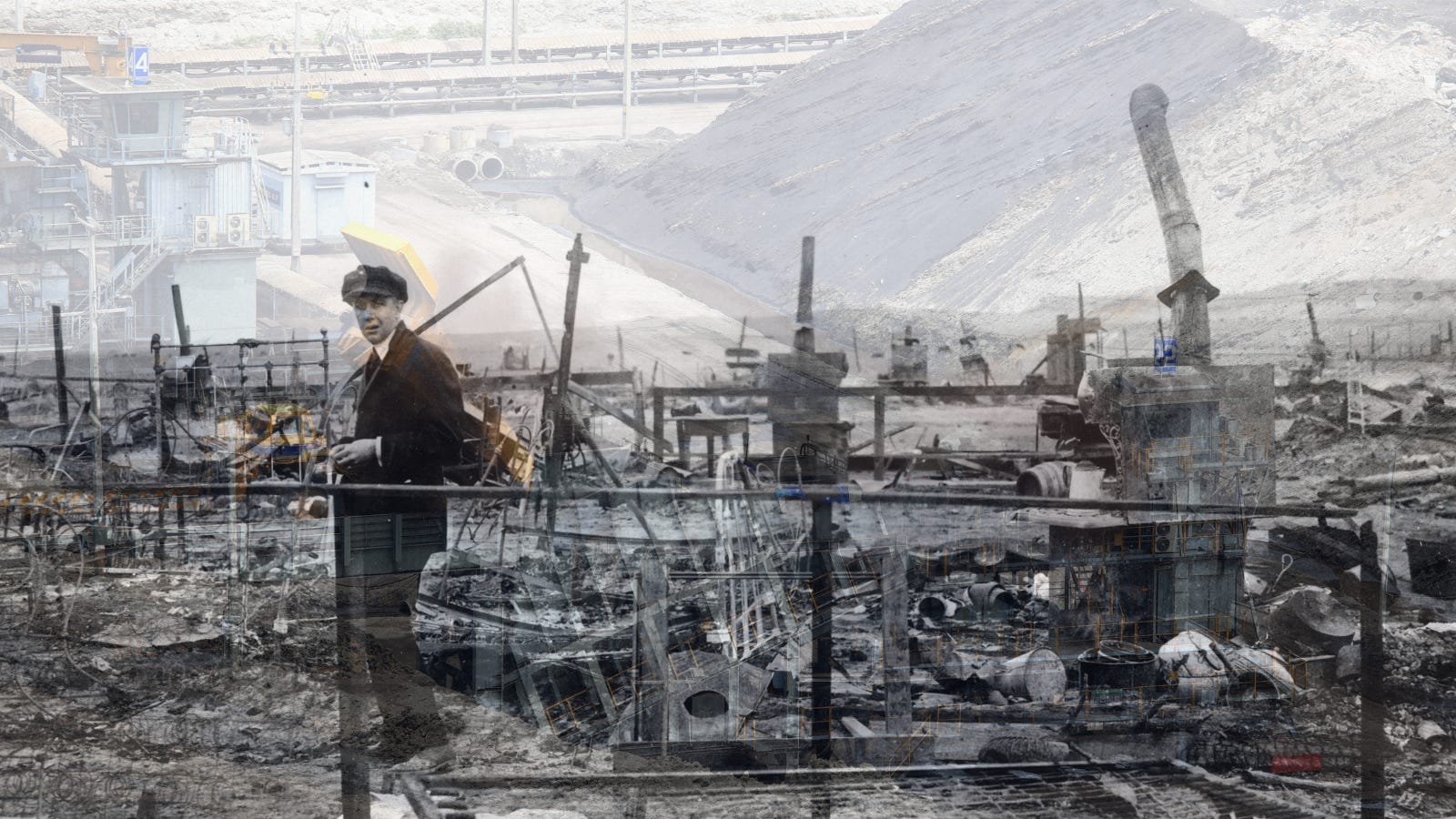
In the spring of 1914, coal miners in Colorado struck for safer work and basic dignity. Many were immigrants. Many were poor. They were forced out of company housing and built a tent colony at Ludlow, families living under canvas because the people who owned the mines also owned the town. Then the state arrived.
On April 20, 1914, the Colorado National Guard and company guards attacked the tent colony, and by the time it was over, 25 people were dead, including 11 children. The camp burned. The argument was order. The reality was a message: you can ask for a better life, but we can take your life away. And here’s the haunting part: the logic was familiar even then. The miners were portrayed as dangerous. The state’s violence was framed as necessary. The line between law enforcement and force-for-hire blurred. When the fire died down, the country argued about who started what, while the children stayed dead.
When we watch Minneapolis now, federal officers in the streets, batons and flash bangs amid crowds in subzero weather, we should feel that old, uneasy recognition: the state is always ready to describe its own violence as control. So, what is the lesson we can take away from the Fire at Ludlow? “Order” has always meant: order for the people who own the levers.
The Gunfire at Orangeburg
Fast-forward to the civil rights era, to a campus in South Carolina where young Black students were demanding what the Constitution already promised.
On the night of February 8, 1968, South Carolina state troopers opened fire on a crowd of Black student protesters on the campus of South Carolina State College. Three students were killed; 28 were wounded. Orangeburg is not as mythologized as other civil rights flashpoints, but its facts are brutally plain: law enforcement fired into a demonstration and students paid in blood.
Orangeburg matters now because it reminds us that “it’s different today” is something Americans say right up until the moment it isn’t. We imagine the modern state as a grown-up version of the old one, more accountable, more restrained. Orangeburg tells us the timeline can lie.
Minneapolis today is not Orangeburg in 1968. History never repeats with identical costumes. But the pattern rhymes: a public in the street; authorities insisting the danger is the crowd; escalation; a body on the ground; and a community left to navigate the space between official claims and what witnesses saw. So, what is the lesson we can take away from the Gunfire at Orangeburg? Officials can always craft a justification. The question is whether we accept it as the last word.
The Bridge at Selma
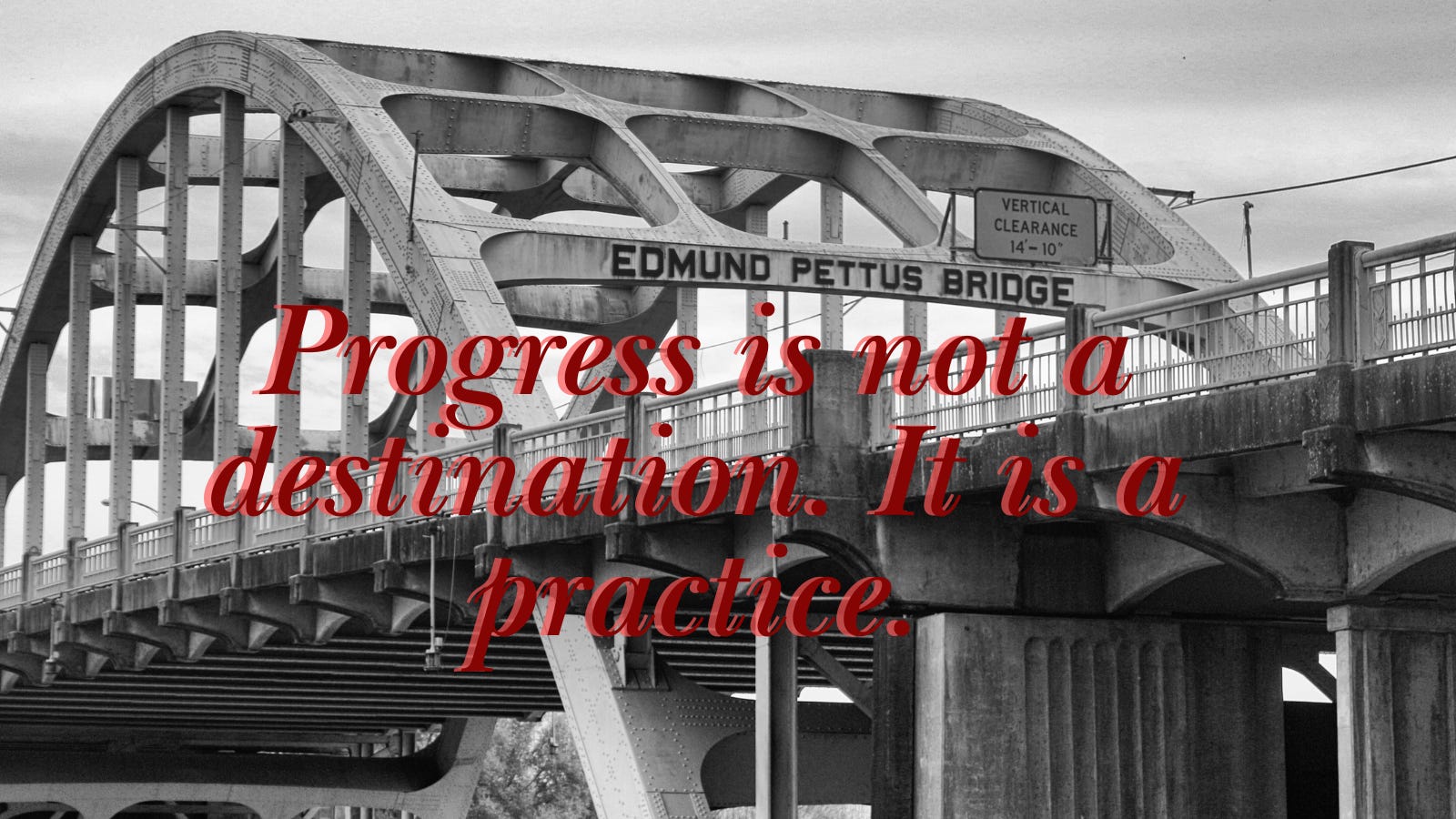
And then there is Selma, the story we teach, the footage that still makes your stomach tighten even if you’ve seen it a dozen times. On March 7, 1965, about 600 marchers left Selma, Alabama, and headed toward the Edmund Pettus Bridge. They got only that far because state and local lawmen attacked them, beating unarmed marchers with billy clubs and using tear gas, driving them back into Selma.
Selma is iconic because it happened in daylight, on a bridge, in front of cameras. It became undeniable. Selma taught the nation that you can make brutality look like law if you control the story, but you can’t do it forever if people keep watching.
Selma is also a reminder that state violence is often paired with moral theater: officers “keeping order,” protesters framed as a threat to peace, force presented as unfortunate but necessary. And then later, much later, society retroactively agrees it was wrong. It puts the photos in museums. It calls the victims heroes. It celebrates the courage of people it did not protect.
That is the trap. We tell ourselves Selma is a monument, not a warning. A completed lesson, not a living possibility. But Minneapolis, right now, has ingredients that should make Selma feel less like history and more like prophecy: a crowd in the cold; federal force meeting protest; the Guard activated; discussion of military escalation; leaders trading accusations while the public stands in the street trying to understand what the government has done in their name. So, what is the lesson we can take away from the Bridge at Selma? We don’t outgrow brutality. We out-organize it.
If you believe this deserves accountability, forward it far and wide. And if this lit a fuse in you, don’t let it burn out alone. Forward it to someone to read along with you.
So, today we draw this line, slowly, carefully, unmistakably. What makes this moment feel like a return to a past the modern government promised we were beyond is not simply that violence happened. America has always had violence. The deeper shock is how quickly the state reaches for the posture of occupation, how rapidly the public sphere becomes a theater of force.
In Minneapolis, the facts on the page already read like the beginning of a grim civics lesson: federal immigration enforcement operations, lethal force, mass protests, the Guard activated, active-duty soldiers on standby, and a President publicly framing the situation as a failure of local leaders. Trump threatened the Insurrection Act, a tool associated with domestic military deployment, over protests against federal immigration actions.
This is the shortcut autocrats love: take a legitimate public crisis, insist only one man can restore order, and treat dissent itself as proof that more force is needed. An autocrat does not always arrive with a crown. Sometimes he arrives with a post, lashing out, demanding obedience, turning every act of community resistance into an argument for escalation. The story stops being “a tragedy that requires accountability” and becomes “a disorder that requires domination.” And you can hear it in the way the ground shifts under the word safety.
What is “safety” when an ICU nurse is dead after an immigration operation?
What is “safety” when people march in subzero temperatures because they believe the federal government is treating their neighbors like targets?
What is “safety” when soldiers are placed on standby for possible domestic deployment, and what is “safety” when the President threatens to invoke a law that expands his power to use military force at home? This is the heart of it: safety becomes a word the state uses to explain its own violence back to us.
Ludlow was “order.” Orangeburg was “control.” Selma was “law.” Minneapolis is “defensive shots” and “public safety” and “largest-ever” enforcement operations, while crowds gather because they do not recognize the country in those phrases.
We were taught a comforting national story: that progress is permanent, that the arc stays bent once it bends, that the modern government learned to protect rights rather than treat rights as inconveniences. But the truth is harsher and more adult: progress is not a destination. It’s a practice. And it can be reversed, fast, if the people who hold power decide that force is easier than legitimacy.
This is why Selma belongs at the end of the sequence. Because Selma is where America saw itself clearly, what it had done, what it was capable of, and promised not to return. And now, in Minneapolis, in a winter so cold it burns your lungs, we are watching the state test that promise again. The question is not whether history is repeating. It never repeats exactly. The question is whether we’re going to recognize the rhyme soon enough, and whether we refuse the oldest American trick: calling force “safety” until the word means nothing.
If you feel anger, good. Anger is the part of you that still recognizes the country you were promised. But anger is only useful if it has hands.
So here are the hands:
Keep watching. Keep filming. Keep naming what you saw.
Demand independent transparency, not “internal review,” not “we investigated ourselves,” not a press release that asks you to stop asking questions.
Treat “order” language like a warning label. When they say “restore calm,” ask: “calm for whom?”
Because the state will always have uniforms and statements. What it doesn’t have, unless you give it up, is your consent. And consent is the quiet thing power needs most. So don’t give it away cheaply. Be loud on purpose. Be steady. Be unembarrassed about caring. And make it politically expensive to turn law into a scarecrow.
What’s the moment you realized “public safety” was being used to excuse force? Let us know in the comments, start a discussion, join a movement. It is time that each and every one of us, stand up and join Minneapolis, we can’t be there physically, but we can be there through conversation, through speaking out, through our hearts, and through a commitment that we as a nation are not going to stand for this any longer. Because, “we the people” was never meant to protect the powerful, it was meant to show the powerful what they were there to protect.
Wow Mary a great article, your use of words makes me jealous! And I love to learn.. you’re a great teacher! Please Continue!
Alex was a nurse, a person who cared. He stepped in to help when the ICE thugs shoved a woman over. Yes he was armed as was his right under the 2nd amendment. Did he reach for that firearm No, it was removed from his holster as he was held down, beaten and then assassinated. Cold blooded murder. Kyle Rittenhouse shot protesters, sobbed like a baby and was aquitted. Alex shot no one and was murdered. Where do we go from here? Justice for Alex, no justice no peace. Things have got to change.