


What keeps hanging over this war, like the smell of burnt wiring in a badly managed casino, is the growing sense that the American public is being shown one script while a very different set of interests is driving events backstage.
Officially, this is always about security, stability, protecting allies, restoring deterrence, preventing a larger catastrophe. It comes wrapped in the old familiar tissue paper of noble purpose. But every day the wrapping tears a little more. Trump tells the public there are “productive conversations” with Iran, as if he is the wise old statesman patiently guiding the world away from the brink. Iranian officials call that fake news. Regional players publicly insist they want peace while privately, according to new reporting, Crown Prince Mohammed bin Salman has been urging Trump to keep the war going, describing it as a “historic opportunity” to remake the Middle East. Which is exactly the sort of phrase that sounds grand and visionary right up until you remember it translates, in practice, to blood, rubble, refugee flows, shattered economies, and young men being fed into machinery built by older men with security details.
As usual, Trump is swaying in the middle of it all like a cheap patio chair in high wind. One minute he is hinting at overwhelming escalation, the next he is talking as though peace is just around the corner, probably right after his next Truth Social post and between servings of self-congratulation. The whole thing has had the texture of improvised theater from the start. Threats dropped with maximum drama, deadlines that may never have been real. Sudden reversals announced as triumphs, and mysterious backchannels are rumored into existence. Allies and intermediaries awkwardly distancing themselves from claims they do not quite recognize. It has all felt like a stage production of crisis management directed by a man who believes vagueness is genius and contradiction is leverage.
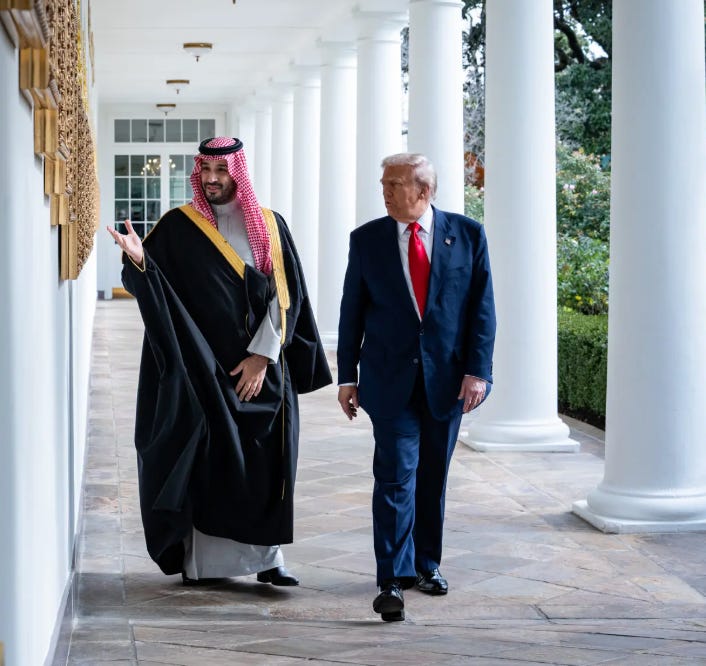
Discussions about possible recent market manipulation are gaining traction. Earlier, we were looking at the possibility that Trump’s choreography around the supposed “48-hour ultimatum” and then the conveniently timed talk of negotiations may not have been simple confusion or cowardice, but something more deliberate in effect, whether or not it was deliberate in design. Ratchet up war expectations, let oil markets brace for greater disruption, then abruptly pivot to “productive talks” and a pause, and suddenly the whole thing starts to look less like sober statecraft than a chaos engine with financially useful side effects. What sharpened that suspicion was the report that between roughly 6:49 and 6:51 in the morning, just minutes before Trump’s announcement, about 7,200 Brent and West Texas Intermediate crude futures contracts changed hands, a burst of trading worth more than $760 million by one account, and around $580 million by another depending on which contracts were counted. Then at 7:04 a.m., Trump posted that the United States had held “very good and productive” talks with Iran and would pause attacks on Iranian energy infrastructure. Oil promptly fell off a cliff. Brent dropped about 10 to 11 percent, sliding to roughly $100 a barrel, while West Texas Intermediate fell about 10 percent, down to the high $80s. The stock market, naturally, cheered the fantasy, and the Dow jumped more than 600 points. No, it does not prove a clean little conspiracy with a tidy paper trail and a prosecutable diagram; life, especially under Trump, is usually messier than that. But it does mean someone placed an extraordinarily well-timed wager, hundreds of millions of dollars’ worth, just before the president said something that moved oil exactly in the direction that wager needed. When Iran immediately responded by denying any negotiations had taken place and accusing Washington of pushing “fake news” to manipulate financial and oil markets, the question becomes harder to dismiss. Who benefits from this constant lurching between apocalypse and de-escalation theater? Because the answer does not exactly begin and end with the average American trying to absorb another $20 at the pump, let alone the prospect of $100 more a week at the grocery store.
Layer this new reporting onto that pattern and the picture gets darker, not clearer. If Mohammed bin Salman really has been privately pressing Trump to continue the war, even floating the logic of ground operations or seizure of oil infrastructure, then we are no longer looking at a crisis shaped merely by military calculations or alliance obligations. We are looking at a conflict unfolding inside a nest of overlapping interests: authoritarian ambition, oil-market instability, personal vanity, regional rivalry, investor nerves, arms sales, and the delusional belief shared by too many powerful men that war can be used as a precision instrument for political renovation. Like the old fantasy of controlled destruction, the conviction that you can set fire to the neighborhood and somehow keep your own drapes from smelling like smoke.
MBS, of course, is not a neutral observer handing out dispassionate advice from some lofty summit of democratic principle. He is an authoritarian ruler who has spent years crushing dissent and polishing his image into a glossy export brand. He wants Saudi Arabia to be seen as the modern nerve center of the region, a glittering high-tech investment haven where the future arrives in mirrored towers and luxury resorts. But that vision exists right alongside an older and much uglier reality: a system sustained by repression, elite bargaining, security paranoia, and petro-power. When the likes of MBS reportedly tells Trump that this war is a “historic opportunity,” it should not be heard as strategic wisdom, because it is the pitch of a man who sees catastrophe and immediately begins calculating market share.
Trump, because he is Trump, is almost uniquely vulnerable to exactly this kind of influence. He admires strongmen, responds to flattery, and confuses wealth with brilliance, ruthlessness with strength, and private access with friendship. He is the sort of man who can be led by anyone willing to tell him he alone can reshape history, preferably while also praising his instincts and pretending his rambling posts are Churchillian. It is not hard to imagine him on the receiving end of these calls, absorbing the message that escalation is not a trap but an opportunity, not a quagmire but a chance at greatness, not an unfolding disaster but a made-for-TV demonstration of strength. One man wants regional transformation, and the other applause. Together they can get a lot of people killed.
The public version of all this is still dressed up in the language of necessity. We are told that Iran must be weakened, that deterrence must be restored, that the regime poses long-term dangers, that half-measures invite worse violence later. Some of that, in the abstract, reflects real strategic concerns. Iran is a repressive state, and its regional conduct has been destabilizing for years. None of that is fictional. But the problem is not that the public case is being made by people whose incentives are plainly contaminated. Trump is not a reliable custodian of national interest. Netanyahu is not approaching this as a detached guardian of regional peace. MBS is not whispering into the phone out of humanitarian concern for Persian civilians. Everyone at the top of this pyramid has motives that stretch well beyond public safety, and in several cases run straight through personal political survival, strategic opportunism, and control of oil and capital flows.
This story feels so sinister because it is not just that war is happening, it is that the war is being narrated by liars, opportunists, and authoritarians who keep revealing that the visible rationale is only part of the machinery. In a system like this, one does not even need a single perfectly timed bet on oil rising or falling. Volatility itself becomes the asset. As long as markets lurch, as long as the public is jerked back and forth between threats, “talks,” denials, pauses, and renewed escalation, somebody with enough money, enough speed, or enough access can make a fortune from the movement alone. War by arbitrage. That may be the cleanest description of what this begins to resemble. Not war as strategy in any coherent moral or political sense, but war as a series of exploitable dislocations. The only real financial risk is stagnation, and the only unacceptable outcome is a world in which the machinery stops trembling long enough for ordinary people to see it clearly. The American people, meanwhile, are fed the usual stale ration of patriotic vapor while decisions appear to be shaped in private conversations among men who treat the region like a game board and its populations like weather. One can almost hear the sales pitch. Yes, there will be disruption. Sure, there may be retaliatory strikes, infrastructure damage, and a long tail of instability. But think of the upside. This is how carnage acquires a PowerPoint voice.
Ordinary people, you and me, get the bill. Americans get higher energy prices, more instability, more risk of being pulled into a larger war, more cynical manipulation packaged as leadership. Iranians get bombed, strangled, and thrown deeper into the nightmare of being trapped between a brutal regime and foreign powers eager to turn their country into an object lesson. Saudis get told that all of this danger is a regrettable but necessary step toward some brighter order. The entire region gets another round of trauma inflicted by men who speak of history the way speculators speak of distressed assets.
That brings us back to the suspicion that there is more going on here than even the ugliest official justifications admit. The market-manipulation angle matters not because it gives us a complete answer, but because it sharpens the central question: if public welfare were truly the guiding principle, why does everything keep looking so performative, so conveniently timed, so responsive to ego and price signals and private persuasion? Why does each new revelation make the stated rationale look a little more like the decorative hood ornament on a machine built for other purposes?
Maybe the cleanest answer is also the bleakest one. This war is unfolding in an environment where too many of the most powerful actors do not see human beings; they see leverage. They see energy chokepoints, opportunities to weaken rivals, consolidate influence, juice domestic politics, calm jittery allies, impress donors, reassure markets, or reposition themselves for the next phase of regional competition. In that world, “the welfare of the American people” becomes a slogan hauled out for ceremonial use, like bunting on a reviewing stand while the real dealmaking happens behind the curtain.
So no, we do not have to claim more than we can prove or a corkboard covered in red string to say something is deeply wrong here; it is enough to observe the pattern. Trump swings between threats and miracle-talk. Iran says the miracle-talk is nonsense. Oil markets convulse. Regional autocrats, according to credible reporting, privately press for more war while publicly insisting they want peace. Everyone insists they are acting out of necessity. Everyone’s private incentives suggest otherwise. Through it all, the public is expected to nod along as though this all adds up to responsible leadership rather than a geopolitical version of insider chaos.
Thank you once again for your clear-eyed assessment of the likely hidden motivations for Trump's war. I really don't know how you and Shanley do it day after day!
More brilliant journalism! I found myself thinking of the main character in Orsen Welles’ classic film The Third Man, in which Welles plays a black marketeer in 1948 Vienna who profits from selling diluted penicillin that causes hundreds of deaths.
In a famous scene, the protagonist, played by Joseph Cotton, confronts Welles as they’re riding to the top of a large Ferris wheel. Cotton asks Welles why he did it. “For the money,” Welles answers. Pointing to the people on the ground below, who appear tiny from the heights of the Ferris wheel, Welles adds: “Would you really feel anything if one of those dots down there stopped moving?”
Without great wealth or influence, we seem to be dots to the predators Mary describes. Even as voters, we no longer appear relevant to their schemes, so confident they seem to be in holding power.
Looking forward to letting these monsters know we dots are not going away or giving up - No Kings, this Saturday, 3/28/26.