


Good morning! if the past few days have demonstrated anything, it’s that launching a war is apparently much easier than explaining why you did it. The widening conflict with Iran is now entering what analysts politely call the “unpredictable phase,” which is diplomatic shorthand for nobody actually knows what happens next. And judging by the past 72 hours, that uncertainty seems to include the White House.
A remarkable report from the Financial Times suggests chaos now unfolding across the Middle East may not be the spontaneous reaction many initially assumed. According to the paper’s reporting, Iran’s leadership had already developed a contingency plan for exactly this scenario after last year’s 12-day war with Israel. The strategy was straightforward and brutally effective: if the regime itself were threatened, the battlefield would expand far beyond Israel and the consequences would spread across the entire region.
Energy infrastructure, shipping routes, airports, hotels hosting Western personnel, and U.S. military bases were all considered fair game. The goal was leverage. If Iran’s survival were on the line, Tehran would raise the economic and geopolitical cost of the war high enough to force the United States and its allies to reconsider.
Then the trigger was pulled. The U.S. and Israel launched a massive bombardment that killed Supreme Leader Ayatollah Ali Khamenei along with several senior Iranian commanders. Instead of collapsing, Iran appears to have moved directly to the next phase of its plan. Drones and missiles struck energy facilities in Qatar and Saudi Arabia. Shipping through the Strait of Hormuz slowed as markets reacted. Iranian proxies began firing on U.S. positions while Hezbollah opened another front against Israel.
Put bluntly, the escalation that analysts spent years warning about may now be underway, not because Iran suddenly decided to ignite a regional war, but because the scenario it prepared for was activated.
That context makes the second piece of the puzzle even more striking. Writing in the Financial Times, columnist Edward Luce described the conflict as Donald Trump’s “war of whim.” Trump campaigned as a peacemaker who would end America’s endless Middle East wars. Yet here he is presiding over the largest escalation in the region in years, and offering a rotating list of explanations for why it happened.
In the span of a few days the administration’s objectives have included destroying Iran’s nuclear program, eliminating its missile capabilities, ending its support for terrorism, forcing regime change, or perhaps negotiating with a new leadership if one conveniently appears. Those goals are not merely ambitious; some of them are mutually incompatible.
The moment the bombs began falling was the one moment the United States had complete control over events. After that, the war became a multi-actor drama involving Iran, regional militias, global markets, and a collection of nervous allies. Once the first missile launches, the script stops belonging to the person who ordered it.
That loss of control is becoming visible on multiple fronts. The diplomatic backlash is already rippling through America’s alliances. Spain’s prime minister, Pedro Sánchez, delivered one of the sharpest rebukes yet from a NATO leader, warning that the strikes risk “playing Russian roulette with the lives of millions.” Madrid has barred U.S. aircraft involved in the operation from using key American bases on Spanish soil, a decision that infuriated Donald Trump and triggered threats of trade retaliation.
Spain’s criticism did not emerge in a vacuum. The Iraq war still looms large in European political memory, and Sánchez made clear he sees echoes of that era in the current crisis.
The unease isn’t limited to Europe. In a speech at Australia’s Lowy Institute, Canadian Prime Minister Mark Carney delivered an unusually blunt assessment of the moment, warning that the world is experiencing what he called a “rupture” in the international order. The old norms that governed the rules-based system, he said, are being steadily eroded as major powers increasingly act without constraint while global institutions struggle to respond.
Carney emphasized that Canada has long viewed Iran as a destabilizing force in the Middle East and supports efforts to prevent Tehran from acquiring nuclear weapons. But he also made a pointed observation that carried real diplomatic weight: the recent strikes by the United States and Israel were launched “without engaging the United Nations or consulting allies, including Canada.”
That’s not the sort of sentence Ottawa typically includes in its public speeches.
Carney warned that great powers are increasingly using economic integration and geopolitical leverage as tools of coercion rather than cooperation, leaving middle powers to manage the fallout. And while he condemned Iranian strikes on civilians and civilian infrastructure across the region, he also urged all parties, including Washington and Jerusalem, to respect international law and move quickly toward de-escalation.
The political consequences of the war are also beginning to reverberate back home. Speaking on Britain’s LBC radio, Washington correspondent Simon Marks reported that the White House is already feeling pressure from an unexpected source: Trump’s own base.
According to Marks, officials are “stung by the fact that so many of the president’s normally ardent supporters are finding fault with his strategy-free war of choice against Iran.” Figures like Tucker Carlson and other “America First” voices have begun asking why a president who promised to end forever wars has now launched another one.
Those critics warn the conflict could quickly drain U.S. weapons stockpiles and expand into a prolonged regional war, precisely the kind of open-ended military commitment Trump once campaigned against.
After years of condemning “endless wars,” the president is now explaining that wars can, in fact, go on indefinitely and still turn out just fine. In a post on Truth Social, Trump insisted the United States has “a virtually unlimited supply” of weapons and ammunition and declared that “wars can be fought forever and very successfully using just these supplies.”
He brushed aside concerns about the duration of the conflict, telling reporters the operation might last “four to five weeks,” but adding that if it takes longer, “whatever the time is, it’s okay… we have the capability to go far longer than that.”
Listening to Trump describe the conflict, you could almost imagine him narrating a video game. It was the geopolitical equivalent of switching on God-mode, the setting where the player has unlimited ammo, unlimited armor, and the assumption that the level will eventually be cleared no matter how chaotic things get. Unfortunately, real wars don’t come with reset buttons, cheat codes, or the option to reload from the last save point.
Polling suggests many Americans are skeptical. Nearly six in ten now disapprove of the decision to attack Iran, and a majority believe the conflict could turn into a prolonged war.
Then came a revelation that landed like a depth charge inside the MAGA coalition. Secretary of State Marco Rubio acknowledged that Washington joined the operation largely because Israel was preparing to strike Iran regardless. In other words, the United States moved in part because Benjamin Netanyahu had already decided to move. For many voters in Trump’s political base, particularly the isolationist wing, the suggestion that American foreign policy was shaped by pressure from a foreign leader is deeply uncomfortable.
While the administration insists it has everything under control, Congress is making a belated attempt to remind the White House that the Constitution still contains a few inconvenient clauses about who gets to start wars. The Senate is scheduled to vote today on a Democratic-led war powers resolution aimed at forcing the administration to withdraw U.S. forces from hostilities against Iran unless Congress explicitly authorizes the conflict. The measure, introduced by Senators Tim Kaine and Adam Schiff and backed by Minority Leader Chuck Schumer, invokes the 1973 War Powers Resolution, which requires presidents to seek congressional approval within 60 days when U.S. forces are engaged in military operations.
Because the resolution is considered “privileged,” it only needs a simple majority of 51 votes to pass the Senate. That procedural quirk means Democrats can force the vote even without Republican leadership support, although actually winning the vote is another matter entirely.
Most Republicans are already lining up behind the administration’s position that the current operations fall within the president’s authority under the War Powers Act, at least as long as U.S. ground troops are not deployed. Missouri Senator Josh Hawley, who briefly flirted with supporting a similar war powers measure earlier this year involving Venezuela, has already said he will vote against the Iran resolution.
Still, supporters argue the vote serves a purpose even if the resolution fails.
“We’re going to put everybody on the record,” Kaine said Tuesday. “Nobody gets to hide and give the president an easy pass or an end run around the Constitution.”
Even if the measure somehow cleared the Senate, it would still face long odds in the House and would almost certainly meet a veto from President Trump. Congress is preparing to hold a vote that will determine where everyone stands on the war, while having very little power to stop it.
While all of this unfolds on the global stage, Washington itself continues to resemble a reality show where every subplot eventually turns into an argument. Homeland Security Secretary Kristi Noem spent hours before the Senate Judiciary Committee yesterday discovering that congressional oversight resembles a bipartisan game of dodgeball.
The hearing was nominally about immigration enforcement but quickly spiraled into a sprawling list of complaints: aggressive deportation tactics, two fatal shootings tied to a Minneapolis immigration crackdown, a $220 million advertising campaign that seemed unusually enthusiastic about featuring Noem herself, and because American politics refuses to be boring, the infamous puppy-shooting anecdote from her memoir.
The sharpest criticism came not from Democrats but from Republican Senator Thom Tillis of North Carolina, who called DHS under Noem’s leadership “a disaster” and demanded her resignation. Holding up a letter from the department’s inspector general alleging investigators had been blocked or misled, Tillis told the secretary bluntly: “That is stonewalling, that’s a failure of leadership and that is why I’ve called for your resignation.”
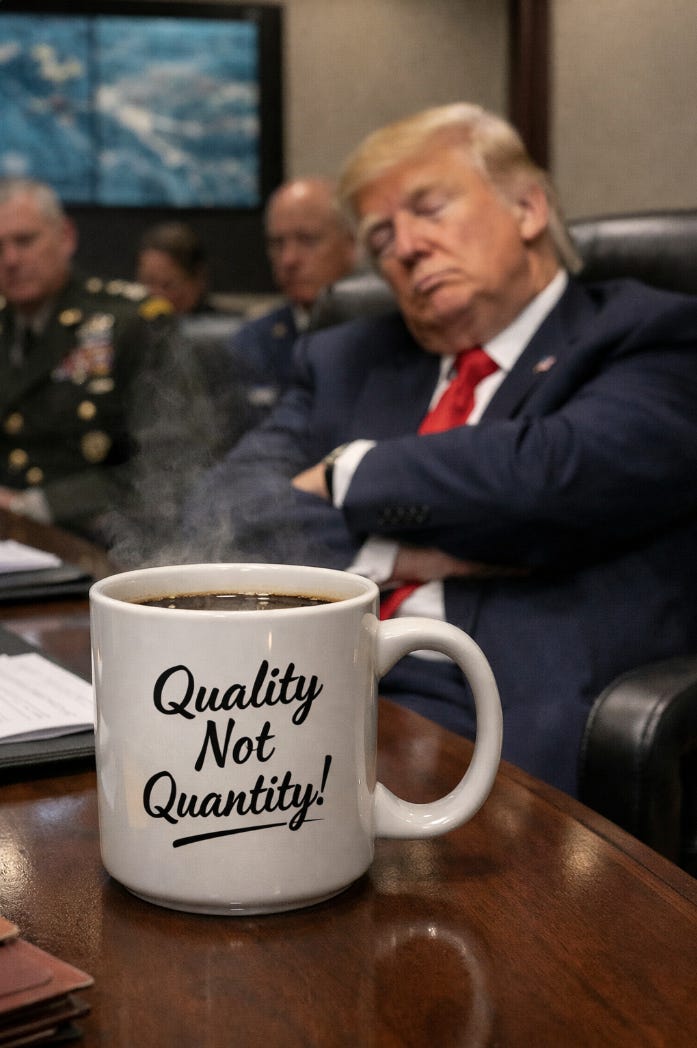
Tillis also accused the department of chasing deportation numbers rather than targeting criminals, warning that “quality matters, not quantity,” and arguing the current approach risks undermining public support for immigration enforcement itself.
Democrats focused their fire on “Operation Metro Surge,” the massive immigration enforcement deployment in Minneapolis that has drawn national scrutiny after two residents, Renée Good and ICU nurse Alex Pretti, were fatally shot by federal agents earlier this year. Several senators pressed Noem to apologize for describing one of the incidents as appearing to involve domestic terrorism shortly after the shooting. Noem declined, offering condolences but sticking to the Washington classic: investigations are ongoing.
The hearing also detoured into the administration’s $220 million television campaign urging undocumented migrants to “leave now.” Louisiana Republican John Kennedy suggested the ads seemed particularly effective at boosting one thing: Noem’s personal brand.
Noem, for her part, insisted DHS is delivering “historic results,” citing a dramatic drop in border encounters, thousands of gang arrests, and large drug seizures. She also warned that rising tensions with Iran have prompted DHS to re-screen migrants and refugees for potential security risks.
By the end of the marathon hearing, senators had accused the department of everything from civil-rights abuses to sloppy management to political self-promotion, while Noem maintained DHS is simply doing what critics demanded for years: enforcing immigration law aggressively.
In other words, Washington’s immigration debate continues to follow its usual formula: everyone agrees the system is broken, and everyone is furious about how someone else is trying to fix it.
The Trump Justice Department delivered its own episode of what can only be described as government by whiplash. After losing in lower courts to four major law firms targeted by Trump’s retaliatory executive orders, the DOJ initially announced it would appeal. On Monday the department abruptly told the court it was dropping those appeals. By Tuesday it had reversed course again and asked the court to essentially pretend Monday never happened so it could continue the fight. No explanation accompanied the legal equivalent of slamming the car into reverse on the freeway.
The underlying dispute involves executive orders aimed at punishing law firms connected to investigations into Trump by stripping lawyers of security clearances and limiting their access to government work. Courts have already signaled those actions are likely unconstitutional. Yet the administration appears determined to keep the battle alive.
Some attorneys suspect the sudden reversal had less to do with legal strategy than with headlines suggesting Trump had backed down. In the current political climate, it seems, losing in court may be preferable to admitting you lost the argument.
And that brings us back to the larger picture. A regional war may now be unfolding according to contingency plans written months ago in Tehran. America’s allies are openly questioning the decision-making that triggered it. Trump’s own political coalition is showing early signs of strain. And back in Washington, the machinery of government continues its usual routine of hearings, lawsuits, and bureaucratic improvisation.
Thank you, Mary. I have written a few responses and deleted them. The first was about collective despair and depression. The second was about a house of cards going up in flames and something about marshmallows. Keep up the good work. We are here and supporting the difficult work you keep doing. Take a minute for yourself, take as much time as you need. This shit ain't going nowhere.
people who are busily discussing the geopolitical angles of this are forgetting three important factors.. trmp is doing this for greed and his ego, trmp is doing this for distraction (Epstein) and trmp is surrounded by people who dont know what the hell they are doing and are deathly afraid to disagree or challenge any of his plans... and the largest military organization is now in the hands of this trifecta of circumstances... he was going to stop wars, lower prices, America first, and now he has managed to put Israel, the Saudis, and a few other rich and powerful first, started a bunch of wars, and managed to drive prices for just about everything up with no end in sight... and yet people still claim he is doing a great job... and in the name of Christ we will blow up all our enemies (and a lot of our friends in the process...). between the tariffs, the insults, the aggression towards Greenland, the abandonment of Ukraine, the insults to our allies, and now this, we are finding ourselves alone in the world. with his fealty to the oil and gas companies, we have effectively shut down renewable energy in this country which would lower prices... we have cut ourselves out of the EV market which is exploding around the world, and while we remark about unpronounceable words in lists of ingredients, we are allowing mercury, carcinogens, a host of other toxic materials into our world and opening the door for a host of preventable dangerous diseases... have i missed anything?