


There are two kinds of power. One kicks in a door. The other files a complaint and calls it “choice.” On January 7, 2026, the Department of Justice announced it had sued Morgan Hill and Petaluma over local ordinances restricting natural-gas infrastructure and appliances in new construction. DOJ framed it as consumer protection, costs, legality, “energy dominance,” “consumer choice.”
But the detail that changes the temperature of the story is this: both cities say they aren’t enforcing those bans, and haven’t been using them to deny permits since the Berkeley decision. So why sue a policy that’s already functionally dead? Because the lawsuit isn’t a fire extinguisher. It’s a billboard. It’s meant to be seen from every planning department in every town that ever wondered, quietly, whether it could build a safer future without asking permission from an industry that sells combustion as a birthright.
And this is where the story widens.
Because the point isn’t just to keep gas in kitchens. The point is to keep cities small, small enough to govern only the things that don’t threaten anyone’s revenue stream. Small enough to manage potholes, not outcomes. To sweep sidewalks, not rewire the future.
Why this matters
This is federal power being used to discipline local democracy, not resolve a live enforcement dispute.
Buildings lock in emissions and health exposures for decades, local rules are where the abstract becomes permanent.
“Choice” is being used as a moral mask for profit protection and preemption.
The mechanism: preemption as discipline
We can name the legal terrain without pretending it’s neutral. In California Restaurant Association v. City of Berkeley, the Ninth Circuit held that EPCA can preempt local rules that functionally regulate the “energy use” of federally covered appliances, because banning gas piping in new buildings can operate like banning the appliances themselves. That’s the doctrine. But doctrine is not destiny. Doctrine is a tool. And tools are defined by how they’re used, who holds them, when they swing, and what they’re trying to break.
When DOJ seeks a declaration of preemption and a permanent injunction against cities that say they’ve already complied, what you’re watching isn’t boundary-setting. It’s conditioning. A lesson delivered in paperwork: This is what happens when you try. The weapon in this case is not a baton. It’s a docket. Because local climate policy isn’t symbolism. It’s plumbing, permitting, building codes, the physical rules of what gets constructed and what every future resident inherits whether they consented or not. So, the fight isn’t really about stoves. It’s about sovereignty. Who gets to decide what “normal” looks like.
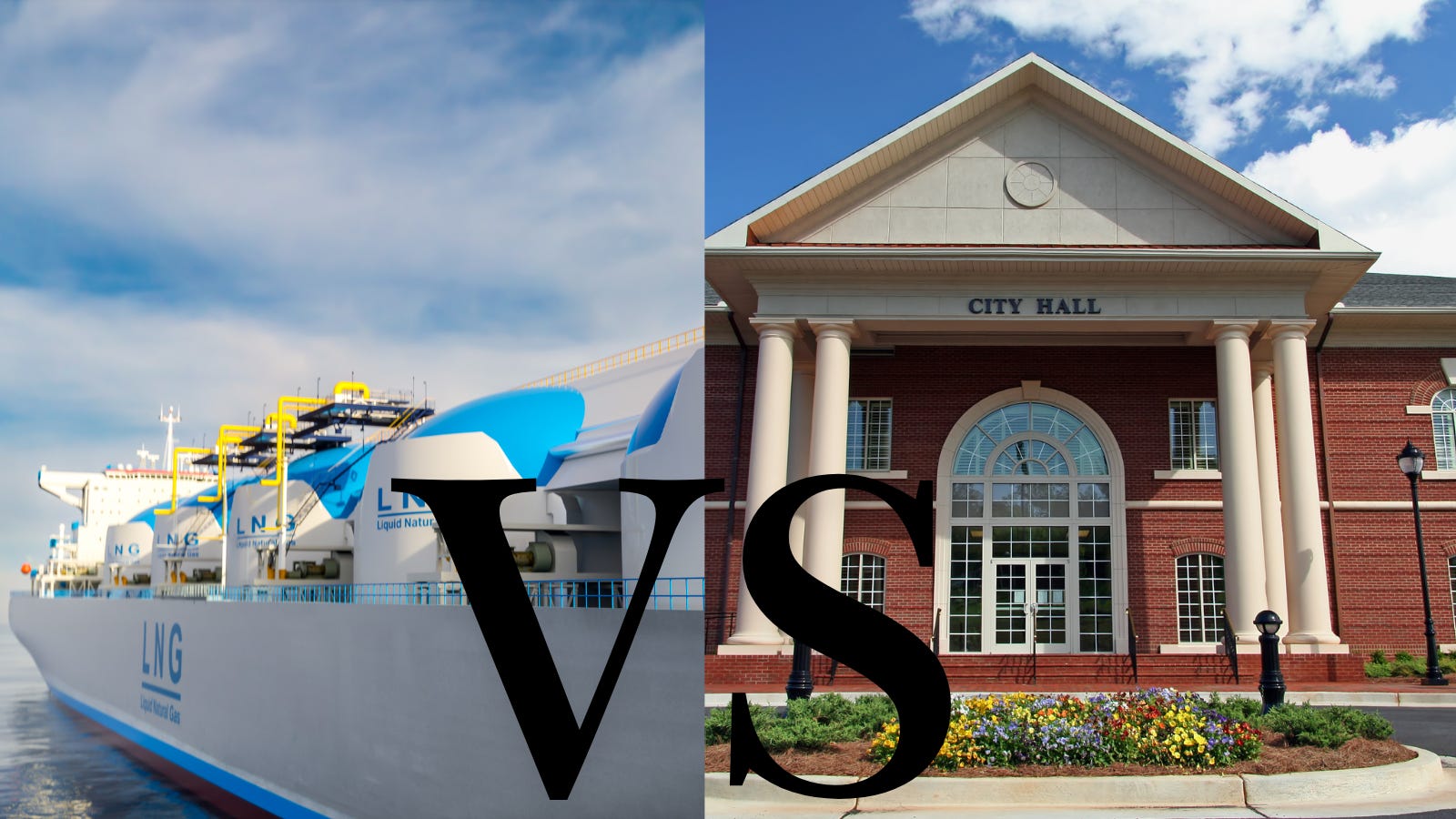
The lie: “consumer choice” as a mask for obedience
The press release uses “consumer choice” like a blessing. But choice is only meaningful if it admits the bill, and tells the truth about who pays it. Gas in a home isn’t an abstract lifestyle preference. It’s flame, nitrogen dioxide, and the intimate physics of what lingers in bedrooms after dinner. A Stanford-led study published Dec. 2, 2025 found gas and propane stoves expose people to substantial nitrogen dioxide linked to health harms, and that switching to electric could cut exposure by more than half for the heaviest users.
So, when officials say “choice,” ask the question that breaks the spell: Choice for whom, paid by whom, borne by whose lungs? Because what’s being defended is not your freedom. It’s a market. And markets have a particular kind of morality: the kind that calls harm “externalities” and treats the future like a discount rate.
The bailout: how capitalism protects its own, and calls it “the economy”
Here is the part we still don’t say cleanly enough: fossil fuels don’t just win because they’re “popular.” They win because they are propped up, with tax preferences, foregone revenue, and rules that lower the real cost of extraction compared with safer alternatives. And with something even more profound: the quiet policy decision that the damage fossil fuels do is not a cost paid by the seller. It’s a cost paid by everyone else.
In December 2025, an IMF working paper estimated that globally, explicit fossil-fuel subsidies were about $725 billion in 2024, and implicit subsidies, mostly underpricing environmental and health costs, were far larger, about $6.7 trillion. You don’t have to agree with every modeling assumption to see the underlying truth: the price you pay at the register is not the full price.
The real invoice arrives as asthma and heat waves and insurance retreat and coastal roads eaten by tides. It arrives as migration pressure and crop failures and ecosystems turning unfamiliar. Capitalism can survive on a scorched planet. It just needs the losses socialized.
And that’s where this lawsuit snaps into focus. When an economy depends on externalizing harm, it eventually requires something else: control over the places that try to stop the harm from being externalized. Which means control over cities. Over building codes. Over the future.
The collision: physics vs. loyalty
A study published in Nature Communications in 2025 linked the post-2012 slowdown in September Arctic sea-ice decline to multi-decadal variability in the North Atlantic Oscillation (NAO), and reporting on the study notes projections that this influence could peak around 2030–2040, after which accelerated ice loss could resume.
Read that again, slowly: the planet is not waiting for politics. The atmosphere is not taking testimony. Arctic ice is not a metaphor, it’s a regulator, a reflective shield, a stabilizer for a world that was never designed to absorb this much heat this fast. And here we are, in the same era, watching federal power show up not to accelerate decarbonization or protect public health, but to prosecute the idea that a city might want to build without a gas line. At the planetary scale, physics is begging for restraint. At the political scale, power is demanding loyalty.
Those forces are now colliding through our homes, through permitting offices, through the air your kids breathe and the ocean’s slow theft of the shoreline.
Authoritarian capitalism: when the market needs a muzzle
There is a kind of authoritarianism that doesn’t wear jackboots. It wears a press release about “choice” and “dominance.” It sues a policy a city says it no longer enforces. It insists the only legitimate democracy is the one that doesn’t interfere with profits. This is how capitalism defends itself when the ledger starts to tilt. It doesn’t just compete, it preempts, it doesn’t just lobby, it disciplines, it teaches cities to flinch. And once cities flinch, the future shrinks. That’s the true cruelty here: not only that federal power is being used to protect fossil fuels, but that it’s being used to hollow out the public’s belief that governance can do anything at all. Because when people stop believing change is possible, the market wins by default, and the planet loses by inevitability.
What now: anger with hands, grief with direction
So what do you do when the story is this big? You refuse the hypnosis of scale. You refuse the appliance argument. You say the quiet part out loud: This is about whether local democracy is allowed to design safety. This is about whether clean air and a stable climate are rights, or optional upgrades you can buy if you’re rich.
And then you act where power is vulnerable:
At City Hall: Don’t abandon the goal, rewrite the method. EPCA may constrain certain approaches, but it doesn’t outlaw ambition. Cities can pursue electrification through EPCA-safer pathways (incentives, electric-ready requirements, performance-based approaches, budget-neutral programs) that survive legal attack.
At the state level: If cities are being kneecapped, the state has to carry the weight. State codes and statewide programs are harder to intimidate city-by-city.
At the federal level: Ask why DOJ is spending time suing places that say they’re already compliant, and what message that sends to every community trying to reduce pollution and climate risk.
Because if the government you fund can be mobilized to protect the continuation of harm, then the project of democracy becomes: making that choice politically expensive. Not someday. Now. Before the next decade arrives. Before “choice” becomes a bedtime story we tell while the world quietly becomes uninsurable. Before physics makes its decision without us.
If you’re tired of being gaslit by press releases, support independent reporting and analysis. Hit subscribe below:
You hit so many spots I feel.
back in the day, when law was something mostly lawyers worried about (and their clients) there were often little articles that listed "outdated laws still on the books." These tended to be things that once they were banned by the courts (or maybe just got outmoded: restrictions on making buggy whips), no one bothered to repeal OR enforce. Sounds like what is happening in Petaluma. THINK of the ways DOJ could start suing places that still had these kinds of lingering but useless laws. Just for the sake of putting states or cities or villages in their place.