


There is something almost impressive about the speed with which Donald Trump can turn swagger into panic while insisting, at full volume, that nothing is wrong. One minute he is chest-thumping about total victory, claiming the war is effectively over, implying that Iran has been flattened, that the United States has everything under control, that nobody else’s help is needed, and that he alone has once again bent world events to his magnificent orange will. The next minute he is threatening NATO, whining about allies, and demanding that other nations send ships to help reopen the Strait of Hormuz, because apparently the war he already won now requires an international rescue mission.
This is the part where the contradictions stop being mere hypocrisy and become a form of performance art. Trump spent years insulting NATO, undermining allied unity, sneering at the sacrifices of countries that actually stood beside the United States when Article 5 was invoked after 9/11, and generally behaving like a man who thinks alliances are just protection rackets with nicer stationery. He belittled the British dead from Afghanistan as if they had spent the war lounging somewhere comfortably “off the front lines,” because cruelty and ignorance are the twin engines of his political personality. He spent years feeding the same lies and resentments that animated Brexit, Farage, and every other useful idiot who mistakes Kremlin propaganda for independent thought. And now, after lighting a match in one of the most strategically sensitive waterways on earth, he is demanding that the very people he has insulted come running with buckets.
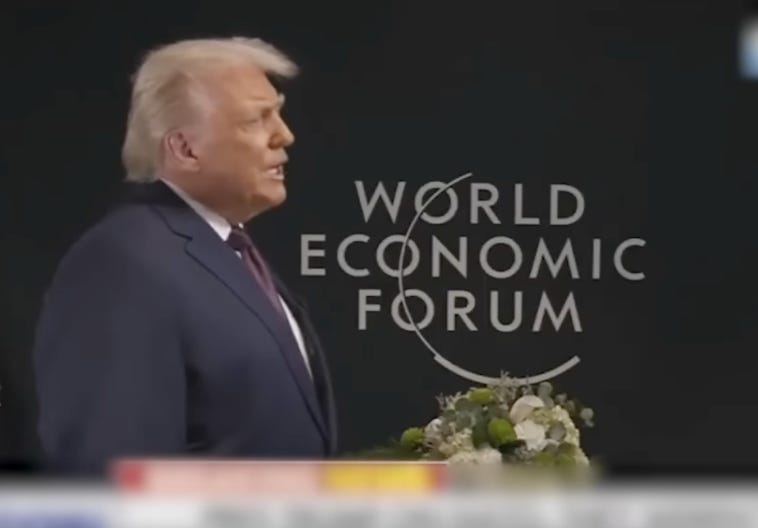
Blessedly, no one seems especially eager to do it, which may be the most reassuring fact in this entire grotesque spectacle. Britain says it will not be drawn into a wider war. France is keeping its distance. Germany is hesitant. Greece has ruled out joining military operations in Hormuz. Japan is not charging forward to become an accessory to Trump’s latest act of geopolitical vandalism. Even the countries that understand perfectly well how important the strait is to global energy markets appear to have grasped the obvious point that Trump himself cannot: there is a difference between protecting shipping and being dragooned into cleaning up the consequences of a reckless war of choice launched by a man with the strategic patience of a toddler in a casino.
This is where James O’Brien, the British talk-radio host who has made a minor art form out of exposing political nonsense in real time, exasperation feels so familiar, because what he is really giving voice to is not just anger but disbelief. Not disbelief that Trump is dangerous, or that he lies. The disbelief is that the contradictions are now so naked, so clownishly circular, and yet still spoken aloud by officials with straight faces as if they do not expect anyone to notice. The logic on offer is something like this: we had to attack because Iran might retaliate if attacked; now Iran has retaliated because we attacked them, which proves we were right to attack them; but also we did not expect the retaliation; but also we planned for it; but also we need help because it is everyone else’s problem. It is a foreign policy doctrine that resembles a snake eating its own tail all while shouting at Europe.
That is what makes the current posture so absurd. Trump and his cronies want to have it every possible way at once. To boast that they have crippled Iran while simultaneously claiming they urgently need allied assistance to deal with the fallout. To sneer that NATO is freeloading while also threatening the alliance if it does not show up to rescue them. They want to claim complete control while betraying something very close to panic, and to declare the war a triumph and then explain away every consequence of that triumph as a reason why more nations must join in. It is the foreign policy equivalent of driving your car into a lake and then blaming the passengers for not rowing.
And then there is the economic clock ticking beneath all of this, which is where Matt Randolph, an oil-and-gas veteran and online energy commentator known as ‘Mr. Global’, starts to make the picture even uglier. By warning us about the ‘three-week window,’ Matt Randolph is talking about the rough danger zone in which emergency reserves, rerouted shipments, and strategic stock releases can still mask the full impact of a Hormuz disruption. It is not a magic number so much as a warning that you can only fake normal for so long when a waterway carrying roughly a fifth of the world’s oil is in trouble. After that, the stopgaps start looking less like stabilization and more like triage. The precise number matters less than the underlying reality: you cannot choke off or severely disrupt a passage that handles a massive share of the world’s oil and gas flows, throw some emergency reserves at the problem, reroute a few cargoes, lean harder on storage, and pretend that means you have solved it. What you have done is buy time. That is not the same thing as fixing the problem. It is just a slightly more expensive way of postponing the bill, and the bill always comes due.
That is what makes Trump’s sudden demand that other countries send ships feel less like imperial confidence and more like the sweaty onset of realization. He knows, or at least the people around him know, that energy markets are not moved by his social media posts. Tankers do not reopen sea lanes because he growled at Keir Starmer. Commodity traders do not take comfort from the fact that Karoline Leavitt can explain a disaster with the poise of a malfunctioning Roomba. Oil prices may wobble on hope, on panic, on rumor, on emergency reserve releases, on selective exemptions, on markets talking themselves into one more day of denial, but none of that changes the basic math. If too much supply stays trapped or threatened for too long, the world economy begins to feel it everywhere. Markets stop treating the crisis as theater and start pricing it as reality.
That is why Trump’s language has changed. It is why the boasts are now threaded with threats. It is why the administration’s story keeps lurching between “we knew exactly what we were doing” and “who could possibly have foreseen geography.” One official seems to suggest that the disruption was anticipated and manageable. Another sounds as though the location of the Strait of Hormuz came as startling new information, like discovering halfway through a burglary that the house has walls. The same people who cannot tell a coherent story for six consecutive minutes now want the world to trust them with an expanding conflict in the Gulf.
No wonder allies are hesitating. The real question is not why they are reluctant. The better question is why anyone would be foolish enough to rush in.
Let us be clear about what Trump is asking. He is not invoking some noble principle of collective defense. NATO is a defensive alliance, not a concierge service for impulsive wars launched to satisfy one man’s ego and then repackaged as a shared Western obligation once the consequences turn out to be real. He is asking allies to enter a crisis he helped create, under terms he has not clearly defined, for objectives he keeps changing, with legal and strategic rationales that appear to shift by the hour depending on who last spoke to him. This is a man setting his own trousers on fire and then demanding that everyone else form a bucket brigade while he lectures them on responsibility.
The satire almost writes itself because the reality is already ridiculous. Trump spent years telling his followers that alliances are for suckers, expertise is for weaklings, diplomacy is for losers, and any problem can be solved by chest-beating, threats, and the magical incantation of his own name. He gutted institutions, glorified ignorance, and filled the room with sycophants who nod like dashboard ornaments every time he mistakes bluster for strategy. So now here we are, in a world where the most powerful country on earth seems to have stumbled into a crisis whose central objective is no longer winning anything grand or historical, but merely reopening the shipping lane that got snarled because they decided to start smashing things. Truly, the art of the deal.
The most revealing thing about this moment is not even the chaos itself. It is the refusal of others to indulge it. Britain declining to be pulled into the wider war matters. France keeping its distance matters. Germany’s hesitation matters. Japan’s refusal matters. Even if all of them are acting partly out of caution, self-interest, or exhaustion, that still counts as a form of sanity. The world does not owe Donald Trump an escort service for his own recklessness. It does not owe him a face-saving coalition. It does not owe him the chance to rebrand a strategic blunder as an allied mission.
What seems to enrage Trump is that other countries are not volunteering to play supporting roles in his fantasy. They are not pretending that his contradictions are coherent, or saluting his improvisation as genius. They are looking at the mess and, for once, saying: no, actually, this one is all yours.
Pressure is mounting from both directions. Politically, Trump needs other countries to legitimize and absorb the burden of his decisions. Economically, he is running into the hard reality that emergency measures can stretch the runway but cannot abolish the landing. That is why the mood has shifted and why the threats sound shriller. Underneath the macho posturing is a simple and humiliating truth: for all the bombing, boasting, and breathless declarations of victory, he may have created a problem that neither intimidation nor propaganda can solve.
It is the whole Trump story in a nutshell. He breaks things he does not understand, demands applause while they are breaking, and then blames everyone else when gravity resumes its ancient work. The only difference now is that the stakes are measured not just in headlines and court filings or campaign slogans, but in global shipping lanes, oil flows, market stability, and the possibility of a wider war. This happens when a man whose entire life has been a pageant of fraud, vanity, and inherited impunity is allowed to treat foreign policy like another branding exercise. The slogans come first. The disaster follows. And then, eventually, comes the desperate hope that someone more competent, more serious, and preferably previously insulted, will step in and save him from himself. This time, at least, it looks like the answer may be no.
Brilliant writing Mary. Thank you.
The rest of the world has his number, methinks.