


Canada has been caught in possession of Ronald Reagan with intent to distribute.
The Trump administration is accusing our northern neighbor of interfering in American politics, and among the suspicious activities identified is Ontario’s decision to run an advertisement featuring Reagan criticizing tariffs. Somewhere in Washington, a Republican must now explain that the voice Americans are hearing is dangerous foreign propaganda, despite belonging to the man whose portrait they have been putting in their offices for forty years.
I would love to have been present when someone assembled that evidence. You spend your entire career preparing to defend America from hostile foreign powers, and then Canada gets into the archives and comes out holding your dad.
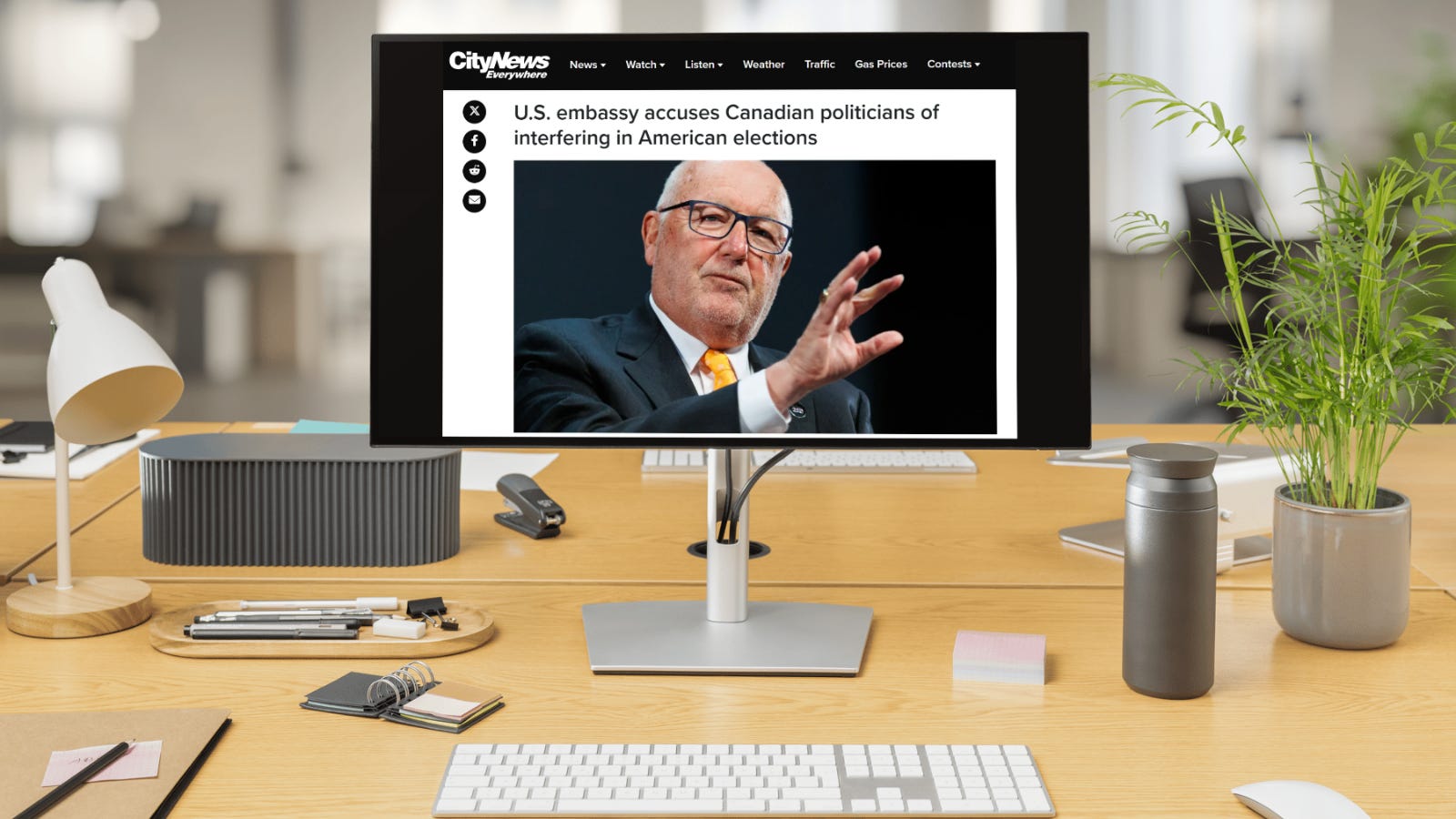
The U.S. Embassy issued its fact sheet on Wednesday, accusing Canadian politicians of seeking to influence American politics. Its examples include targeted retaliatory tariffs and Ontario Premier Doug Ford’s anti-tariff advertising campaign. On Friday, Prime Minister Mark Carney rejected the allegations as having “no merit.”
This is where we are diplomatically. We hit Canada with tariffs. Canada objects, retaliates, and explains why it objects. Our government then begins collecting evidence that Canada has noticed. As a mother, I recognize this stage of conflict. One child hits another, the second child screams, and the first comes running to report an entirely unprovoked noise.
The Reagan advertisement is from last year, which means this particular threat has apparently been aging in an evidence locker. It uses excerpts from his April 25, 1987, radio address warning about protectionism. The Reagan Foundation objected to the editing and use of the speech, and the full address does include his defense of targeted tariffs against Japan. It also includes his explicit warning that high tariffs provoke retaliation and trade wars. That part has proved considerably harder to make disappear.
Reagan actually said, “High tariffs inevitably lead to retaliation by foreign countries and the triggering of fierce trade wars.”
An awkward item to find in the family papers. You can imagine the security briefing. The president is informed that an elderly American man has appeared in a Canadian advertisement undermining his economic agenda. He demands to know whether the man can be fired. An aide explains that there are several obstacles, beginning with the year 2004. At this point, someone should probably check whether the Reagan Library has a panic button.
What makes the whole thing so exquisite is that Republicans spent decades presenting Reagan as a source of enduring wisdom. They named buildings after him. They invoked him in debates. They treated his opinions as something a serious conservative should consult before leaving the house. Then Canada consulted one, and suddenly we have a national security situation. Apparently, the Gipper was supposed to remain on the wall and keep his mouth shut.
The embassy’s case also cites eleven Canadians charged with illegally voting in U.S. elections between 2012 and 2026, without linking those cases to the Canadian government. That distinction would seem useful before implicating an entire country. Eleven people across fourteen years is a collection of individual criminal allegations. Turning it into evidence against Ottawa requires a considerable amount of diplomatic embroidery.
By this standard, if an American gets arrested in Toronto, Carney should be allowed to summon our ambassador and demand to know why Washington has launched Operation Drunk Outside a Hockey Game.
There is, of course, a purpose to describing the tariff fight this way. If Canadian retaliation creates political trouble for Republicans, the administration can frame that trouble as something Canada did to an American election. The voters’ objections become evidence against the neighbor. The policy that started the fight gets to stand quietly behind the curtains while everyone searches the garage for a Mountie.
And there is something revealing about a government that regards another country’s defense of its own interests as suspicious. Canada is supposed to absorb the costs, accept the threats, and arrange its public statements around the Republican campaign calendar. Should Canadians insist on discussing what is happening to them, they may be attempting to influence the Americans doing it.
People are allowed to notice when your policies hurt them. They’re allowed to say so where other people can hear. Even during an election. Especially when the people responsible would prefer everyone discuss something else.
The administration has managed to take a trade dispute and give it the emotional structure of a man shouting over the fence that his neighbor is making him look unreasonable.
Unfortunately for him, the neighbor has a recording. And it’s Ronald Reagan.
Ms Geddry, I love your witty commentaries! Makes me think you might be a kindred soul with Tod Maffin of Nanaimo BC who makes me proud to be 🇨🇦! You might like to explore his online work — he has too many links to offer here but he’s well worth looking up.
Great take-down. Thank you.