


Donald Trump has come to the defense of the Cheesecake Factory, which had apparently been navigating the difficult business environment of Barack Obama making a joke.
At a campaign appearance in Ohio on Saturday, Obama said the gold-adorned Oval Office looked “like Saddam Hussein opened a Cheesecake Factory.” He also suggested that Trump’s enthusiasm for renovations belonged on HGTV. By Monday night in Mississippi, Trump was defending the restaurant as “a very successful company” and explaining that Obama “doesn’t like successful companies.”
Obama’s point was clear enough, and he made it explicit: “He’s clearly not focused on lowering prices for you.” The gold was the visual aid in an argument about priorities. He was asking why the president seemed so absorbed in improving his surroundings while Americans needed him working on theirs.
Trump responded by becoming absorbed in defending his surroundings. He’d been accused of confusing the presidency with a renovation show and came back with the director’s commentary. Obama could hardly have arranged a more helpful response if he’d handed him fabric swatches and asked which one best addressed the cost of living.
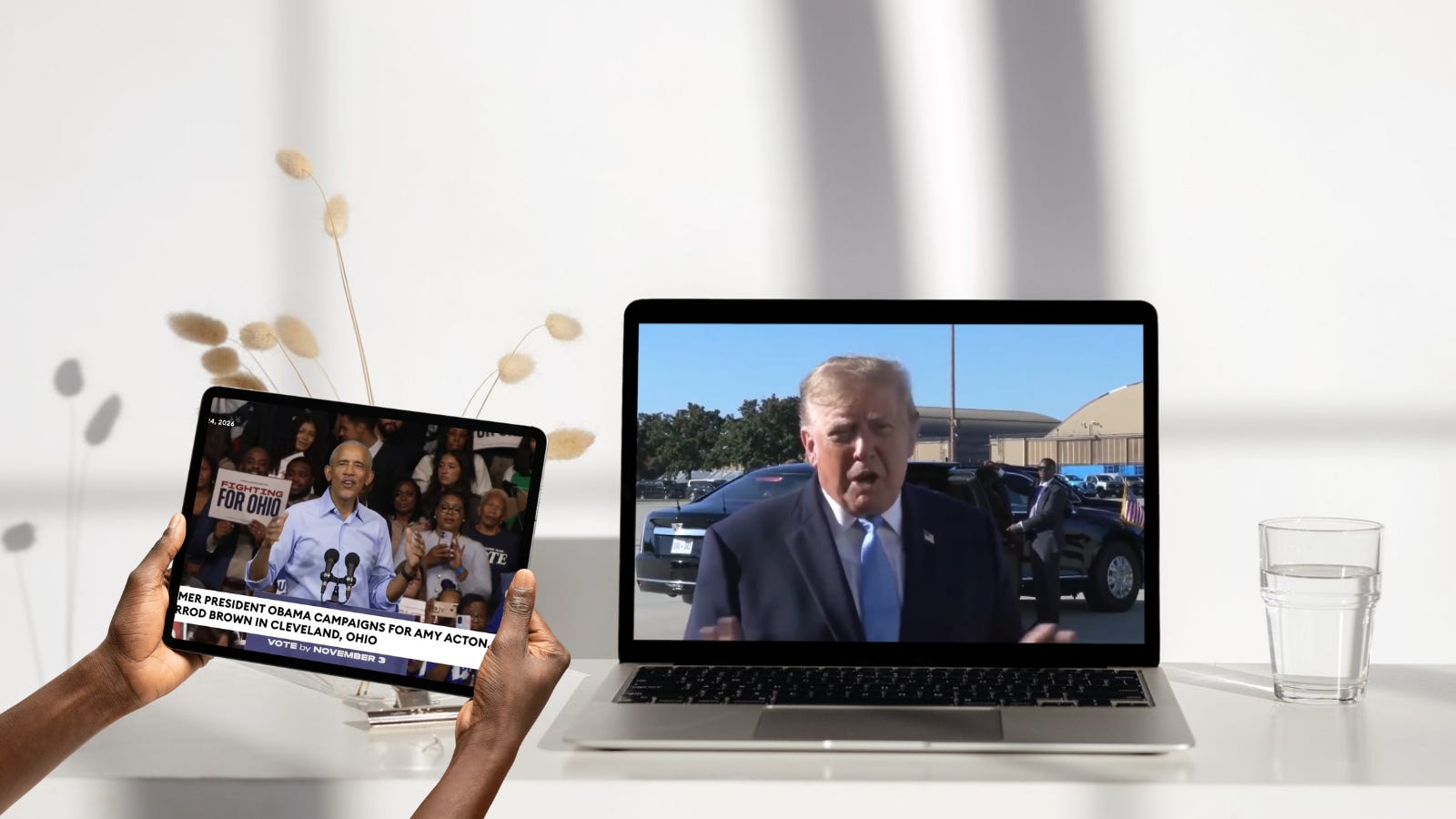
The restaurant deserves to be left out of this. People are allowed to enjoy an elaborate dining room and a dessert large enough to require a succession plan. Nobody ordering the lemon raspberry has agreed to serve as a supporting argument in Donald Trump’s theory of government.
Trump’s defense of the restaurant adds another layer. A criticism of his priorities became an accusation that Obama resents successful businesses. The question of what the president is doing for Americans disappeared, replaced by a much more comfortable question about whether somebody had been unfair to Donald. The Cheesecake Factory was now serving as his character witness, which is a demanding assignment for a place that already has to maintain that menu.
That change of subject matters because a president can win an argument about his own importance while leaving the public’s complaint entirely unanswered. The White House belongs to the public. Its occupant has temporary custody of a building and enormous power over people who will never be invited inside it. Whatever he thinks of the curtains, he still owes those people an account of his work.
Trump did offer a defense of the work itself. He described damaged plaster, broken tile, and missing ornamentation, presenting his renovations as necessary care for a historic building. Preservation is a legitimate responsibility, and repairing a cracked surface doesn’t become sinister because Donald Trump enjoyed choosing the finish. But a list of repairs can’t, by itself, answer a criticism about presidential priorities. A person accused of spending too much time on a hobby has not resolved the matter by explaining how much the hobby needed doing.
He told the crowd the work relaxes him, and his account lingered on the details he’d noticed and the improvements he’d made. There was interest, specificity, and a clear sense that a problem deserved his attention. That is a useful thing to learn about the president: he can become deeply engaged in something that needs fixing. I’d like that level of attention available to the people living in less distinguished buildings.
A parent trying to keep the heat on also has a preservation project. So does a renter watching a ceiling stain spread while the landlord assures them it’s being addressed. Their surroundings represent something, too: whether their work can buy them safety, whether their children can sleep comfortably, whether the next repair will swallow the grocery money. They’re unlikely to describe the experience as relaxing. Most home improvement projects become less soothing when you are the person figuring out how to pay for them.
That’s the standard worth carrying out of this ridiculous exchange. When a president talks about making the country beautiful or successful, we should be asking whose life becomes more livable. Can people afford their homes? Can they get care? Does the government respond when something they depend on is failing?
Gold leaf is admirably cooperative. Once applied, it reflects the light exactly as instructed. People are more troublesome. They keep having needs after the photographs have been taken.
There’s a larger failure here than being unable to take a joke. Criticism is one way the public tells an elected official that the job isn’t getting done. If the official translates every complaint into disrespect, he can spend the whole day defending himself and mistake that for responding to the country. The person asking for help becomes a heckler, and the president’s wounded feelings become the emergency.
Obama gave that failure a funny, memorable image. Trump then supplied the demonstration: challenged about his focus, he focused on the insult. The meaningful response would’ve been an account of how his administration is improving people’s lives. Instead, we learned that the restaurant is successful and the plaster needed attention. The American people remain entitled to ask when their part of the question will be answered. I’d settle for a parent opening a utility bill without having to sit down.
The Cheesecake Factory can handle its own reputation. And even there, eventually, somebody has to stop explaining how beautiful the dining room is and ask whether the people at the tables have been served.
Have we Ever seen T laugh? I don’t think so. His world is 2 dimensional and all about one thing, Him!
I haven't thought about a visit to a CheeseCake Factory in years until this. I think the company might be enjoying the free publicity.