


The Strait of Hormuz is “closed.” Effectively closed, anyway, perhaps not legally, but especially if you’re the captain of a 300,000-ton tanker insured by Lloyd’s and you’d prefer not to be vaporized by a drone, you might consider that distinction academic.
Iran’s Revolutionary Guards have declared the strait closed and threatened to fire on vessels attempting passage. Tankers are clustering like nervous wildebeest at a crocodile crossing. Insurance clubs, the deeply unsexy but absolutely essential plumbing of global trade, have begun canceling war-risk coverage. More than any missile, that is what makes markets sweat.
Because missiles are dramatic. Insurance cancellations are lethal.
Without insurance, ships don’t sail. Cargo doesn’t finance, ports don’t accept deliveries, and banks don’t clear payments. The global economy, it turns out, runs less on oil than on paperwork.
Oil markets responded exactly the way oil markets always respond when someone even whispers the words “Hormuz disruption.” Brent jumped into the high $70s per barrel. WTI climbed into the low $70s. A sharp move, yes, but not yet apocalyptic? There’s still a staggering amount of crude sloshing around the oceans, parked off Singapore, idling near Malaysia, sitting in tankers waiting for instructions like a floating petroleum reserve with better sea views.
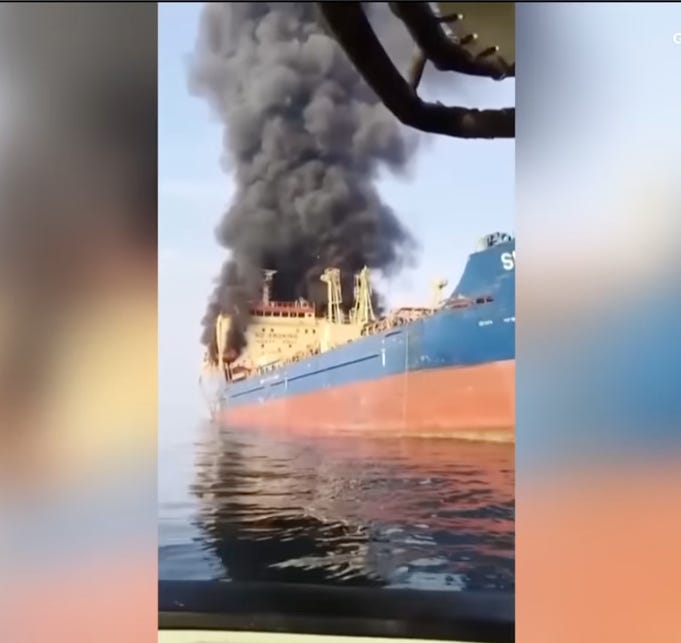
Over the past 24 hours, we’ve watched the conflict widen from “U.S. and Israeli targets” to “let’s start touching the plumbing.” Reports of strikes near Ras Laffan in Qatar, home to major LNG facilities. Drone incidents around Ras Tanura in Saudi Arabia. Debris falling near Jebel Ali in Dubai. A tanker struck in the Gulf of Oman. The Stena Imperative hit while berthed in Bahrain in dry dock, gas-free, tragically killing a shipyard worker but avoiding the nightmare scenario of a fully fueled inferno.
Here’s the thing Gulf leaders understand better than anyone: you can posture about ideology all you want, but once you start rattling LNG terminals and export hubs, you are no longer playing regional chess. You’re nudging global inflation, Asian utilities, European gas storage, and American pump prices.
Which is why the insurance story might be the real canary here. Seven of the twelve major protection and indemnity clubs signaling war-risk exclusions is extraordinary. Though not permanent, they’ll almost certainly reissue coverage at much higher premiums. That repricing moment is the cause of the pause. Shipping doesn’t stop because it physically can’t move; it stops because no one wants to foot the bill if it explodes.
This is not yet the Tanker War of the 1980s redux. There is no confirmed mining of the strait. No sustained campaign of sinking vessels mid-transit. No convoys threading through missile corridors under full naval escort. Traffic has dropped, not vanished. The Joint Maritime Information Center has called the risk level “critical,” but it has also explicitly noted there is no formal legal closure.
What would truly change the game? Mines. Sustained interdiction. A U.S. naval vessel hit. Multiple tankers sunk underway. Insurance markets refusing to return at any price.
On the political side, the Gulf states are walking a tightrope strung between fury and survival. Qatar and Saudi Arabia have spent years carefully rebuilding diplomatic channels with Tehran. That was not done out of love; it was done out of cold security logic. Now energy infrastructure is being tested, and the question becomes: at what point does “not our war” turn into “you’re hitting our house”?
GCC leaders are publicly emphasizing restraint. Diplomacy remains “open.” Leverage will come through investment relationships, security partnerships, and, bluntly, the reminder to Washington that blowing up the neighborhood is bad for business. The language is measured because the alternative is catastrophic.
In Washington, the tone is… less measured. Trump declared the operation “ahead of schedule,” dismissed the notion of boredom (a reassuring metric for strategic stability), and expanded the menu of objectives in ways that suggested a plan that evolves in real time. Boots on the ground have gone from unthinkable to conceivable to likely.
Markets are reacting rationally so far. Oil is up, but not parabolic. Natural gas in the U.S. Henry Hub has moved modestly, because American gas pricing is still driven more by weather and storage than Gulf geopolitics. LNG is the wild card. If Qatari exports face sustained disruption, that ripples outward fast.
For now, this is a shock, not a collapse. Shipping companies are hunkering down. Insurers are recalculating. Tanker charter rates are tripling. Traders are gaming duration scenarios. Consumers are filling gas cans because humans are predictable.
The most important variable is duration. If ships begin moving again under repriced insurance by week’s end, this becomes an expensive scare. If infrastructure hits continue, if LNG remains offline, if the strait becomes a shooting gallery rather than a chokepoint with nerves, then we move into a different category, one where inflation accelerates, alliances harden, and the phrase “energy security” regains the ominous tone it had in the 1970s.
A great way to raise the price of his stolen Venezuelan oil and put a couple of billion into the special Qatar Bank account.
A dear friend is in Jerusalem now. According to the Times of Israel, “US State Department urges Americans to immediately leave over a dozen Mideast nations, including Israel: 'Depart now via commercial means due to serious safety risks'”.
Our government might have considered this before deciding to unleash another major war in the Middle East. There are few if any “commercial means” to leave Israel as of this morning.
Maybe expertise and the wisdom of restraint matter after all.