


On May 12th of this year, a free-flying California condor crossed into Oregon for the first time in 122 years. The 2-year old condor known as B9 was released by the Yurok Tribe’s condor restoration program into Redwood National and State Parks last year. The event marks another milestone in California Condor restoration after a pair earlier in the year laid the first known egg in the northern California wild in over 100 years. Although the egg was not viable, it is still another encouraging sign of recovery, and the pair may try again soon.
California Condors (Gymnogyps californianus) are one of the most remarkable success stories in conservation. Once ranging from British Columbia to Baja California and the Pacific coastline to the Rocky Mountains, these remarkable birds reduce disease in other animal populations by feeding on rotting corpses. With a 9.5 ft. wingspan, condors can fly hundreds of miles a day to find carrion. Unfortunately, they declined with the arrival of European settlers. Shooting, egg-collecting, and cyanide poisoning from coyote traps wreaked havoc on the population. The worst epidemic was the lead poisoning from shot left in carrion, still one of the greatest threats to condors today. Because they are long-lived birds that can reach 60 years old, condors only begin breeding at about 6 years. Due to the great investment in offspring, they will typically lay one egg every other year. The killings and poisoning paired with this slow recovery rate took a heavy toll and nearly drove the species to extinction. By 1982, there were only 22 California condors in the world.
Thankfully, biologists intervened in the ongoing extinction. In 1983, the U.S. Fish and Wildlife service began a breeding program through several western U.S. zoos, notably the Los Angeles Zoo, the World Center for Birds of Prey in Boise, and the Oregon Zoo. All remaining wild condors were brought into captivity in a contentious 1987 decision that ultimately paid off. Using egg-removal techniques that often induce a mother to lay a second or third egg, the captive breeding program was able to rapidly increase the population by using condor hand-puppets to rear chicks that could not raised by parent birds. Once captive condor numbers increased, several groundbreaking releases occurred. The first in 1992 occurred in central and southern California. In 1992, condor releases began in Baja California that now support a second population in Mexico. In 1996, another milestone occurred when releases began near Grand Canyon National Park in Arizona, sustaining a third population that has spread to portions of Utah and Nevada. Although the populations are fragmented and still reliant on releases to maintain their numbers, they continue to grow and thrive.
One of the principal groups working to add another population of condors to northern California is the Yurok tribe. Like many other indigenous Californians, the Yurok consider condors sacred. The word for condor in Yurok is prey-go-neesh, and it is an important figure in the tribe’s creation story as well as serving a crucial role in some dances. In 2008, the Yurok Tribe Wildlife Program (YCRP) was created with their top priority being the reintroduction of condors in the Pacific Northwest. Although it took over a decade of planning and analysis, work by the YCRP and partners, the California Condor Recovery Program and Redwood National and State Parks, led to the first releases of condors in northern California in 2022. Since then, the ranks have swelled to 23 wild condors that have now graced not only California, but Oregon skies.
The efforts of the Yurok, CCRP, Oregon Zoo, and the many other collaborators have paid off over the years. In 2020, the CCRP listed over 500 living condors, with over 300 of those wild. Although condors still face many threats from lead poisoning, trash ingestion, and habitat loss, their steady recovery continues with their Oregon reconnaissance the latest in a long history of restoration. And while these are dark times for conservation, the growing presence of condors is a bright success story that we should all take note of. Sometimes, it’s nice to remember that good things with lasting impacts are still happening
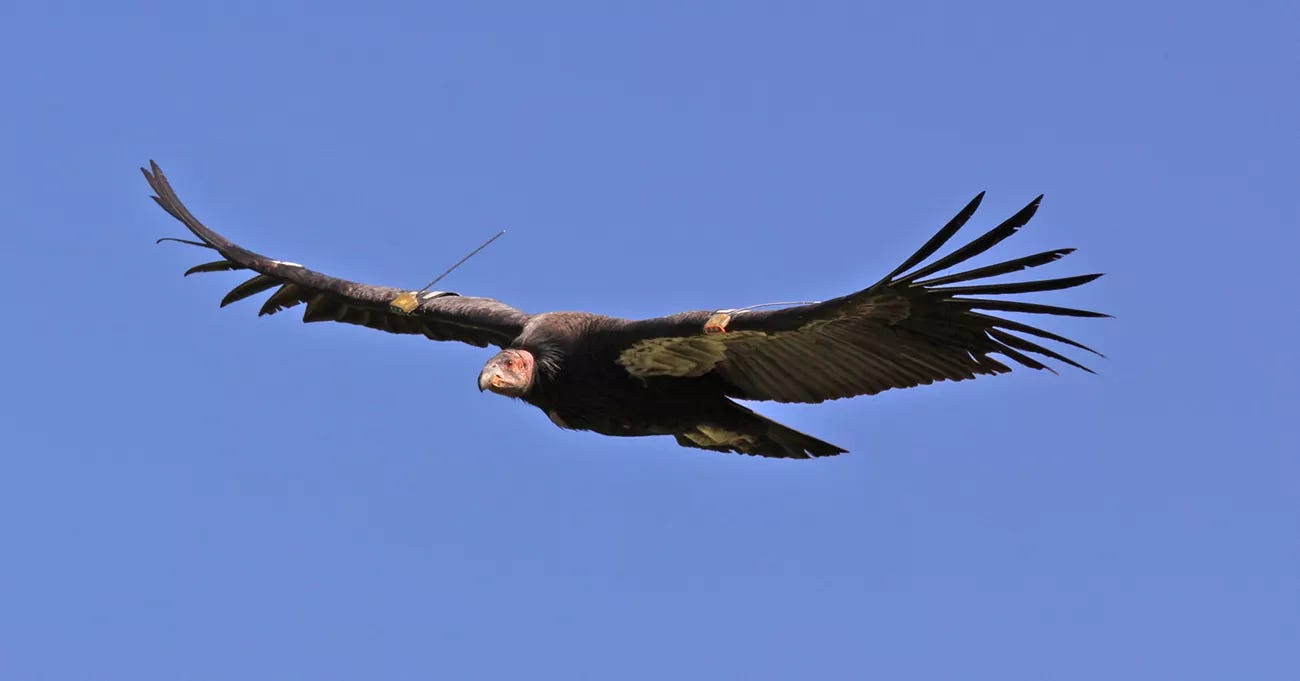
Photo by Chris West of the Yurok Tribe, taken from the National Parks Website
Another thing, like the un-damming of the Klamath and the return of the Salmon, for which we can thank the Yurok people and their allies.
This was such a treat to read today. With the constant barrage of terrible things happening, reading this gave me joy. Thank you for this.