


On Tuesday, the United States launched retaliatory strikes against Iran after Donald Trump claimed Iranian forces had shot down a U.S. Apache helicopter near the Strait of Hormuz. Central Command called the mission a “proportional response to unjustified Iranian aggression,” which is the sort of phrase governments use when they would like everyone to pretend escalation is actually restraint.
The helicopter’s two crew members survived. In fact, Trump reportedly told a Wall Street Journal reporter that the incident “wasn’t a big deal” because “the pilot is fine.”
Then, naturally, he bombed Iran.
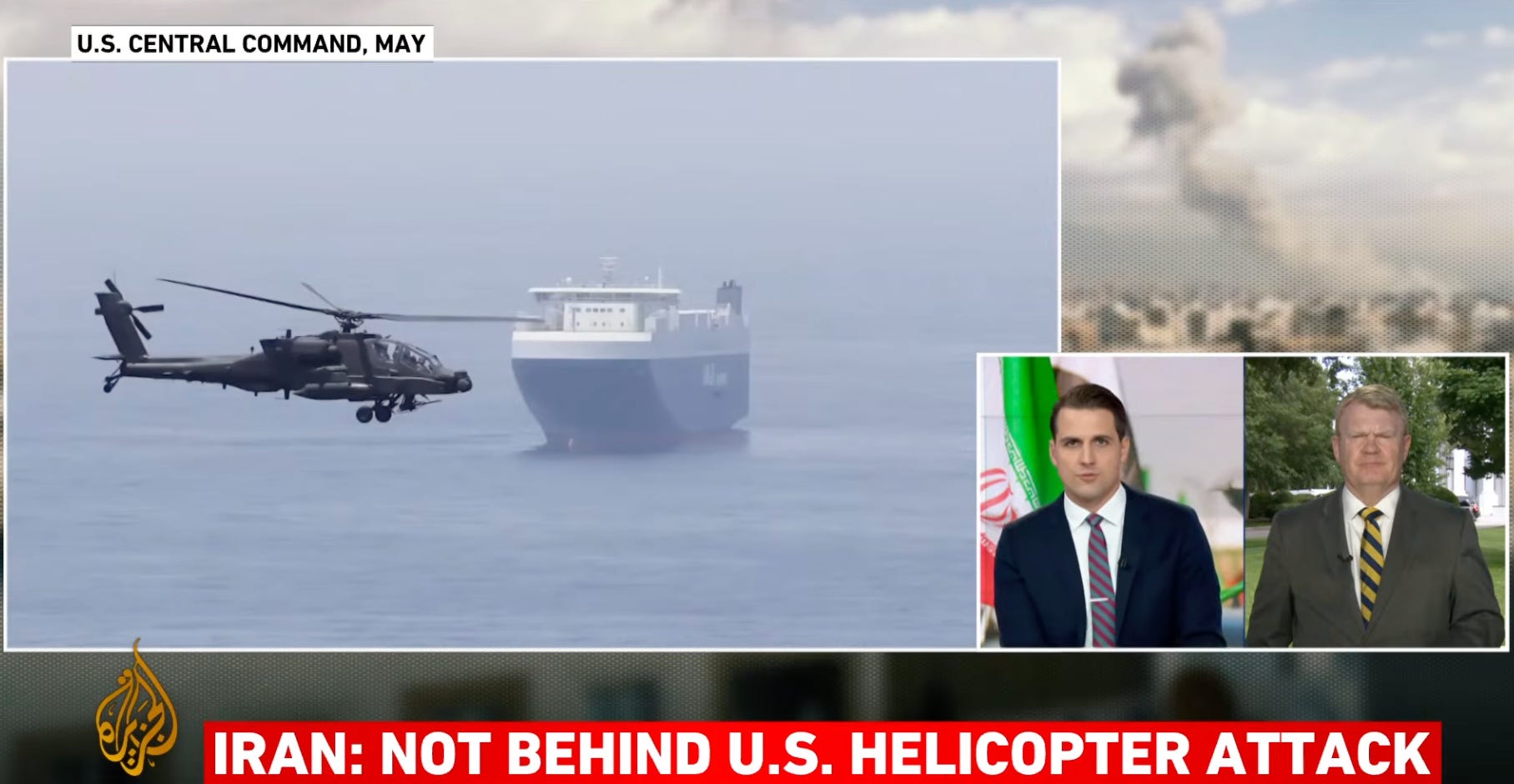
That is the Trump foreign policy doctrine in miniature: first minimize the crisis, then use it as a pretext to expand the war, then insist the deal is still right around the corner.
Iran has not officially taken responsibility. Its state broadcaster quoted a military official saying Iran conducted no operation over the Strait of Hormuz in the previous 24 hours, even as its foreign minister, Abbas Araghchi, posted that foreign forces near Iranian territory are “at constant risk on account of their own human errors, plain accidents, or potentially being caught in crossfire,” that the best solution is “for them to leave,” and that Iran prefers “the language of diplomacy but speaks other languages too.” Denial and wink, same afternoon. An anonymous U.S. official told reporters an Iranian Shahed drone took down the Apache, though Central Command’s own on-the-record statement said only that the helicopter went down near Oman, cause “under investigation.” On the strength of that, Trump declared the United States “must, of necessity, respond.”
“Must, of necessity” is doing a lot of work there, propping up a war expansion on a trigger the Pentagon itself hadn’t formally confirmed.
This comes as the broader regional war keeps metastasizing. Israel struck across southern Lebanon on Tuesday, including Tyre, where Lebanon’s health ministry said at least eight people were killed and dozens wounded. Israel also called for the evacuation of the entire city, including its Christian quarter, marking another expansion of the war’s civilian geography. Iran has warned that Israeli attacks on Lebanon could trigger another wave of retaliation, while Tehran continues insisting that any peace deal must include security guarantees for Lebanon. Israel, meanwhile, rejects linking Lebanon to the Iran negotiations and says it will keep striking Hezbollah.
So the “ceasefire” now appears to consist of Israel bombing Lebanon, Iran threatening Israel, the United States bombing Iran, and everyone insisting diplomacy is still alive somewhere under the rubble.
Enter JD Vance, offering exactly the kind of clarity we have come to expect from the administration. In a preview of a CBS interview, Vance said the United States was close to a deal with Iran, but also maybe not.
“I think that the deal could happen in the next week,” Vance said, “but the deal could also happen months from now.”
Well, that certainly narrows it down.
A peace deal could happen next week, or months from now, or possibly after the next round of retaliatory strikes, or after the Strait of Hormuz reopens, or after someone finds the diplomatic track buried beneath Trump’s social media posts. The vice president’s message, apparently, is that the administration is simultaneously on the verge of success and nowhere close to it.
Basically, a weather forecast from a Magic 8 Ball.
Oil told its own story. Prices fell as much as 5 percent earlier in the day and recovered only part of that drop after Trump threatened to retaliate. Even with U.S. strikes looming, the market was not exactly delivering the “tumbling prices” victory lap Trump keeps promising as the reward for victory. The Energy Information Administration now expects the war to reverse global oil consumption outright and says the Strait of Hormuz will remain effectively closed until early 2027.
Wars do not stay neatly boxed inside press releases. They move through shipping lanes, gas prices, food prices, insurance markets, military deployments, civilian cities, and eventually voters’ wallets.
Trump keeps claiming he is close to ending the war. But every “almost there” seems to come with another explosion, another denial, another evacuation order, another market tremor, and another official explaining that bombing someone is actually part of the peace process.
The helicopter crew survived. That is good news.
Still, Trump took an incident he first downplayed as “not a big deal” and turned it into direct U.S. strikes on Iran. Vance says a deal could happen next week or months from now. Israel is expanding attacks in Lebanon. Iran is warning of retaliation. Hormuz remains effectively closed.
The administration would like you to believe this is all going according to plan. Sure. And the “proportional response” is just another word for peace.
I keep up paying very close attention to the words used by the US, for example: trump (and hegs, etc) are using the phrase 'defensive strikes' in order to try to make naked ATTACKS the opposite, as if we are only on the defensive.
Fuck them!
When will the melon felon supporters realize that this is the most ignorant, incompetent and dangerous administration in our country's history?