


You may have read my long history of vaccination, “The Price We Paid to Live Long Enough to Forget.” This week, however, I bow my head in mourning, not for the past, but for the dedication and work of the scientists who once stood between our children and diseases that killed and hospitalized thousands.
The CDC has officially updated its childhood immunization recommendations, no longer universally recommending vaccines for respiratory syncytial virus (RSV), hepatitis A, hepatitis B, dengue, meningococcal ACWY, and meningococcal B, at the request of President Donald Trump and under the influence of Robert F. Kennedy Jr.
Many Americans may respond with a familiar refrain: “Parents can still choose to vaccinate their children if they want to.” But let me paint a clearer picture. You’re 27 years old. You have three children. A house to maintain. A job you can’t afford to lose. Bills to pay. Birthday parties, playdates, family gatherings, school emails, sick days, grocery lists, the relentless pace of life that rarely allows a moment to breathe. Parents living at this speed depend on institutions like the CDC to guide them. They rely on these systems to tell them what is safe, what is necessary, and what will protect their children so they can grow up healthy.
They trust that these recommendations are factual, free from political bias, and rooted in care, not ideology. They trust that the guidance offered is grounded in science, built on decades of sacrifice, and shaped by hope for their children’s futures.
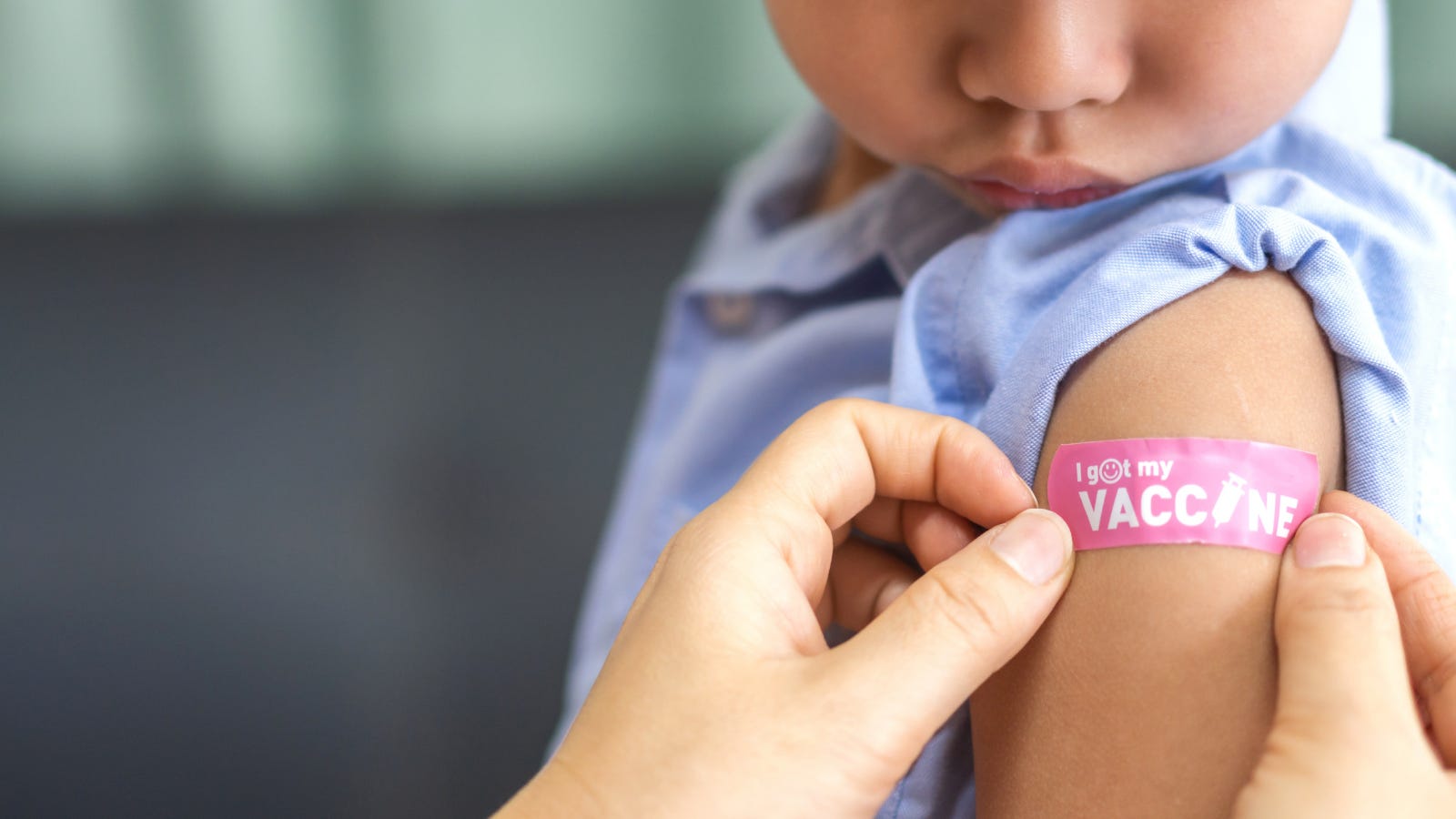
That trust is what is being dismantled. Robert F. Kennedy Jr. may claim that his actions are meant to “rebuild public trust,” but will that still be his refrain when today’s measles outbreaks swell into nationwide crises, when the United States loses its hard-won status of elimination?
Will that still be his line when infants are infected with RSV, an illness that can scar developing lungs and leave lifelong damage? Will it still ring true when parents who trusted his guidance listen to their baby struggle through episodes of apnea, when they watch their infant gasp for breath, unable to feed, their tiny chest heaving with every desperate inhale? Will that be his defense when parents stand beside an incubator, seeing their child breathe only with the help of mechanical ventilation? And will it still be his line when those parents lean down and kiss their baby goodbye for the last time?
Public trust is not rebuilt by dismantling the very protections that once kept our children alive. What is being built is an authoritarian regime, one in which a single man and his “trusted advisors” can shout louder than evidence, where misinformation becomes gospel and science is reduced to a fairytale. But what is the real motivation here? What could this administration possibly gain from reintroducing preventable diseases into the country? Nothing from the diseases themselves. The diseases are merely collateral damage to a broader political image.
Vaccine skepticism functions as a powerful identity marker for certain voter blocs. For Donald Trump, this means undermining scientists and institutions that challenge him, while positioning himself as a self-styled tribune against the so-called “deep state.” From this, he gains loyalty, enthusiasm, and differentiation from establishment politicians, further reinforcing his carefully constructed image as the president for the “little guy.” For Trump, it is simply clout, clout that could cost the lives of thousands of children.
For Robert F. Kennedy Jr., the motivation is less overtly political and more rooted in a long-standing worldview. He gains ideological coherence, credibility within anti-establishment movements, and leadership over a niche but deeply committed constituency.
At its core, this is a push for power through deregulation and executive control. Weakening vaccine recommendations diminishes the authority of independent public health agencies and shifts decision-making power toward executive discretion, state governments, courts, and political actors. This aligns seamlessly with a broader effort to politicize science, replacing expert consensus with loyalty and ideology, granting greater control over regulatory levers while removing constraints imposed by scientific institutions.
But why is this so dangerous beyond the suffering of sick children? From a public health perspective, vaccine recommendations exist because individual choices affect collective risk. Herd immunity, built through routine vaccination, protects those who cannot protect themselves, infants, the immunocompromised, and the elderly. Rolling back these recommendations predictably leads to disease resurgence, preventable deaths, and soaring long-term healthcare costs.
And there is another incentive rarely acknowledged. Vaccine skepticism fuels alternative health industries, supplements, paid speaking tours, books, podcasts, donations. Controversy sustains attention. Attention sustains influence. Influence sustains money.
The cost, once again, is paid in children’s lives. Fortunately for American families, the American Academy of Pediatrics sees through the noise and continues to stand firmly behind science. The AAP continues to recommend these vaccines for all children.
“At a time when parents, pediatricians and the public are looking for clear guidance and accurate information, this ill-considered decision will sow further chaos and confusion and erode confidence in immunizations,” AAP President Andrew D. Racine, M.D., Ph.D., FAAP, said of the new CDC schedule. “This is no way to make our country healthier.”
“AAP continues to recommend that children be immunized against these diseases, and for good reason; thanks to widespread childhood immunizations, the United States has fewer pediatric hospitalizations and fewer children facing serious health challenges than we would without this community protection,” said Dr. Racine.
The data make this unmistakably clear. RSV, the leading cause of hospitalization among infants, has been reduced by as much as half following the introduction of maternal and infant immunization, according to recent studies. Rotavirus vaccination prevents an estimated 40,000 to 50,000 hospitalizations each year among U.S. infants and young children. Hepatitis B infections in infants and children have declined by 99 percent since a universal birth dose was recommended in 1991. And last influenza season, approximately 89 percent of children who died were not fully vaccinated.
This is what evidence-based medicine looks like. This is what protecting children actually means. As I made vaccine decisions for my daughter, I was deeply grateful for the doctors who cared for her and offered vaccine recommendations grounded in compassion and trust in science. Today, as I make these same decisions for my infant son, I am grateful once again, for a physician who continues to guide us with evidence rather than ideology.
I am also grateful for my own knowledge, having worked in the healthcare field. But that gratitude is shadowed by grief, for the parents who may be making these choices without that background, who may base life-altering decisions not on science or medicine, but on a calculated push for power we are witnessing today.
It is for them, and for their children, that this moment matters so deeply.
Do you think anyone in our lofty Administration has thought about the combination of skyrocketing medical premiums and the potential of many more hospitalizations due to the abandonment of immunizations?
Thank you Shanley for this excellent but heartbreaking post. This article needs wide circulation so that it reaches the parents and family's who are trying to understand the confusion created by these unqualified and inept people who are charge. Shame on the CDC for kowtowing to the kleptocracy.