


A fish stick is an impressively uncomplicated-looking object: rectangular, breaded, reliably beige. It gives very little indication that it might arrive at dinner carrying a dispute over Indigenous food security, industrial fishing, and the future of an entire river. There really ought to be more room on the box.
Alaska pollock supplies fish sticks, imitation crab, and McDonald’s Filet-O-Fish. It supports an enormous commercial fishery, one NOAA has long held up as an example of sustainable management. But a fishery can be successful at harvesting the fish it wants while still causing harm to the fish, and people, caught alongside them.
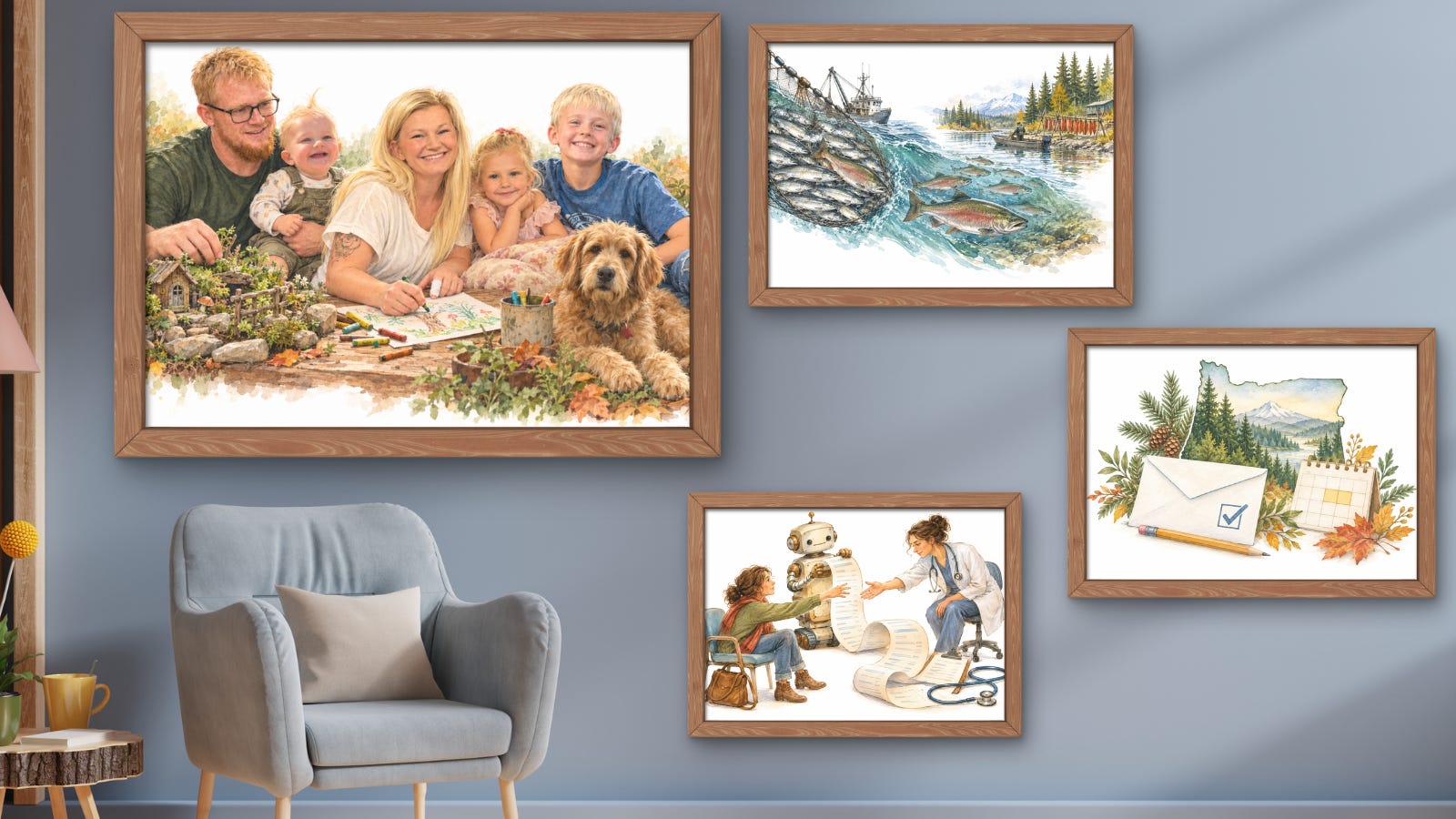
In reporting published Friday, the Associated Press followed the pollock fleet into the Bering Sea, where nets also bring up salmon. Those salmon are “bycatch,” the term for animals caught while fishing for something else. The fight over that incidental catch has become especially painful for Alaska Native communities whose own access to salmon has been severely restricted.
Incidental is a word that depends quite heavily on where you’re standing. For communities along the Yukon and elsewhere in western Alaska, salmon are food, culture, and a relationship carried across generations. In its January submission to fisheries managers, Tanana Chiefs Conference described devastating declines in subsistence harvests and argued that river communities had shouldered an unfair share of the conservation burden. It called for enforceable limits on chum salmon caught by the pollock fleet, along with stronger avoidance measures and Tribal participation.
That’s a different conversation from whether someone can substitute chicken for dinner. Losing access to salmon also means losing opportunities to practice and pass on the knowledge that belongs to catching, preparing, and sharing them. A grocery-store replacement cannot supply that.
The science matters here. NOAA identifies changing ocean conditions as a leading cause of the salmon crisis. Warmer water changes what young fish can eat, how much energy they need, and whether they survive. Cutting bycatch will not, by itself, repair the ocean. Many chum salmon caught by pollock vessels also originate outside western Alaska, which is why genetic testing helps managers identify which populations are being affected. But a problem having several causes doesn’t give us permission to ignore the ones we can do something about. We don’t normally respond to a leaking roof by explaining that, technically, the rain started elsewhere.
There’s variation within the crisis, too. This year’s fall-chum return brought enough improvement for Alaska to lift subsistence restrictions in several Yukon districts in September, after fish needing protection had passed through. That is welcome news. It also makes it important to distinguish salmon species, runs, and places rather than describe an entire region as if every fish is facing the same conditions.
In February, the North Pacific Fishery Management Council recommended a 45,000-fish limit on western Alaska chum bycatch, paired with fishing-area closures during a critical migration period. More than 170 people testified. The recommendation called for federal regulations to put those measures into effect.
The council also acknowledged that pollock supports livelihoods in Alaska communities and helps fund development in 65 western Alaska villages. The people dependent on these fisheries don’t divide neatly into an Indigenous side and an industry side. There are workers, families, and communities with overlapping interests, all trying to build a future around an ocean that is changing. That complexity should make the decisions more careful. It should also make us ask whose losses become the accepted cost of doing business.
Today is Indigenous Peoples’ Day. Recognition ought to reach beyond honoring a relationship with the natural world while leaving the people who sustain it to argue for a place in the decisions. Tribal knowledge, food security, and authority deserve to shape what happens next.
There is useful work underway. A gathering of Tribal leaders, scientists, youth, and community members begins tomorrow at the Spokane Tribe Resort & Casino, focused on salmon and orca recovery, environmental justice, and Tribal sovereignty. The in-person event is full, but online participation is available. People are organizing around the survival of these relationships, with actual meetings, actual proposals, and actual work ahead.
Farther from the river, another system is getting very efficient at deciding what people can afford. The Guardian reports today on the growing use of artificial intelligence in medical billing and debt collection. Cedar, a billing company, describes using machine learning to predict a patient’s likelihood of paying and tailor discounts. There may be real help in a lower bill. There is also a fair question about what happens when a patient’s financial distress becomes another thing a system can calculate.
A new Urban Institute analysis, supported by the Robert Wood Johnson Foundation, found that 27 percent of adults reported that they or someone in their family had medical debt in December 2025. Among insured adults, the figure was 26 percent. Having coverage simply doesn’t guarantee being able to afford the care.
From my years in healthcare quality and compliance, I want to know what a process is designed to accomplish and how we measure whether it works. Helping someone qualify for assistance is useful. So is making a bill easier to understand. But collecting more money is a financial outcome. It does not, on its own, tell us whether people are healthier or able to seek care when they need it.
I would like some of this magnificent technological ambition directed toward the part where a person gets help.
And a practical reminder before tomorrow gets here: Oregon’s voter registration deadline is October 13. Counties begin mailing ballots October 14. Check your registration and address through the Secretary of State’s My Vote page, and pass the reminder to someone who might need it. A reminder today gives someone time to act.
Here on the Homefront, I am operating with one fewer usable finger than usual thanks to my soup burn. Unfortunately, it is the middle one, which means a substantial portion of my communication infrastructure is currently unavailable.
The worst spots are white, peeling, and almost completely numb. I would like to interpret the absence of pain as a benefit, but white, numb skin can be a sign of a deeper burn. It deserves medical attention, even if my first instinct is to appreciate one less thing complaining at me.
I have, however, figured out how to use the wonderful oil pastels Brock gave me without that finger, occasionally recruiting my left hand. You don’t realize how much you use your middle finger until you can’t. The answer is quite a bit, even during activities in which everyone is behaving perfectly reasonably.
I have already used about half the new paper he got me. I simply can’t stay away from the pastels. He has given me something I can get happily lost in, which has been a lovely thing to have amid the coughing and general bodily mutiny.
My daughter is home sick today with the tobacco-baron illness. She’s four and sounds as though she has been smoking for four times the length of her life. Meanwhile, I’m still waking up coughing in the middle of the night, although the phlegm appears to be considering a gradual departure.
We planted a few things in the fairy garden bed last night, and the house and yard are moving along. There are still small, good things happening here, even with a household full of suspicious voices and my most expressive finger out of service.
I have been considering seeing a doctor about it. I also caught myself wondering whether I would rather live without feeling in a finger than pay for the visit. That is an alarming calculation to find yourself making, and a very ordinary one in this country. The numbness needs attention. The cost shouldn’t be what makes me hesitate.
If this piece gave you something worth thinking about, please restack it or share it with someone. It helps our work find people who might otherwise miss it.
A paid subscription supports both The Homefront Report and Mom’s clearly superior work. I am currently down a finger, so this would be a particularly unsporting time to challenge her.
If you would like to help support our family’s projects, plants, and everyday adventures, you can chip in here:
Thank you for helping us keep growing things, making things, and finding a little beauty in the middle of all this.
Take care of yourselves today, and thank you for spending part of it with us.
I don't expect many folks south of the Canadian border to be aware of the extent of salmon catch issues with Canada. We both struggle to maintain a sustainable fishery but practices vary a lot! BC is finally getting rid of those Atlantic salmon fish farms that spread diseease in the wild stock, but all too slowly. Yet the resiliance of salmon is astonishing as we've seen in the Broughton Islands between Vancouver Island and the mianland and again in the Klamath River. Our countries need to negotiate sensibly for shared good, hopefully in another couple of years, about salmon and lumber!