


A long con is not a single lie. It is an elaborate performance sustained over time, a scam that depends on repetition, bravado, misdirection, and the victim’s willingness to keep believing long after the facts have curdled. We are not merely watching the failure of a presidency, but the collapse of a long con. For fourteen months, Trump and the parade of chest-thumping imbeciles he has promoted have survived on the assumption that spectacle can overpower consequence, that propaganda can outrun reality, and that if you bark “victory” loudly enough, the rubble will politely rearrange itself into success. Abroad, that scam is finally collapsing under the weight of its own stupidity. The rest of the world perceives what too many people here learned to ignore: men who mistake menace for strategy, ignorance for strength, and improvisational bluster for statecraft now lead the American empire.
So many commentaries, from different voices and different countries, keep converging on the same haunted conclusion. They are not reacting only to a strike, a ceasefire, a shipping crisis, or another of Trump’s foam-flecked outbursts. They are reacting to the growing recognition that there is more here than meets the eye, and that what lies beneath is uglier than the headline. The visible chaos is only the surface froth. Underneath it is the deeper revelation that American power, once sold as immovable and omnipotent, is now being wielded by a kakistocracy so staggeringly unfit that it cannot even successfully fake control anymore.
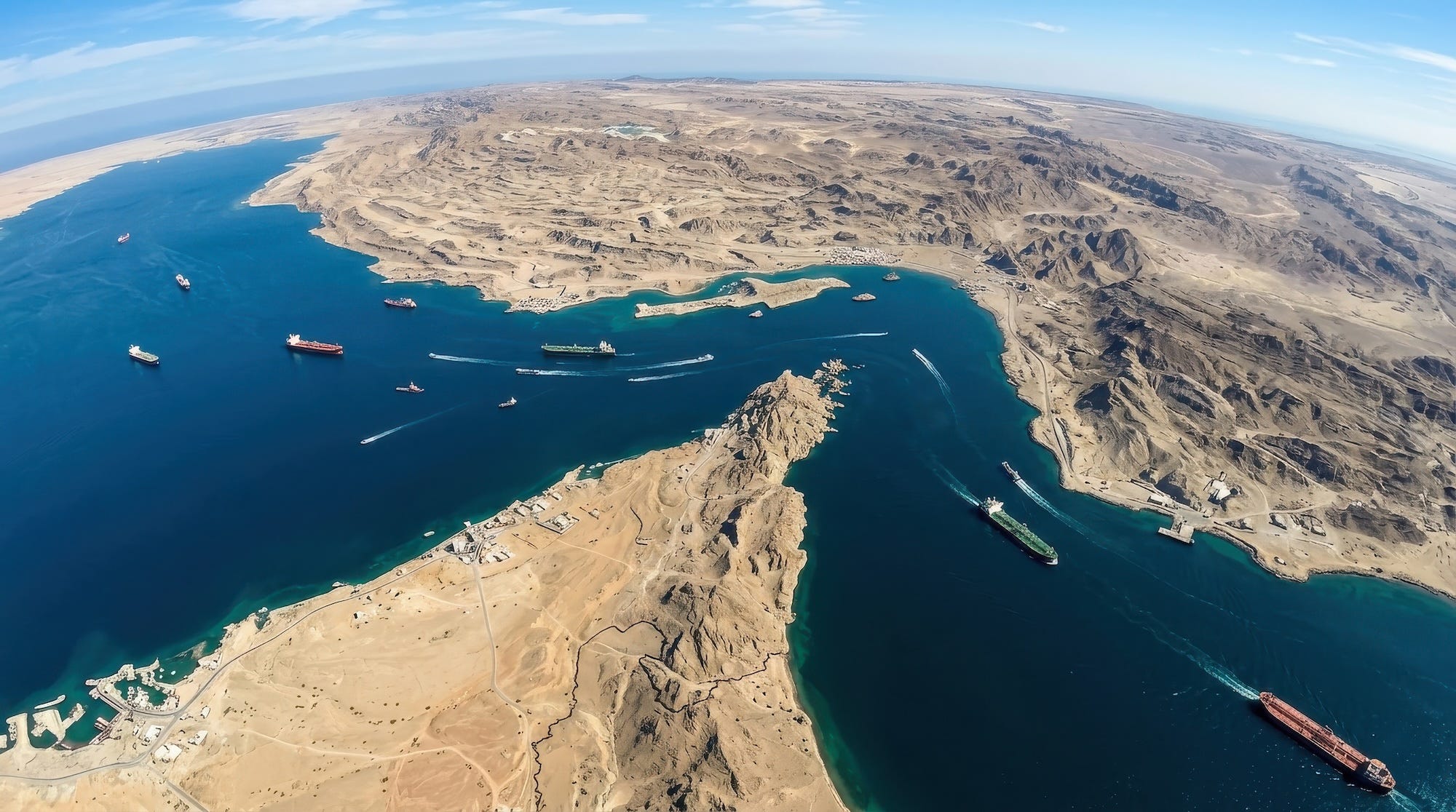
Credibility lost abroad is not abstract. It is not some diplomatic bruise State Department euphemisms and cable-news graphics can powder over. It is visible in the way allies are recalculating, the way markets are flinching, the way even friendly observers now describe American action with terms like flailing and floundering. One analysis makes the point with brutal clarity: whatever military damage was done, Iran may well have emerged politically stronger, with more leverage in the negotiations to come and with the Strait of Hormuz transformed into a source of power rather than vulnerability. Another frames the so-called peace plan not as triumph but as retreat in formalwear, a tactical backdown dressed up as statesmanship for people too lazy or too propagandized to notice the difference.
The fraud collapses even faster when events keep refusing to stick to the script. The administration announces order; the region produces fresh disorder. Trump hails a ceasefire and then casually shrugs that Lebanon was a “separate skirmish,” adding, “Yeah, they [Lebanon] were not included in the deal.” Hegseth puffs himself up and insists Iran “begged” for the ceasefire, while the live reporting immediately veers in the other direction: the Strait of Hormuz is thrown back into chaos, ships are warned they will be “targeted and destroyed,” and the death toll in Lebanon climbs as attacks continue.
The kakistocracy can no longer stage-manage. The White House sprays cologne over the carcass and calls it diplomacy, but the smell keeps getting through. Even the language coming out of the coverage reads like a dark farce written by people who have finally given up pretending: one U.S. official says “the document being reported by media outlets is not the working framework,” while another commentary cuts through the euphemisms and calls the whole thing what it looks like, “defeat reframed as diplomacy.” Or, even more brutally, “the language of peace is being used, but the substance is that what has happened looks like a retreat. And in fact, it is a retreat.”
Even the supposedly triumphant imagery keeps curdling on contact with reality. One analyst notes that if Hegseth were right that Iran was “on their knees and begging for this ceasefire,” there would be obvious proof of it: “why haven’t they handed over the uranium?” Instead, the visible result is a ceasefire already fraying, Lebanon excluded, the waterway still in doubt, and foreign observers openly concluding that “US credibility has now been damaged probably beyond repair.” That is the kakistrophe, (I know it is not a word but it should be), that follows the kakistocracy, the inevitable chain reaction that occurs when fools are handed matches and told they are master engineers of history.
Even more dangerous, the incompetence is not incidental. It is not a few regrettable staffing choices or the ordinary sloppiness of an overmatched administration. It is both structural and philosophical. Trump did not accidentally surround himself with mediocrities, hacks, fanatics, and steroidal mannequins of authority. He chose them because they mirror him. They flatter his shallow understanding of power as domination, noise, and humiliation. This is rule by people who do not know what they are talking about and do not know that they do not know. Somebody’s meme about “President Dunning” and “Captain Krueger” lands because it captures a whole governing worldview in one stupid, glorious flash. They are not merely wrong. They are aggressively, studiously, theatrically, almost erotically wrong. They strut into the room wearing confidence like costume jewelry and expect everyone else to mistake it for competence.
Trump’s talk about returning Iran “to the Stone Age” is not simply barbaric rhetoric, though it is certainly that. It is also an inadvertent confession of civilizational illiteracy, the boast of a man so historically vacant that he imagines annihilation as sophistication and destruction as proof of greatness. To be clear, this is not a defense of the Iranian regime, which does a perfectly adequate job of indicting itself. But there is an old axiom about knowing thy enemy. Iran, historically Persia, was shaping organized civilization long before the United States existed “in any meaningful form.” Under Cyrus the Great in the sixth century BCE, Persia built one of the largest empires the world had yet seen, developing systems of governance, taxation, infrastructure, and communication that would influence later empires. The Cyrus Cylinder is still remembered for its association with religious tolerance and the protection of communities, concepts standing in direct opposition to Trump’s language of obliteration.
Persia’s contribution was not merely imperial but intellectual. The “lifeblood” of Islamic civilization flowed through Persian cities such as Nishapur, Rayy, Balkh, Tus, and Isfahan, which became engines of scholarship, medicine, poetry, mathematics, and philosophy. It was in that wider Persianate world that knowledge from Greek, Persian, and Indian traditions was translated, studied, criticized, and expanded, helping lay foundations later absorbed into the European Renaissance. This was the world of al-Khwarizmi, whose work gave us algebra and the word “algorithm,” and of Ibn Sina, whose medical writings shaped learning in Europe for centuries.
The real obscenity of Trump’s phrase is that Persia was producing systems of governance, philosophy, medicine, mathematics, and urban civilization while the ancestors of his movement were still centuries away from inventing the strip mall. He cannot understand what Iran is because he does not understand what history is. To him, the Middle East is not a complex civilizational space shaped by empires, religions, trade routes, scholarship, and long memory. It is a property dispute with oil under it. He approaches the region the way a drunk landlord approaches an apartment building: threaten everybody, break what you do not understand, and then demand applause for being tough. In that sense, “returning Iran to the stone age” is not a statement about Iran at all. It is a window into the intellectual emptiness of the man saying it.
Therefore reality can no longer be stage-managed. Stage management depends on a minimum level of coherence. It requires people capable of reading a room, anticipating consequences, maintaining the illusion from one scene to the next. Trumpism used to get by on brute-force spectacle because there were still enough buffers in the system to keep the set from collapsing mid-performance. There were still people to move the scenery, fix the lights, and sweep away the broken props before the audience got a good look. Those buffers are gone now, burned through by corruption, loyalty tests, anti-intellectualism, and the promotion of every slick-haired dunce willing to call arson a peace plan. Pyromaniacs has replaced the stagehands. The curtain rises and the audience can see the plywood, the wires, the smoke machine sputtering in the corner, and Pete Hegseth in a costume that looks like it was stolen from a Halloween Spirit pop-up for divorced dads.
The most humiliating part for a country long accustomed to projecting invincibility is the world has noticed. Foreign observers are no longer reacting with awe, fear, or even disciplined diplomatic caution. Increasingly, they are reacting with a kind of incredulous clarity. Strategic failure presented as decisive action. They can see that America is now being fronted by a traveling pageant of ignorance, where every statement designed to project certainty instead reveals a fresh layer of confusion. The empire is not naked in some noble, tragic way. It is naked in the worst possible way: loud, orange, and insisting everything is going swimmingly.
Trump has survived for as long as he has because his support structures were grotesquely durable: the cultic base, the propaganda machine, the party of cowards, and the whole diseased ecosystem of moral surrender that insists every humiliation is actually genius in disguise. But even those structures have limits, because facts on the ground have a way of eventually kicking down the door. You can keep telling people that chaos is order, that retreat is triumph, that bombing is peace, that corruption is authenticity, that senility is virility, and that every setback is a brilliant game of multidimensional chess. Eventually, the contradictions pile so high that even the most devoted liar can no longer see over them. That is the moment we are entering now.
Amongst all the commentary I’ve read, there is a shared mood of dread rather than celebration. None of them sound relieved. None read like victory laps. They understand that when reality finally catches up to an authoritarian fraud, the result is not neat accountability with a cello soundtrack. It is panic, improvisation, scapegoating, overreach, and fresh danger. A regime built on illusion does not gently concede when the illusion fails. It thrashes and gets louder, crueler, more absurd, and more reckless. The same ignorance that produced the crisis becomes the reason it spirals. That is the deeper horror now confronting both Americans and the world beyond us: not simply that our credibility has been squandered, but that it has been squandered by people too stupid to understand what credibility was for in the first place.
The stagecraft is failing because the actors have become too incompetent to memorize their lines, too arrogant to notice the audience laughing, and too delusional to admit the set is on fire. The mythology cannot survive contact with the body count, the market panic, the diplomatic contradictions, the historical illiteracy, and the sheer comic-book stupidity of men who think looking fierce is the same thing as being fit to govern. The world sees it, and more Americans are beginning to see it. Once reality breaks through that thoroughly, no amount of flag-draped bombast can fully stuff it back behind the curtain again.
This piece is totally brilliant Mary. Thank you. The stand out phrases which should be (with your permission) written on many protest signs.. ' a travelling pageant of ignorance'...superb. 😅
And ' the steroidal mannequins of authority'.. brilliant. 👍
Need a distraction? Start a war. Oops, that didn't go too well. Look out Cuba.