


On the morning of April 5, 1977, Judy Heumann asked her personal assistant to put a toothbrush and an extra pair of underwear in her bag. She was going to a rally outside a federal building in San Francisco, and she thought she might be gone for a few days. I love knowing what she packed. History has had nearly fifty years to give that morning the weight it deserves, and there she is at the beginning of it, thinking she might want to brush her teeth.
When Judy was five, her mother had taken her to enroll in kindergarten. The principal called her a fire hazard because she used a wheelchair. Her mother kept at it, and Judy finally got to attend school in fourth grade. Years later, when she wanted to teach, New York City denied her a license on much the same grounds. She sued and got her license. By the time she stood outside that federal building, she knew how easily an official could tell a person she had to stay outside and go home satisfied that he had done his job.
Congress had passed Section 504 of the Rehabilitation Act four years earlier, barring disability discrimination in programs that received federal funding. The government still hadn’t issued the rules that would tell schools, hospitals, and other institutions what they actually had to do. Kitty Cone, one of the protest organizers, recalled a court case in which a bus driver stopping and opening the doors was deemed enough to give a wheelchair user equal treatment. The passenger still had no way up the steps. The bus could pull away, the person could be left at the curb, and everyone with the power to change it could say the procedure had been followed.
When the rally ended, Judy asked people to follow her inside. They went up to the fourth floor, and when it came time to go home, they stayed. Some needed help transferring out of their wheelchairs. Others needed somebody to turn them during the night to prevent bedsores. Kitty rigged a cardboard box to an air conditioner to keep medication cold. When officials cut off phone access in the offices, Deaf protesters signed through a window to people outside. The government could afford to wait another day. The people on the fourth floor had to figure out how to get each other through the night.
Brad Lomax was one of the people who stayed. He had multiple sclerosis, used a wheelchair, and belonged to the Black Panther Party. He helped bring the Panthers in, and they delivered a hot meal every day. A lesbian cooperative and a church helped keep people supplied. When a delegation went to Washington to press its case, the machinists’ union helped pay for the trip. They couldn’t find transportation that would take the wheelchair users, so the union rented a box truck. People rode through the nation’s capital in the dark in the back of that truck to ask their government to make it possible to ride the bus.
My mom wrote about revoking our consent through the story of the GIs who passed underground newspapers among themselves during the Vietnam War. Imagine reading, in words some other soldier had put down on paper, the thing you’d been afraid to say out loud. Now imagine turning to the person in the next bunk and handing it to them. The passage from one pair of hands to another is the part I keep thinking about. In San Francisco, the protesters could decide to stay because other people kept making it possible for them to stay. A meal arriving at the building gave them another evening together. A message signed through a window reached somebody who could carry it into the street. Every time somebody answered, the circle of people the government had to contend with grew a little wider.
On April 28, the secretary of Health, Education, and Welfare signed the regulations. The San Francisco protesters left after twenty-six days. The rules they fought for helped lay the groundwork for the Americans with Disabilities Act. And today, when a parent sits across from a principal and asks what the school will do so their child can take part, Section 504 gives that parent something Judy’s mother didn’t have. I wonder how far ahead Judy’s mother could see when she took her little girl to enroll. I suspect she was thinking about kindergarten. Her daughter grew up to help change what a mother she would never meet could ask for in that same room.
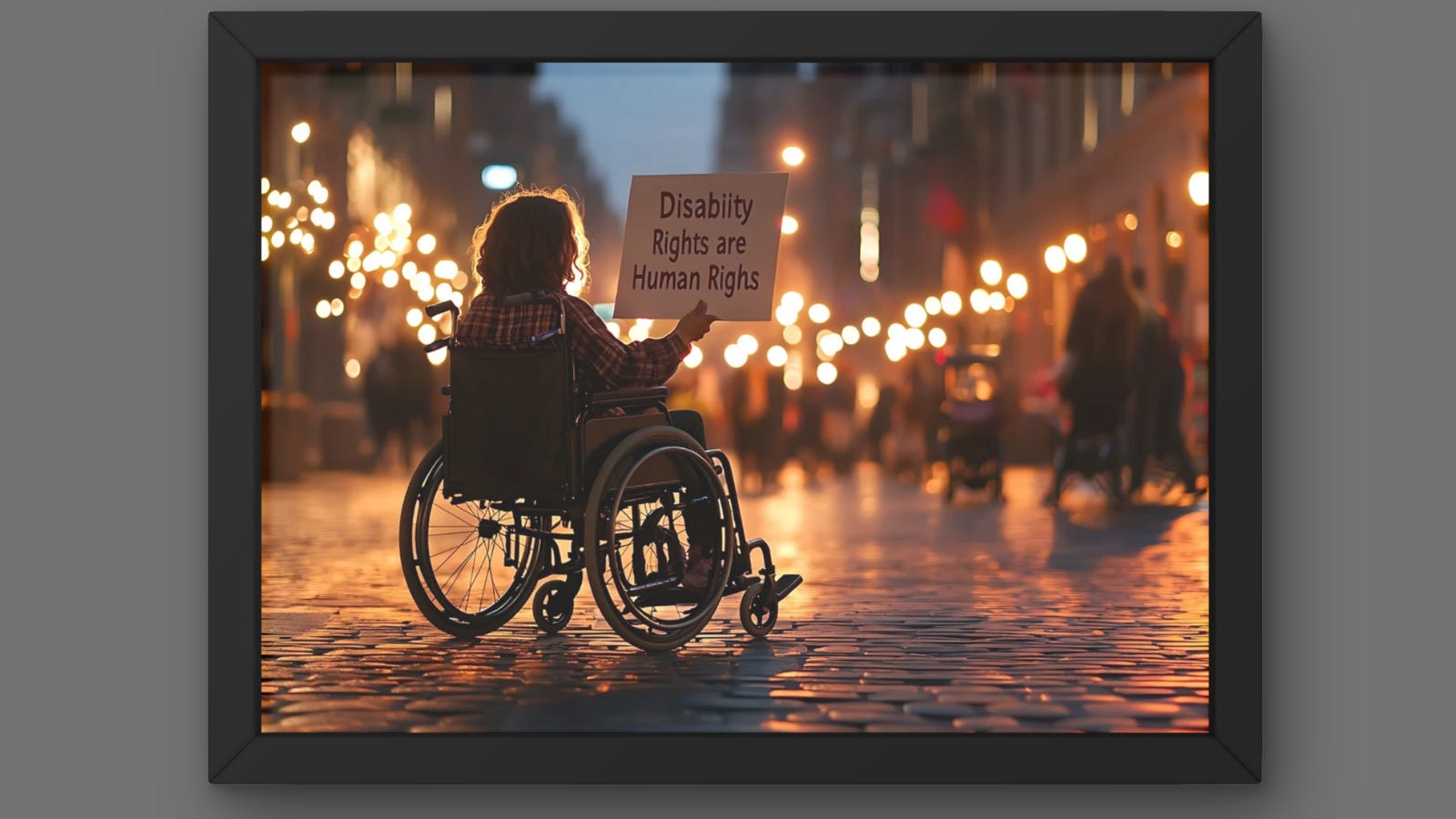
There are people doing this work right now. In El Paso this week, students gathered on their high school’s marble steps for their classmate Michell Germán. She and her eleven-year-old sister had been on their way to school with their father when immigration officers detained them. Their mother was detained too. The students helped organize the rally, the family’s lawyer spoke there, and elected officials pressed for their release. Late Friday, after nearly a month in detention, the family came home. They still face the possibility of deportation. And they got to come home to a city where their daughter’s classmates had used the place they still got to go every morning to say she belonged there with them.
The students couldn’t know, when they started planning that rally, whether Michell would come home. They went ahead anyway. And anyone who’d been hearing about the family and wondering what on earth they could do suddenly had somewhere to go. They could walk up those steps. That’s how I think courage becomes hope. Somebody acts while the outcome is still in doubt, and because they do, another person can see a way to help change it. The people who stayed on the fourth floor gave others a reason to come with dinner. Dinner gave the people inside a reason to believe they could stay another night. Hope went both ways through that door.
Somewhere there’s a child having a thoroughly unremarkable Tuesday at school because people she’ll never meet fought for her right to be there. Maybe she’s bored in math. Maybe the best thing that happens all day is that her friend saves her a seat at lunch. I love that she gets to care more about who she sits with than about how she got into the building. Nearly fifty years ago, somebody on the fourth floor of a federal building rolled over in the middle of the night because another person was there to help. They were trying to get through to morning, and look how many mornings they helped give away.
Now some of those mornings are ours to give. Hope asks us to have the courage to stand up for what’s right before we know whether we’ll win. The students in El Paso did it on their school steps. The disabled protesters in San Francisco did it every night they stayed. We’ll have to do it where we live, sometimes in front of people whose good opinion we’d rather keep. Maybe that means asking out loud the question everybody else was saving for the parking lot. Maybe it means putting our name beside somebody’s and coming back when it’s time for a decision, so they know we meant it.
The person who hears us might have walked into that room certain they were alone. The next time, they might be the one who speaks first. We collectively need to become the first ripple in a wave of strength, and every person our ripple reaches gets to add something of their own. We’ve inherited the good that people before us were brave enough to fight for, and we live among people who are still doing it. Sometimes our place is beside them. Sometimes we have to be the first to move.
I hope those two girls in El Paso get a thousand school mornings so ordinary they forget most of them. I hope their dad gets to call from the car that they’re going to be late, and one of them has to run back inside for something she forgot, and that’s the only thing that goes wrong all day. I want us to fight for that morning with the same conviction we’d bring to a fight for our own children. Because somewhere down the years, if we do this well, a girl will run back into her house for a forgotten lunch and never have to know how many strangers loved her enough to make that ordinary morning possible.
Thank you for your inspiring and hopeful reminder of how even one can start a tsunami of change.