


The human species has a tendency to take a finite thing and rename it a resource, a resource is then renamed productivity, productivity is renamed abundance, and by the time anyone asks who is paying the bill, the bill has already been lowered hundreds of feet beneath the prairie.
The Ogallala Aquifer is not an underground lake waiting patiently beneath the Great Plains, no matter how often we imagine groundwater as some hidden reservoir with a shoreline and a bottom we could see if only the earth were glass. It is water held in the pore spaces of sand, gravel, silt, and clay, stored inside the High Plains aquifer system beneath parts of eight states, where geology has been doing its slow work for thousands of years while we built an economy that behaves as if ancient water were a yearly crop.
That is the first dishonesty we have to confront, because the Ogallala is not disappearing because people drink too much tap water or forget to turn off the faucet while brushing their teeth. It is being depleted because industrial-scale irrigation has been withdrawing groundwater faster than precipitation, soil infiltration, and deep percolation can replace it, especially in the central and southern High Plains where recharge is low and much of the stored water functions as fossil groundwater on human timescales.
The polite term is irrigated agriculture, but in the hardest-hit areas the more accurate hydrologic term is groundwater mining, because the system is not living off interest anymore; it is spending principal, liquidating a water inheritance that accumulated under different climatic conditions and calling the liquidation efficiency.
Scientific American has reported that if the Ogallala were drained, natural processes would take roughly 6,000 years to refill it, which means we are not using water on anything resembling an agricultural or political timeline. In parts of the High Plains, annual recharge is measured not in feet but in fractions of an inch, while pumping for irrigation can remove several feet of groundwater in a single year. That imbalance is the whole story: a civilization built on quarterly markets and annual crop reports has been making withdrawals from a reserve that answers to geologic time.
Since large-scale pumping expanded around the middle of the twentieth century, wells have pulled the aquifer downward through drawdown, reduced saturated thickness, and altered hydraulic gradients across parts of the region. Those terms sound technical because they are, but they describe something very plain: there is less water-bearing material left beneath many farms, pumps must work harder to lift what remains, and the margin between a functioning well and a dry one keeps narrowing.
This is where overproduction enters the story, not as a moral failure of individual farmers, but as a structural demand imposed by a commodity system that rewards volume, punishes restraint, and treats ecological limits as accounting problems to be postponed. Farmers did not invent this machine by themselves, and many of them are trapped inside it by debt, land values, crop insurance rules, equipment costs, water rights, ethanol mandates, export markets, feedlot demand, and the brutal arithmetic of trying to keep a family operation alive while the market keeps asking for more.
Still, the aquifer doesn’t care about our explanations, because hydrology has no lobbyist and groundwater storage doesn’t negotiate with commodity prices. If withdrawals exceed recharge, the water table falls, and if the water table falls far enough, wells weaken, pumping costs rise, yields become less reliable, and the agricultural economy built around cheap groundwater begins to cannibalize the very foundation that made it possible.
We should be honest about what a great deal of this water is doing, because not every gallon pumped from the Ogallala becomes food on someone’s plate. Across the broader American food system, enormous volumes of grain become livestock feed, ethanol, industrial inputs, and export commodities, while a staggering share of the food we produce is never eaten at all. In that context, calling every acre-foot of groundwater extraction a sacred act of feeding the world becomes less like truth and more like branding.
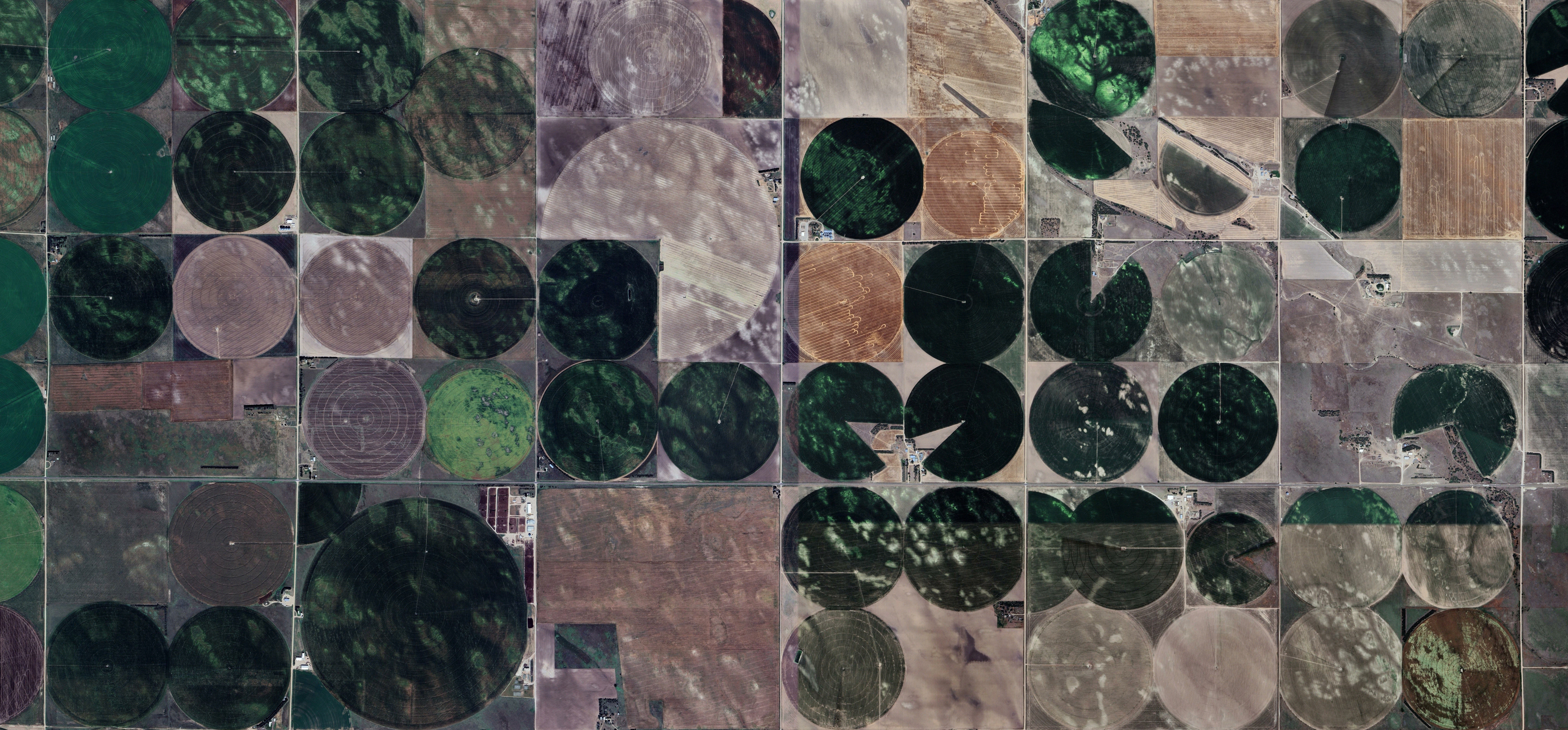
The tragedy is not that the High Plains became productive, because productivity itself is not the crime. The tragedy is that productivity was severed from reciprocity, scale was mistaken for wisdom, and a region was encouraged to behave as if the highest use of ancient groundwater was to convert it into short-term yield, cheap calories, feedlot throughput, fuel additives, and quarterly economic activity.
When the water goes, the damage will not arrive as a single cinematic collapse, because aquifers rarely make good disaster movies. It will come unevenly, county by county and well by well, as some producers shift to dryland crops, some sell land, and some watch the farm that carried their family history become impossible to operate under the climate and water conditions that remain.
The land will change first in ways outsiders may not recognize as emergency, because a field without irrigation is not automatically dead, but it becomes more vulnerable to heat, drought, wind erosion, and yield volatility. Dryland farming can be skilled, resilient, and honorable, but it can’t simply replace every irrigated acre at the same output without consequences for income, soil cover, crop choice, local processing, and the web of rural life that grew around the assumption that the pumps would keep running.
Communities will feel the decline through budgets, schools, hospitals, and municipal water systems, because groundwater depletion is never only an environmental issue once a town has organized its economy around it. A falling aquifer can mean deeper wells, more expensive treatment, harder planning, lower tax bases, declining land values, fewer young families, and the quiet civic grief of places being told to adapt after the profitable years have already been extracted by forces much larger than them.
Farmers will be blamed, as they always are when the country wants food cheap, land productive, risk privatized, and consequences localized. That blame is too easy, and it lets the rest of us avoid looking at the policy architecture that told farmers to produce more, borrow more, irrigate more, mechanize more, consolidate more, and then somehow become sustainable without changing the market signals that made depletion rational in the first place.
There are ecological consequences too, because groundwater is not separate from the living surface just because we can’t see it. Aquifer depletion can reduce baseflow to streams, stress wetlands, alter playa recharge dynamics, concentrate contaminants such as salts or nitrates in vulnerable areas, and weaken the hydrologic buffers that help landscapes survive drought. A depleted aquifer is not merely an empty account; it is a damaged relationship between climate, soil, water, plants, animals, and people.
This is why the Ogallala crisis should be understood as a warning about the entire logic of extraction. We have built systems that celebrate production without asking whether production is necessary, whether it is equitable, whether it is wasteful, or whether it is stealing from the future under the respectable language of growth. We have confused abundance with oversupply, efficiency with intensity, and food security with a commodity pipeline that can drain ancient water while still leaving people hungry.
The solutions are not mysterious, although they are politically difficult because they require somebody powerful to accept limits. Deficit irrigation, soil health practices, playa restoration, managed aquifer recharge, regional groundwater governance, payments for conservation, and transition support for farmers are all more honest than pretending that a finite aquifer can be saved by branding. The science is clear enough to act; the question is whether policy can become brave enough to stop rewarding the behavior it claims to regret.
If sustainability means anything, it has to mean that we stop treating future generations as silent creditors who can be forced to accept whatever depleted world we leave behind. It has to mean that water is not just an input, not just a commodity, not just a line item in an agricultural budget, and not just something to be priced after it has already been overdrawn.
The Ogallala is asking a question we can’t evade forever: whether we are willing to grow less of what we don’t need, waste less of what we already produce, support the people asked to change, and finally admit that a civilization can’t call itself successful while it drains its oldest water to maintain the illusion of endless plenty.
I would have thought that anyone looking at a globe would be realize that the earth was finite, as are its resources when they are used beyond the capacity for renewal. In the late 1970s, farm groups in Iowa and other Midwest states were extremely concerned, and quite vocal, about the Ogallala aquifer because it was down 1-2% and it would take an estimated 100 years to replenish it.
Imagine my shock when in the late 1980s, I was on a long bicycle trip through Nebraska and saw that farmers were now irrigating corn. In just 10 years, farmers had gone from alarm over depleting the aquifer to extracting even more water from it than ever, and unnecessarily so: my grandfather, who farmed in NE South Dakota, strategically planted corn because, among other things, it didn't need much water beyond the humidity in the air.
And now the aquifer's status is exponentially worse. The results of this unsustainable extraction is heart-breaking. Many farmers have lost their farms and livelihoods because they no longer had water, a heart-breaking result of failing to be good stewards of the earth. Unfortunately, the lack of sustainability is not limited to this aquifer, and the consequences to all life on this planet will be dire.
This is brilliant. Incredibly well written and researched. It deserves a much wider audience.