


Karoline Leavitt didn’t open the White House press briefing by acknowledging that a woman was dead. She didn’t open by noting that video existed, or that investigators were still reviewing evidence, or even by offering the boilerplate “this is a tragic situation.” She opened by telling the country that a “larger sinister left-wing movement” is underway, one that is, in her telling, organizing attacks on federal law enforcement.
By the time JD Vance stepped to the podium, the frame was already locked in place: this wasn’t a killing to be examined, it was an attack to be avenged; not a disputed incident, but a battle in an ideological war. Facts would be permitted only insofar as they served that story.
Vance wasted no time reinforcing it. He described the shooting as “an attack on federal law enforcement,” repeated the administration’s insistence that Renee Good “was trying to ram this guy with her car,” and declared, flatly, “He shot back. He defended himself.” Anyone describing Good as a victim, he said, should be “ashamed of yourselves.” The media, he added, had become “agents of propaganda of a radical fringe.”
This was a verdict, delivered loudly, repeatedly, and with theatrical indignation, paired with a demand that journalists stop “prejudging” the case. Vance insisted that “what you see is what you get,” while rejecting frame-by-frame video analysis showing the ICE agent stepping out of the vehicle’s path and firing at least two shots from the side as the SUV passed. Evidence was only valid if it aligned with the administration’s conclusion. Anything else was framed as incitement.
And then came the excuse that should have stopped the room cold. To explain the agent’s actions, Vance emphasized that the officer had previously been hit by a car, suffering serious injuries and “over 30 stitches.” The implication was clear: this was a man uniquely sensitive to vehicular threats, acting under the shadow of past trauma.
That argument doesn’t exonerate the shooter, it indicts the system that put him there. If an officer is so traumatized by prior incidents that a moving vehicle triggers a lethal response, then DHS has an obligation not to place that officer in a volatile, door-to-door enforcement operation on a residential street, particularly one involving unmarked agents, rapid escalation, and civilians in close quarters. Trauma is not a license to kill; it is a good reason for reassignment.
Vance used that trauma as retroactive justification, while ignoring the most obvious fact visible on video: the agent placed himself in front of the vehicle. Self-defense doctrine does not cover self-manufactured danger. You don’t get to step into harm’s way, escalate the encounter, and then claim lethal force was inevitable because you felt afraid. Regrettably, fear is doing a lot of work in this administration’s rhetoric. It’s the emotional solvent they use to dissolve accountability.
From there, the briefing spiraled outward into something even more revealing. Vance alleged, without evidence, that Good was part of a “broader left-wing network” dedicated to obstructing ICE, suggested unnamed funders and organizers were behind her presence, and promised an investigation into who “paid for the brick” and who “told protesters to show up and engage in violent activity.”
This is how civilians are posthumously converted into conspirators. First you declare a sinister movement, and you slot the dead into it. Finally, you announce an investigation whose purpose is not to discover what happened, but to justify what already has.
Throughout, the media remained the real target. Vance accused reporters of “lying,” of “covering for violence,” of putting officers’ lives at risk by describing the incident as the killing of a U.S. citizen. At one point, he snapped, “You people in the media… have been lying about this attack.” The word attack did all the work. Once uttered, it erased the need for proof.
Committing journalism is an act of terrorism. That framing doesn’t exist in a vacuum. It mirrors the administration’s broader posture toward accountability, a posture we’ve already seen play out in its handling of the Epstein files. When confronted with overwhelming public demand for transparency around a documented child sex trafficking network that implicated powerful people, the response was not disclosure, but delay; instead of reckoning, we are burdened with obfuscation, and a sustained effort to discredit journalists, whistleblowers, survivors and anyone insisting the records be released.
An administration willing to bury evidence to protect institutions and elites from the consequences of child sexual abuse will not hesitate to malign a dead woman to protect a federal enforcement apparatus. Once you’ve decided that exposure itself is the threat, the specific crime becomes irrelevant. Sexual exploitation, corruption, even killing a civilian. The reflex is always the same: deny, delegitimize, attack the press, and close ranks.
Leavitt’s “sinister plan” language at the top of the briefing wasn’t just rhetoric. It was narrative inoculation. By declaring an enemy before the facts are discussed, the administration ensures that any contradiction becomes proof of the conspiracy. Disagreement confirms guilt. Evidence becomes propaganda.
Vance closed by insisting that the agent “had every reason to think that he was under very serious threat,” that the shooting was “obvious,” and that the idea it was unjustified was “absurd.” The investigation, we were told, is ongoing, just not in any way that might change the conclusion already delivered from the podium.
In an administration already working overtime to suppress records of elite abuse, dismiss video evidence, and redefine scrutiny as sabotage, moving from cover-up to character assassination to lethal force is not a leap. The only thing that’s escalating is how openly they’re daring the public to look anyway.
Before closing, I need to correct the record. In the chaotic first hours after Renee Nicole Macklin Good was killed by an ICE agent in Minneapolis, an image circulated widely online wrongly purporting to be her. I shared it, as did many others.
Early reporting is always subject to change, especially when authorities withhold information, misdirect the press, or rush out a narrative before facts are settled. That doesn’t absolve those of us chronicling events in real time of responsibility. Accuracy still matters, especially when the subject is a woman who can no longer speak for herself.
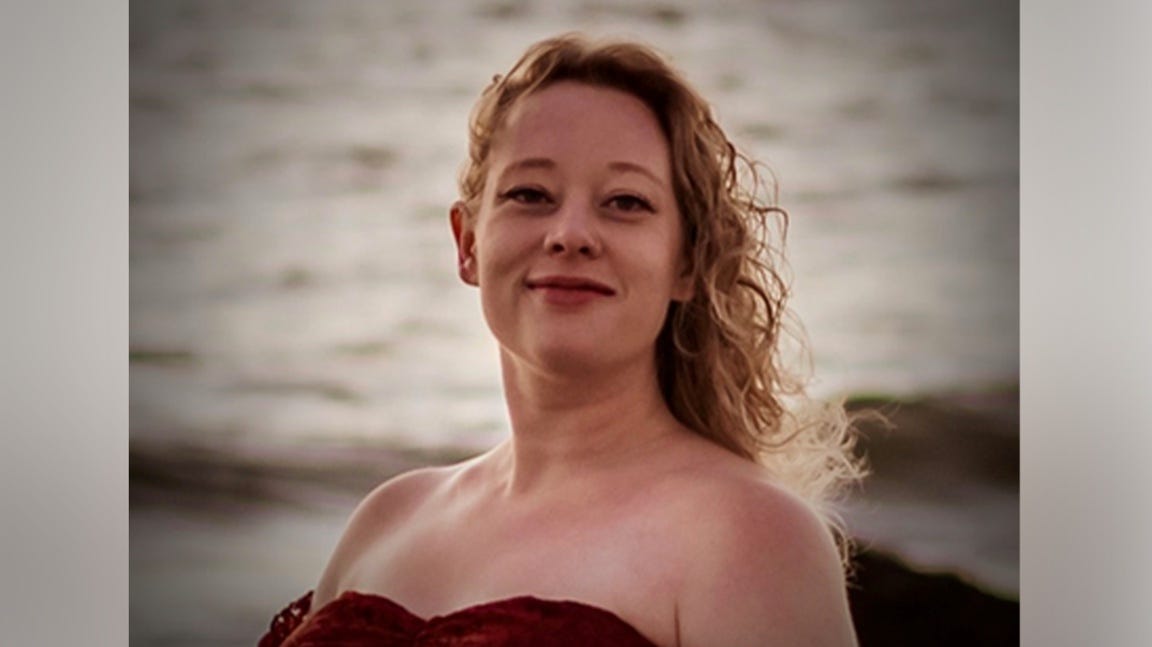
Here is a true and correct image of Renee Nicole Macklin Good, as confirmed by reputable reporting. This is the woman whose life was taken. This is the person whose name was dragged through a White House press briefing and recast as a threat, a conspirator, a “deranged leftist,” and an enemy of the state.
She deserved better in life. She deserves accuracy in death.
May she rest in peace.
That’s a terrific piece, Mary. Thank you for exposing the disgusting framing of this incident by the very top of the US government.
Simply, these people are scum.