


America has reached that particular late stage of political absurdity where the question is no longer whether we can slow the planet’s fever, but whether a city is even allowed to ask the people who sold the matchsticks to help pay for the fire department.
On February 23, 2026, the Supreme Court agreed to hear a case that sounds like a spreadsheet tab but carries the weight of a policy earthquake: Suncor Energy v. County Commissioners of Boulder County, a dispute rooted in Boulder’s long running effort to hold ExxonMobil and Suncor financially responsible for climate linked harms that, in practice, show up as budget line items, infrastructure strain, public health costs, and the increasingly familiar sensation of living inside a weather system that has stopped playing by the old rules.
Boulder and other plaintiffs have been pushing a simple story, even if the legal language is ornate: the fossil fuel business was not merely extracting and selling, it was also shaping public understanding, managing perceptions, and allegedly downplaying what it knew about the consequences of its products, and now communities are being asked to adapt on their own dime, as if “externality” were a synonym for “someone else’s problem forever.”
The companies’ reply is, in its own way, elegantly cynical: climate change is too big to be handled by a county courthouse, too global to be sorted out by state tort law, too entangled with interstate and international emissions to be adjudicated through the ordinary machinery of nuisance and consumer protection claims, and therefore, they argue, it belongs in the federal domain, where statutes like the Clean Air Act and constitutional structure should preempt a patchwork of state level accountability experiments.
That framing is not just legal theory, it is a power move, because if you can successfully describe the harm as global, then the plaintiffs’ forum becomes illegitimate by definition, and if the plaintiffs’ forum becomes illegitimate, then the case never reaches the stage where it can do the thing these lawsuits often do best: force disclosure.
This is the underrated engine inside climate litigation, the part that makes corporate America nervous in a way that a press release never will; discovery, with its subpoenas and depositions and internal documents, is not a moral victory in itself, but it is often the bridge between “everyone suspects” and “everyone can see,” and once a lawsuit survives long enough to demand receipts, the pressure shifts from abstract debate to concrete risk.
State attorneys general, and the city and county lawyers who operate in their orbit, sit at the center of this drama, partly because they have become the institutional adults in a country that cannot reliably legislate its way out of large problems, and partly because they are staring at costs that do not politely wait for electoral cycles; if Washington will not produce a stable climate funding architecture, then states and localities will keep trying to build one in the only places that still require someone to answer a complaint, which is to say the courts.
If the Supreme Court sides with the companies in a broad way, the likely outcome is not the end of all accountability attempts, but a forced pivot toward narrower theories, more carefully framed claims, and a kind of legal choreography designed to avoid anything that looks like a state trying to regulate global emissions through tort damages; the most durable lane in that world tends to be deception, consumer protection, and misrepresentation based claims, because they focus less on the atmospheric chemistry and more on what was said, what was known, what was marketed, and what was concealed.
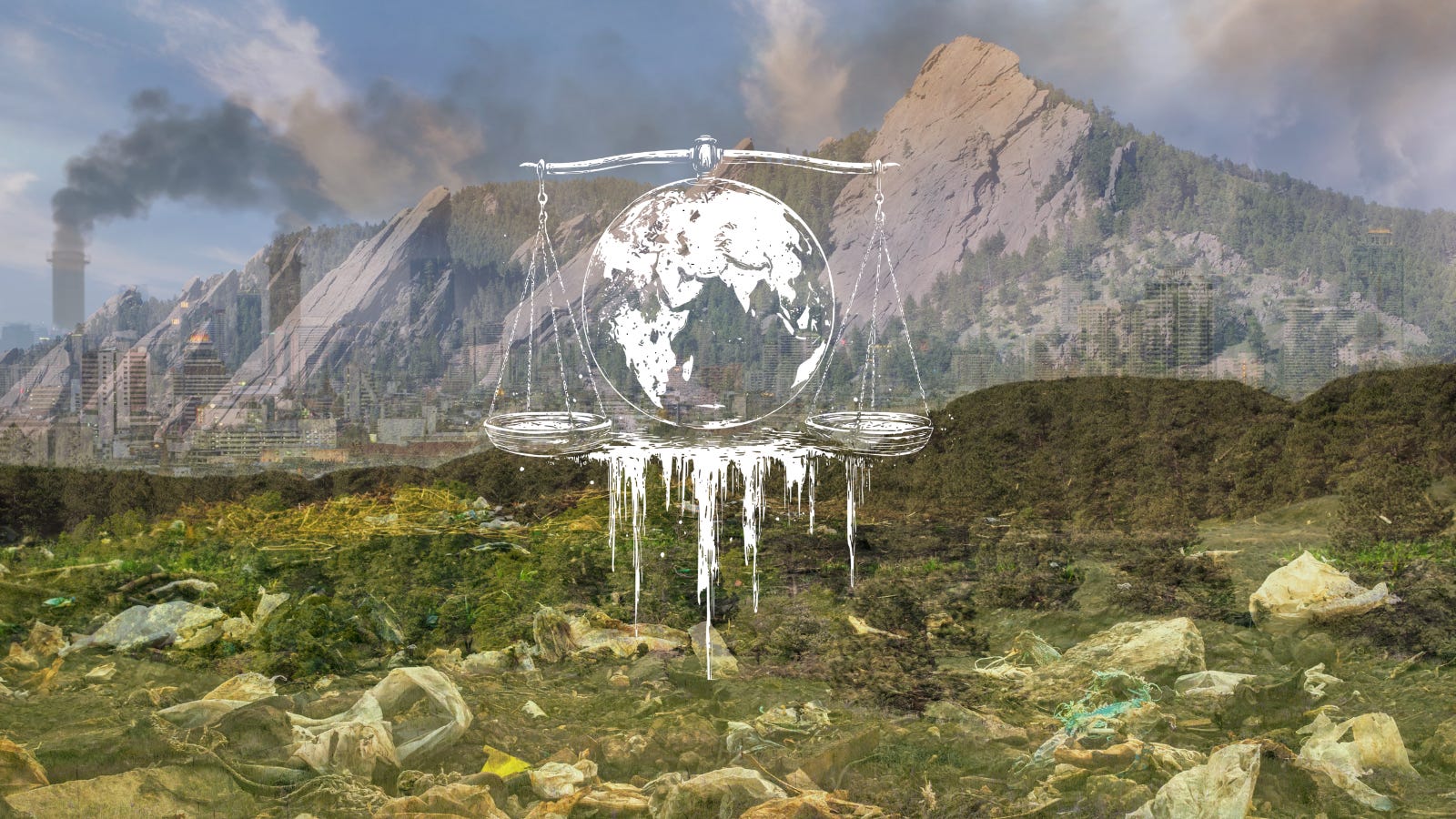
If the Court sides with Boulder, or even simply draws a permissive boundary around this style of lawsuit, then attorneys general and local governments get something they have been chasing for years: validation that state courts can be a legitimate arena for assigning climate costs, and once that legitimacy is affirmed, the number of suits, and the sophistication of the strategies behind them, tends to expand quickly, because the incentives are obvious and the political rewards can be substantial.
There is also an important, and slightly bleak, twist embedded in the posture of the case, because the Supreme Court signaled that it may also wrestle with whether it can take the case at this stage, which means the justices could choose a procedural off ramp, limiting the decision to questions of timing and jurisdiction, and leaving the substantive fight to continue in lower courts a while longer; even that kind of punt would still matter, because uncertainty is its own policy instrument, it slows momentum, it changes settlement calculations, it encourages defendants to keep fighting, and it tells everyone else to wait.
The deeper question, the one rooted in deep existential annoyance, is not merely what doctrine applies, but what this moment says about the American system when confronted with a crisis that demands consistency; we have built an economy that ran on fossil fuels, we have evidence that major players understood the risks long before the public did, and we now live in an era where towns are improvising adaptation plans as their tax base and emergency services get stretched thinner, yet we are still litigating whether it is appropriate to ask the profiteers to share the bill.
And yes, it is impossible to tell this story honestly without acknowledging fossil fuel money, not only the campaign checks and the lobbying, but the long, patient effort to make climate action feel optional, to turn public safety into culture war theater, to frame accountability as persecution, and to suggest that any attempt to allocate responsibility is somehow an attack on modern life rather than a defense of it; the point is not that corporations should be punished for existing, the point is that the costs should not keep landing on everyone else as though gravity were a partisan opinion.
The Supreme Court’s eventual ruling could narrow these cases by declaring the core claims federally preempted, it could split the baby by distinguishing between emissions regulation by lawsuit and deception based misconduct claims, or it could dodge on procedure and delay a clear national rule; whichever path it chooses, the premise of the fight will remain, and it will remain ridiculous, because we should not be in a place where communities must beg for permission to seek climate protection from the actors most associated with undermining it.
I moved here from Boulder because the air quality was so bad from oil and gas development that I developed asthma and I need to live in an area with clean air. That and a huge and sudden rent increase when the granddaughter took over managing the condo we lived in for 17 years when our nice long time landlady got too old to manage it any longer. She died a few months later.
I feel like, sometime in the future, we will have that "How did this happen?" moment. And I hope it's not too late.