


Kash Patel would probably like to be seen as a great American patriot, the kind of man who wraps himself in the flag, invokes liberty like a backup singer, and speaks in that permanently aggrieved tone that suggests the only thing under siege in this country is the ability of powerful men to do whatever they want without criticism. Which is why it was such a lovely little civic haiku to watch him confirm, under oath, that “we do purchase commercially available information,” when Senator Ron Wyden asked whether the bureau still purchases Americans’ location data. Nothing says freedom quite like the federal government picking up your movements from the digital equivalent of a fence in an alley and then insisting this is all perfectly constitutional because somebody, somewhere, put a price tag on it.
That phrase, commercially available information, deserves some kind of national award for Bureaucratic Euphemism of the Year. It is so clean, so bloodless, so eager to sound responsible. Commercially available information sounds like a weather report, or maybe the title of a deeply boring conference panel sponsored by Deloitte. What it actually means, in this context, is that your phone, your apps, your ad-tech parasites, and the thousand tiny leeches attached to modern life can vacuum up where you go, where you sleep, where you worship, where you get medical care, where you protest, where you cheat, where you cry in your car, and then pass that information through the miracle of American enterprise until the government can buy it without the inconvenience of looking a judge in the eye. Apparently this is the free market. Apparently James Madison died for programmatic ad placement.
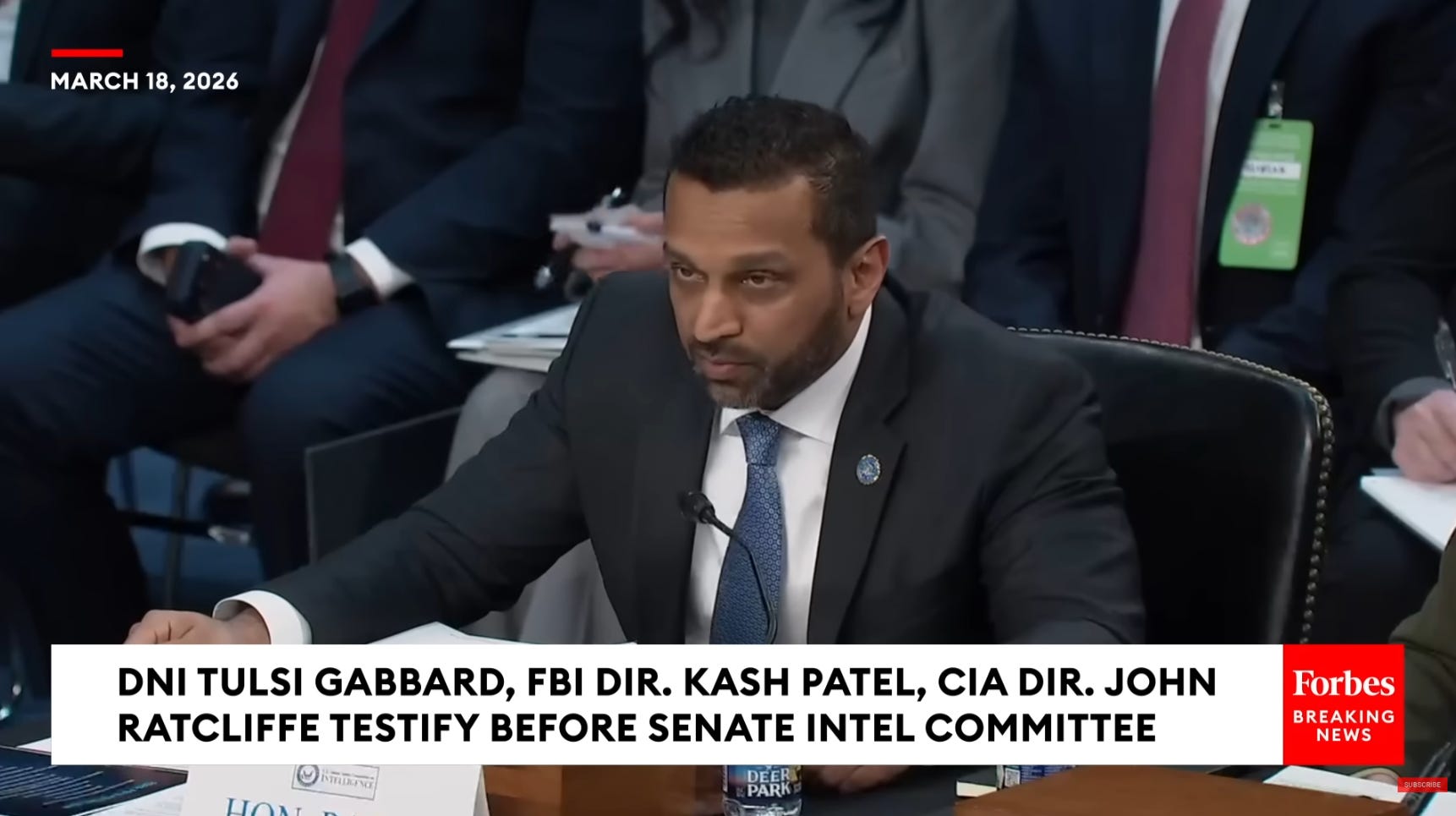
The part that makes the whole thing genuinely grotesque is not just the surveillance, though that would be plenty, it is the hypocrisy. This is the same Kash Patel who helped build a public persona around the idea that the real victims in American politics were the January 6 crowd, the poor persecuted darlings of a supposedly tyrannical state. This is a man who promoted the J6 Prison Choir and referred to January 6 defendants as political prisoners, which was already one of the more nauseating branding exercises of the post-Trump era. The people who smashed their way into the Capitol, beat police officers, and tried to overturn an election were presented as martyrs. That was the sales pitch. Those were the patriots. Those were the people we were supposed to see as casualties of government abuse.
And now here he is, running an FBI that admits it buys the location data of Americans from data brokers and defending it with the kind of legalistic throat clearing that always precedes a direct assault on the spirit of the Constitution. It turns out the people who spent years screaming about federal overreach are perfectly comfortable with federal overreach, as long as they are the ones reaching. This is the same old song from the authoritarian gift shop: when the government does something to them, it is tyranny, but when the government does something to you, it is law and order with a spreadsheet.
The Fourth Amendment, poor battered thing, is apparently now expected to survive by technicality. The Supreme Court has already said there are constitutional limits on the government obtaining certain kinds of location data directly from phone companies without a warrant. But in twenty-first century America, if the same intimate portrait of your life gets hoovered up by private actors first, if it passes through enough apps and brokers and creepy little data laundromats, then suddenly powerful people start talking as if your privacy has been transformed into inventory. They did not seize your personal life, you see, they purchased it, they did not pry, they subscribed. That is not a serious civil-liberties argument, that is Etsy for surveillance.
And you really have to admire, in the bleakest possible sense, the patriotic theater of it all. The movement that has spent years performing reverence for the Constitution now treats one of its core protections like a minor software annoyance. The same political culture that never shuts up about the Founders has apparently decided the Fourth Amendment only counts if the data comes from a place with bad enough branding. If Verizon hands it over, maybe we need a warrant. If some oily broker assembled it from apps that told you they value your privacy while selling your soul in the fine print, then by all means let the bureau go bargain hunting.
This is where the right’s self-mythology collapses into pure farce. We were told, endlessly, that these were the people standing between ordinary Americans and an arrogant, intrusive state. We were told they were the last guardians of liberty, the sentries against politicized law enforcement, the defenders of the little guy against bureaucratic abuse. And yet every single time real state power comes into view, every single time the machinery of surveillance expands, every single time privacy collides with control, the costume falls off. Beneath the patriot cosplay is the same old hunger for power, just dressed in more flags and flatter hair.
So yes, there is something almost poetic about Kash Patel being the face of this. The man who had warm words for January 6 defendants, the man who helped romanticize people who attacked the seat of American government, is now attached to a policy that critics say treats the private lives of millions of Americans as a purchasable commodity. He is not defending liberty. He is exploiting the gap between what the Constitution is supposed to protect and what the surveillance economy has made easy to monetize.
It is the most modern kind of hypocrisy. First they turn patriotism into a marketing slogan. Then they turn privacy into a product. Then they tell you the government has done nothing wrong because it simply went shopping. A republic, if you can keep it, should not come with data broker integration.
Thank you for this reporting, Shanley. A couple of buddies and I are working on a Legacy System which could make it impossible for a third party to access data without user consent. Because consent matters.
Thank you. I enjoyed your post.