


Good morning! This week’s most important political cocktail was shaken up in Detroit, where President Trump gave what he called an economic address at the Detroit Economic Club, and what most people in the audience later described as a sprawling, grievance-laden set of riffs that would have made a cable news host blush.
Trump opened with the usual self-congratulatory boilerplate, “I’ve kept all my promises and much more,” he crowed, and declared victory over inflation and flagging growth, even though official data show a far more nuanced reality. Prices have stabilized somewhat, but inflation has not collapsed to zero or magically disappeared, and many families still feel squeezed at the checkout and at the gas pump. Some of the specific numbers he touted track only in the loosest sense with public data, for example, claims about gasoline averaging $1.99 or mortgage rates dipping below 6% ring hollow when national averages tell another story, and broader cost-of-living pressures remain real for many Americans.
Where Trump truly found his groove was in distraction. Rather than stick to prepared economic remarks, he pivoted quickly, and repeatedly, into attacks on his perceived enemies. Rather than present a clear, grounded policy path for affordability, he hurled rhetorical grenades at Federal Reserve Chair Jerome Powell, calling him “that jerk” and ominously declaring he “will be gone soon,” a comment that underscores the depths of his ongoing feud with the Fed over interest rates.
He also revived familiar talking points about crime, immigration, and Minnesota, including a bizarre dismissal of protests over the fatal ICE shooting there, suggesting participants were “fake” and “rehearsed” like some poorly staged community theater. Comedian Jimmy Kimmel, taking a break from late-night giggles, didn’t mince words, comparing that talking point to a “Motel January 6” scenario while insisting the demonstrations were very much real.
As usual, what Trump says and what the numbers actually say are not always following the same script. In Detroit, he claimed inflation had been “defeated,” that gas prices were routinely below $2 nationwide, and that wages were soaring across the board, assertions that collapse on contact with publicly available data. Bureau of Labor Statistics figures show inflation has cooled from its peak but remains well above pre-pandemic norms, while grocery prices and rent continue to strain household budgets. National average gas prices are lower than last year, yes, but nowhere near the across-the-map $1.99 fantasy Trump keeps invoking. He also boasted of securing “$18 trillion” in new investment commitments, a number economists say wildly exaggerates announced projects, double-counts speculative pledges, and conflates private estimates with actual capital spending. Even his claims about mortgage rates dipping below 6% rely on cherry-picked moments rather than sustained trends, as most buyers are still facing rates and prices that have locked homeownership out of reach. The result is a familiar pattern: a speech built on vibes, applause lines, and selective anecdotes, while the lived reality for millions of Americans remains stubbornly expensive.
Late Tuesday, multiple outlets, including MS Now, confirmed reports that Trump did, in fact, flip off a heckler during his Detroit visit, after initially dismissing the incident as rumor or grainy misinterpretation. The heckler has since been identified as TJ Sabula, a 40-year-old United Auto Workers Local 600 line worker who shouted “pedophile protector” in reference to Trump’s handling of the Epstein files. According to Sabula, Trump responded by yelling “F you” and raising his middle finger — a moment the White House later described as an “appropriate and unambiguous response” to what it called a “lunatic” protester.
Sabula has since been suspended from his job, raising fresh concerns about political retaliation and workplace pressure in the wake of public dissent. He has said he has “no regrets” about calling Trump out, though he is now worried about his livelihood. Whatever one makes of the exchange itself, the image is hard to miss: a president who traveled to Detroit to celebrate American manufacturing ending the visit by flipping off a union worker, a gesture that neatly captures the gulf between Trump’s populist rhetoric and his reflexive hostility toward those who challenge him, especially when the challenge lands close to home.
There is also a sequel to that moment, and it doesn’t favor the White House. Within hours of news breaking about his suspension, an online GoFundMe raised more than $150,000, with donors explicitly framing the effort as support for a worker punished for speaking out. The fundraiser’s language is blunt, the donations fast, and the message unmistakable: attempts to silence dissent are now being answered with crowdsourced solidarity. Whether Ford intended to wade into a political firestorm or not, the optics are brutal, a union worker disciplined after a confrontation with the president, while Trump’s allies dismiss the exchange as appropriate conduct. If nothing else, it underscores how Trump’s reflexive escalation continues to create martyrs faster than it creates loyalty.
Across the country, the aftershocks of the Minneapolis tragedy that killed American citizen Renee Good continue to ripple through politics, law enforcement, and civil society. Good, a 37-year-old resident of Minneapolis, was shot and killed by a U.S. Immigration and Customs Enforcement agent during an enforcement operation earlier this month, a moment that has become a flashpoint in an already volatile national conversation about immigration enforcement and use of force.
The fallout has been fierce and multifaceted. On the ground, community patrols and rapid-response networks have formed in Minnesota to monitor and deter what many residents view as aggressive ICE operations, with activists trailing federal vehicles, sounding whistles, and yelling at agents, a strategy born of fear and empathy alike. Local reporting paints a portrait of neighborhood volunteers willing to risk arrest or confrontation to protect their neighbors and to document federal activity in daylight and on social media.
While Minneapolis remains the most visible flashpoint, a comprehensive ProPublica report has documented more than 40 distinct cases nationwide in which immigration agents used banned chokeholds, neck restraints, or other dangerous physical tactics even though such moves were prohibited in federal law enforcement after the murder of George Floyd unless deadly force is authorized. They ranged from cases in Houston where a 16-year-old U.S. citizen was put in a chokehold so tight that his neck was left welted and he later said he felt like he was “going to pass out and die,” to scenes in Los Angeles where a mask-covered agent pressed his knee into the neck of a handcuffed woman as she appeared to lose consciousness, and an incident in Massachusetts where a young father convulsed after an agent jabbed fingers into his neck while he tried to protect his family.
What makes these findings especially striking is that the Department of Homeland Security’s own use-of-force guidelines explicitly prohibit chokeholds and similar restraints unless an agent reasonably believes deadly force is necessary, a standard that appears to have been violated in nearly 20 of the cases ProPublica reviewed, with roughly two-dozen additional videos showing tactics that, while not expressly banned, carry significant risk of asphyxiation when used on cuffed or prone subjects.
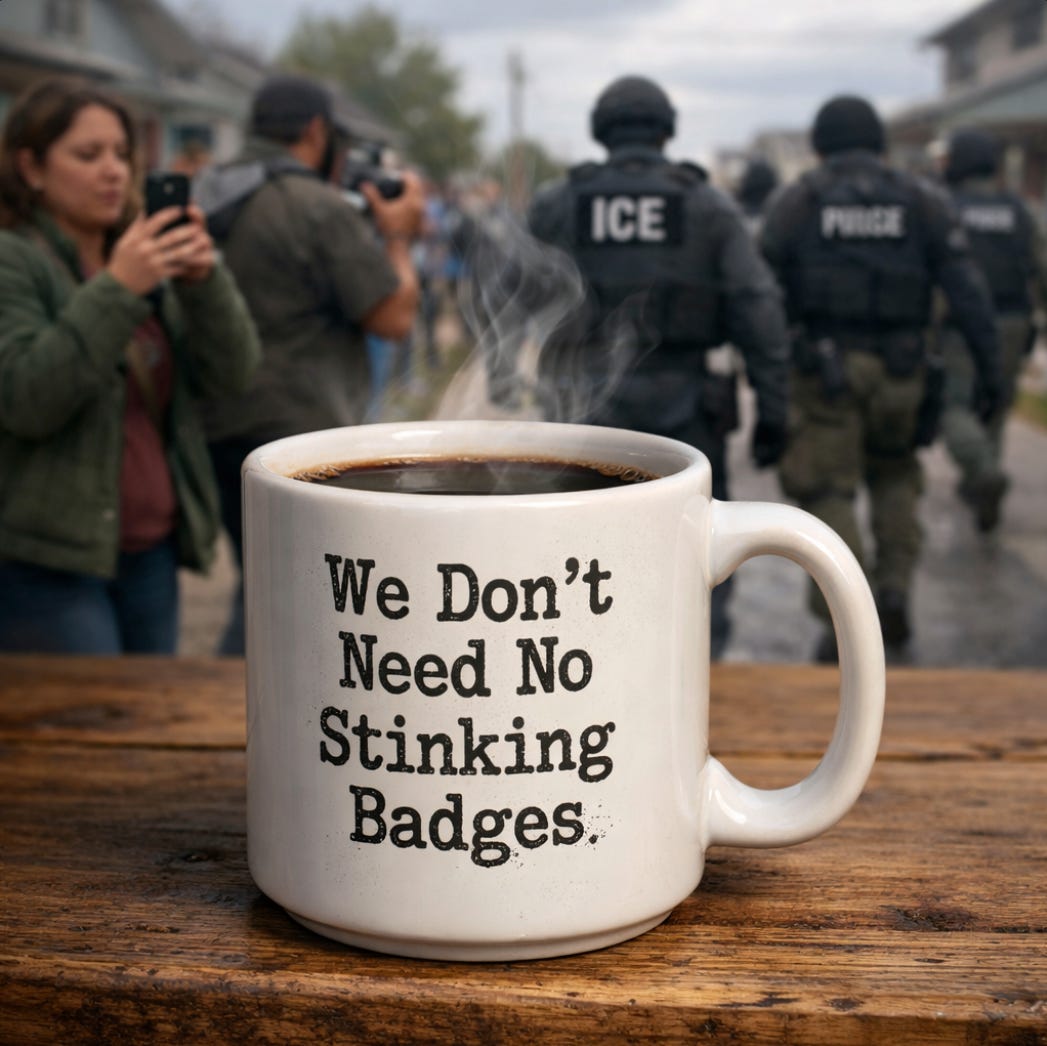
Perhaps most alarming to many is that, despite the gravity of these incidents and the involvement of both immigrants and U.S. citizens in many of the encounters, the government has not publicly disclosed any meaningful disciplinary actions against agents involved in these restraint abuses. DHS and White House spokespeople have defended agents’ actions, asserting that officers “followed their training to use the least amount of force necessary,” even as experts and former law enforcement officials told ProPublica the actions they reviewed were dangerous and unjustified.
This pattern of aggressive restraint and scant accountability dovetails with ProPublica’s separate reporting from last year documenting that immigration agents detained more than 170 U.S. citizens during raids and protests in the administration’s enforcement surge, often without clear legal basis, without access to counsel or family for days, and, in some cases, involving painful or humiliating treatment.
Taken together, these investigations paint a picture of an agency under expansion, both in numbers and in the boldness of its tactics, where lines that many Americans assumed were settled after George Floyd’s death are being tested or ignored outright, and where oversight, reporting, and accountability mechanisms have struggled to keep pace with the breadth of enforcement activity.
At higher levels of government, the consequences have been just as dramatic. Senior prosecutors from both the U.S. Attorney’s Office in Minneapolis and the Justice Department’s Civil Rights Division have resigned amid turmoil over how the shooting is being handled, particularly the decision by DOJ leadership to keep local and state authorities largely on the outside of the investigation. The departures of career prosecutors, including high-ranking civil rights litigators, have been described inside and outside DOJ as a vote of no confidence in how the department is responding to allegations of civil rights violations, a stunning institutional rupture considering this is the office charged with enforcing those very rights. (Reporting by The Washington Post has documented both the departures and the underlying frustration among career lawyers.)
Meanwhile, late-night commentators and public figures alike have taken aim at the administration’s rhetorical handling of the unrest, with critics seizing on Trump’s dismissal of protesters and his characterization of Good’s death in ways that diverge sharply from video evidence and accounts from local authorities and Good’s family. Accusations of misleading claims about the incident have even been catalogued in public records of false or misleading statements by the president in his second term.
Clearly, the story isn’t over, and it’s not just street protests and community patrols that underscore how volatile this moment has become. As legal scholar Ryan Goodman observes, Deputy Attorney General Todd Blanche’s swift determination that there is “no basis for a criminal rights investigation” into the killing of Minneapolis resident Renee Good functions like a preemptive pardon, a declaration made before a full investigation, rather than after one. In Goodman’s framing, announcing the absence of an inquiry at the outset sends “a dangerous signal, a permission slip, to ICE agents on the ground in Minneapolis and elsewhere,” reinforcing a culture where the threshold for deadly force goes untested and accountability remains elusive.
The public and internal fall-out reflects that danger. Multiple federal prosecutors in both Minnesota and Washington have resigned in protest over the DOJ’s handling of the case, objecting to the sidelining of experienced civil rights lawyers and the exclusion of the Justice Department’s own Civil Rights Division from the investigation, a stark departure from precedent in police use-of-force incidents.
Alas, we jump from domestic drama to foreign drama. In what may be the most eyebrow-raising geopolitical pitch of his presidency, Trump spent part of today reasserting his claim that Greenland, the world’s largest island, an autonomous territory of Denmark, is something the United States must control for national security, and that anything less than American control is “unacceptable.” This chest-beating strategy comes just hours before a planned diplomatic meeting in Washington involving Vice President J.D. Vance, Secretary of State Marco Rubio, and the foreign ministers of Denmark and Greenland.
Not content to settle for tariff wars and domestic spats, the administration is now pitching what looks a lot like cold-war–era real estate acquisitiveness with 21st-century swagger. Trump has argued that NATO would be “more formidable” with Greenland “in the hands of the United States,” and frets aloud about Russia and China getting there first, as if Greenland were a game of geopolitical Monopoly. Denmark and Greenland have made clear that the island is not for sale and have reiterated their loyalty to Denmark and the European Union. European leaders, from France to Germany, have openly condemned the idea as a threat to international order.
As diplomats gather today, all eyes will be on whether Secretary Rubio, often cast as the responsible, buttoned-down half of this foreign policy duo, tries to tether this expansionist rhetoric back to the realm of normal statecraft, and whether Vance, who has shown a preference for disruptive questioning of European allies, doubles down on Trump’s territorial enthusiasm.
Regardless of the outcome, the scene reads like a fever dream from an era most of us assumed was safely in the past: the U.S. insisting on territorial acquisition from an unwilling sovereign ally under the banner of national security, while surrounded by a chorus of global eye-rolls.
Last night, after the noise died down and the headlines stopped refreshing, Marz and I stepped outside and held our small moonbeam vigil, something quiet, human, and intentionally out of step with the chaos. I realized Marz deserved a torch too, so we lit two, sending whatever peaceful intentions we could muster into a system that increasingly feels allergic to restraint, accountability, and empathy. We prayed for justice for those already wronged, and for something resembling a sustainable future for the rest of us who are still here, still watching, still trying to make sense of it all.
If you wake up in 2030 and this reads like a dystopian daily brief from an alternate universe, you’re not imagining it. From Detroit to Minneapolis to Nuuk, we are seeing an unmistakable snapshot of how fractured, fraught, and surreal American governance and foreign policy have become in 2026.
Crush ICE for good.
Deeper and deeper we are plunged into this nightmare. The relentless assaults on our morality and ideals are staggering. My fundamental belief in America is shaken with each new outrage. We cannot tune out from exhaustion, our children and future generations need our resistance and fight until we end this scourge named Trump. ✊