


There are moments in history when a civilization is forced to look at itself without costume, slogans, and without the soothing myths it has wrapped around its own appetites, and we are living in one of those moments now. The climate crisis has stripped away so many of our illusions and left us standing before the plain truth that the Earth is not an endless vessel for our hunger, a mute backdrop for human ambition, or an inventory of resources waiting to be consumed without consequence. It’s alive, just as it was long before we arrived. And in these last months, it has seemed to cry out from every corner of itself.
The cry has come in many forms, it has risen from coral reefs turning ghostly under seas that have grown too warm. It has come from Arctic ice thinning at the edge of the world, that old bright shield shrinking back as though the planet itself is losing its memory of cold. It has come from forests in Australia, Chile, and Patagonia, where heat and fire moved through trees and underbrush and ancient habitats with a kind of ferocity that now feels less like anomaly and more like prophecy. It has come from floodwaters in southern Africa, across the western Mediterranean, and in Brazil, where rain did not simply fall but poured into homes and streets and hillsides until the architecture of ordinary human life was torn apart.
We call these things disasters, and of course they are. But they are more than isolated catastrophes.
They are chapters in one long story about what happens when a species chooses dominance over wisdom. They are the visible expression of an invisible imbalance, the result of centuries spent burning what should have remained buried, cutting what should have been protected, building where rivers have always wanted to roam, and speaking of growth as though the word itself could absolve us of what that growth required. We have treated the Earth as if it were durable enough to survive any insult and generous enough to endure any theft. Now the bill has come due, and it is not being paid in numbers alone. It is being paid in heat, in habitat, in beauty, in safety, and in grief.
And yet even in the midst of this sorrow, I don’t believe the truest story available to us is one of final ruin. I don’t think we are called only to witness the damage and record it with eloquence. I think we are being called, far more urgently than that, into a story of restoration, not the shallow kind of restoration that lives only in marketing language or policy speeches, but the older, sterner, holier kind. The kind that understands that repair is not separate from love. Because while it can be easy to move through life and not think about it much, it would be hard to deny that some part of us loves our planet.
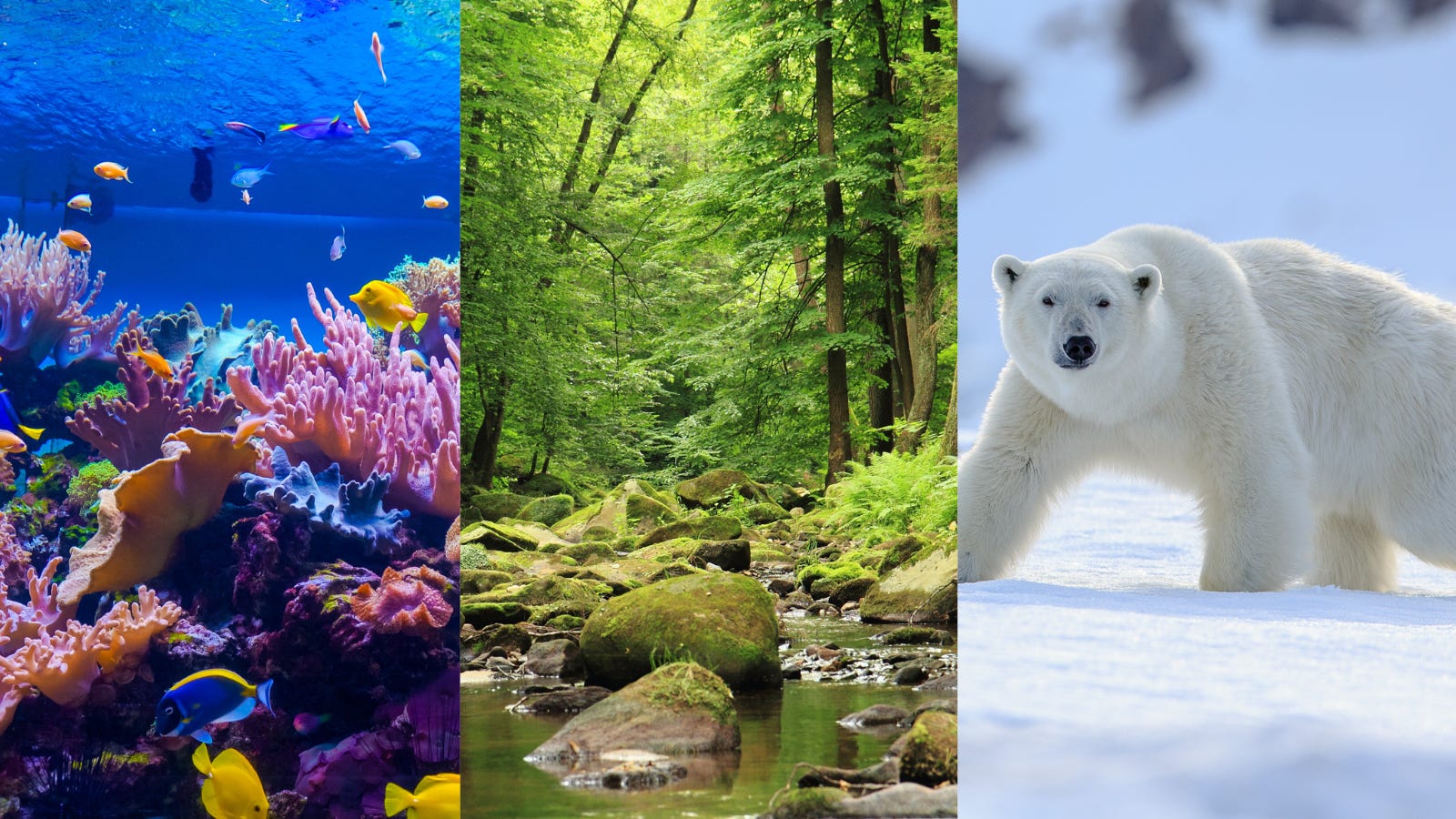
A coral reef is one of the planet’s great acts of imagination. It is a city built by tiny living beings who never asked for thanks or repayment, a city whose limestone towers and ledges and crevices become nursery, shelter, hunting ground, spawning ground, and refuge all at once, and whose architecture is so consequential that reefs are often called the rainforests of the sea because around a quarter of all marine fish depend on coral reefs at some point in their lives. It is a place where color becomes shelter, where stone and motion and light are braided together into something so extravagant it can seem almost out of this world, and in the Great Barrier Reef that abundance becomes almost impossible to overstate, with 1,625 species of fish, more than 450 species of hard coral, more than 3,000 species of molluscs, six of the world’s seven marine turtle species, 30 species of whales and dolphins, and one of the world’s most important dugong populations all bound into the life of the Reef and the seagrass and mangrove systems around it. Reefs cradle fish and mollusks and sea turtles and countless other forms of life, not only by existing, but by making habitat, by giving small creatures places to hide from predators, places to find food, places to reproduce, and places to rear their young in the many nooks and crannies corals build over centuries, while adjacent seagrass meadows in the Great Barrier Reef region act as buffers between catchment runoff and reef communities and serve as crucial feeding grounds for dugongs and green turtles. They soften waves before those waves can become destruction on shore, they feed communities, and they sustain livelihoods, with one landmark study finding that coral reefs “reduce wave energy by an average of 97%,” reef crests alone dissipating most of that force, which means a healthy reef is not only beauty but breakwater, not only wonder but defense. They offer children and divers and travelers one of the purest experiences of wonder available on Earth, that sudden intake of breath when the underwater world opens and reveals itself not as emptiness but as abundance beyond imagining.
To lose a reef is not only to lose an ecosystem, but also to lose one of the places where the planet has been most lavish with its creativity. It is to lose a school of fish turning all at once in near perfect synchrony, to lose sea turtles passing over branching coral, to lose the quiet labor of parrotfish, grazers, cleaners, filter feeders, and all the other species that keep reef systems functioning through a choreography so intricate most of us never even notice it while it is still intact. It is to lose the astonishment that comes from seeing a world thrive in forms stranger and more radiant than anything we could have designed ourselves, but it is also to lose a breakwater, a food web, a nursery for marine life, and a living structure that has protected shorelines and human communities simply by being alive, because newer work shows that when reef structural complexity is cut in half, extreme wave run-up events that once came once in a century can become fifty times more frequent. It is to lose a place that has taught generations of people that beauty is not a luxury in the natural world, but rather one of its fundamental languages.
The Arctic carries a different kind of beauty, but it is no less profound. Its grandeur is quieter, more austere, written in white light and long silence and the slow authority of ice, yet beneath that stillness it performs some of the planet’s most consequential work. Sea ice is not only frozen water, it’s one of the structures by which the planet has regulated itself, reflecting sunlight back into space instead of allowing darker ocean water to absorb that heat, and because snow-covered sea ice reflects roughly 50 to 70 percent of the sun’s incoming energy, it acts as one of the Earth’s bright shields against further warming. It stabilizes patterns, moderates exchange between ocean and atmosphere, gives marine mammals and Arctic food webs a platform on which life has long depended, and holds a line between balance and acceleration, with NOAA noting that sea ice is essential habitat for marine life and an essential component of life and culture in Indigenous communities of the North. The Arctic has always felt, even to those who haven’t seen it, like one of Earth’s last great places of chastening scale, but it is also one of its great climate regulators, and now one of its fastest-changing regions, with observations showing that the Arctic has warmed nearly four times faster than the globe since 1979, while by the end of summer 2025 its sea ice was younger, thinner, and 28 percent less extensive than it was in 2005. It reminds us that the world was not made to fit human convenience, that cold has its own majesty, and restraint is part of beauty too.
When that ice retreats, something more than surface area is lost. We lose a cooling force, yes, because less bright ice means more dark ocean absorbing more heat, but we also lose habitat, seasonal timing, ecological stability, and one of the mechanisms by which the Earth has long kept itself from warming still faster, and the losses are already radiating outward through the living world, with walruses using sea ice for resting and giving birth, polar bears and seals depending on it as hunting and breeding habitat, and Arctic marine productivity shifting in ways that are already reshaping fisheries and food webs. We lose a form of planetary dignity, one of the old presences that has helped make the world habitable, a chapter of Earth’s long self-governance, another place that once invited humility and now increasingly invites alarm as the ice grows thinner, younger, and less enduring than it used to be, while warming waters, declining sea ice, and changing productivity are pushing southern species northward, altering the northern Bering and Chukchi seas, and affecting Arctic food security and Indigenous subsistence practices. We also lose a measure of protection for people, because Indigenous observers and NOAA scientists have linked sea-ice loss, warmer air and ocean temperatures, and more intense coastal storms to worsening flooding and erosion, and long-term records show that decadal erosion rates have increased at 13 of 14 monitored Arctic permafrost coast sites since the early 2000s.
And because the Arctic is not isolated from the rest of the planet, its melting and freshening matter beyond its own horizon. What happens in the far north does not stay in the far north, because the Arctic and subarctic help shape the density contrasts that feed the Atlantic Meridional Overturning Circulation, the great system of currents that redistributes heat, salt, carbon, and nutrients through the Atlantic, and observational studies suggest that this overturning circulation has already weakened by about 15 percent since the mid-twentieth century. The IPCC says the AMOC has weakened relative to 1850 to 1900 and is very likely to weaken further this century, which means the Arctic is not only a place being damaged by climate change, but one of the places through which climate change can reverberate back into weather, rainfall patterns, sea level, and ecological stability far beyond the pole itself.
The forests, too, are more than what can be tallied in carbon accounting, though even by those terms their value is beyond dispute. A forest is shade, birdsong, soil, fungus, and memory, but it is also a vast living system of exchange in which roots hold ground in place, fallen leaves feed microbes, fungi braid themselves through the soil and help move nutrients and water through the underground economy of the woods, carbon is drawn from the air and stored in wood and roots and the forest floor, and the canopy slows rain, cools air, shapes humidity, and helps govern the quantity, quality, and timing of water moving through a landscape. Forests cover about 31 percent of the world’s land surface, store an estimated 296 gigatonnes of carbon, and are one of the great planetary buffers against our own excess, with global forests estimated to have been a net sink of about 7.6 gigatonnes of CO2 equivalent per year from 2001 to 2019, while the broader land sink has recently absorbed around 29 percent of total human CO2 emissions. It is the smell of resin warming in summer and the hush that settles beneath tall trees, but it is also one of the great regulators of life on land, because forests hold the majority of terrestrial biodiversity, and FAO reports that they contain more than 60,000 tree species and provide habitat for 80 percent of amphibian species, 75 percent of bird species, and 68 percent of mammal species. It is where people have gone for generations to remember that they belong to something older and larger than their own plans, and it is also where watersheds are protected, soils are stabilized, streams are cooled, and the subtle conditions required for life are held together by countless visible and invisible relationships, with forested watersheds supplying roughly 75 percent of accessible freshwater and delivering water to over half the world’s population.
In places like Patagonia and Chile, where fire has ripped through landscapes of staggering beauty, what is burned is not only timber or terrain, it is intimacy, a relationship between a people and a place, the trails walked, the trees recognized, the species sheltered, the silence loved, and the intricate living architecture by which forests make clean water, fertile soil, stored carbon, habitat, and resilience possible. When a forest burns at that scale, the loss moves outward through everything the forest was quietly doing all along, through the roots that held slopes in place, the canopy that tempered heat, the understory that sheltered insects and birds, the fungal networks that helped keep nutrients cycling, the streams that ran cooler in the shade, and the long work by which a forest turns weather into climate, rainfall into groundwater, leaf fall into soil, and sunlight into breathable life.
Floods wound differently, but they are no less intimate in their violence. Fire may devour from a distance, but flood enters the home. It rises through bedrooms and kitchens and schools. It lifts photographs from drawers and children’s books from shelves; it leaves behind a muddy line on the wall that says, with terrible precision, this far. This far the water came, and your safety failed. There is something especially cruel in the way climate-fueled flooding turns ordinary domestic life into wreckage, because it desecrates not wilderness but refuge, and makes vulnerability impossible to misread.
And what all of this asks of us is not simply that we become more informed, though information matters. It asks that we become more faithful, that we recover the ability to love the Earth not in the abstract, not as a concept, but as a real and living inheritance whose fragility is now unmistakable. It asks that we stop speaking as though sustainability were a niche concern for idealists and admit that it is now the central moral discipline of any civilization that intends to deserve a future.
What would restoration look like if we were serious about it? It would begin with ending the age of casual fossil fuel dependence, not because this is “fashionable” language, but because there is no honest path through the climate crisis that does not require us to stop feeding it. It would mean building energy systems that do not darken the future in exchange for present comfort and protecting forests not only as carbon sinks but as living communities. It would mean restoring wetlands, mangroves, floodplains, and reefs because these are not ornamental features of a healthy planet, they are part of its defense, part of its wisdom, and part of the way life protects itself when we allow it to.
It would mean building differently, no longer placing neighborhoods in the path of inevitable flood and then feigning shock when the water returns. It would mean designing homes and cities for heat, fire, and the changed reality already pressing in around us. It would mean understanding adaptation not as surrender, but as care, a shaded street, a restored marsh, a resilient power grid, and a warning system that reaches the elderly woman living alone, the family without a car, and the child sleeping through the storm. The future will be shaped not only by what we stop doing, but by what we choose to protect one another from.
And beneath all of this practical work, there must be a deeper transformation, because the crisis is not only technological, it is spiritual in the broadest sense of that word. We have been living as though the Earth were beneath us rather than around us, as though our cleverness exempted us from belonging. We have mistaken extraction for accomplishment, and we have spoken of nature as though it were separate from human life, something over there, something scenic, or something optional. But there is no over there, the reef is part of our story. The forest, the ice, the rivers and marshes and coastlines and birds are all part of our story. To wound them is to wound the conditions that make our own flourishing possible.
What is at stake for our children and grandchildren is not only whether the planet becomes hotter, though it will. What is at stake is whether they inherit a world still rich in wonder, stability, and living complexity. Whether they will know reefs as places of astonishment or only as faded photographs from a vanished abundance. Whether they will know winters that still feel like winter, forests that still breathe out coolness and song, rivers that still belong to their banks, and summers that do not arrive with an undertone of dread. Whether they will grow up believing that beauty is durable, or whether they will learn too early that adults can destroy what they do not know how to revere.
I don’t want to hand them a world shaped by our failure of imagination and I don’t want to hand them a civilization that knew exactly what it was doing and called its delay prudence, no, I want to hand them something else. I want to hand them coastlines strengthened by living roots, cities softened by trees, skies made cleaner by restraint, and communities bound together by the understanding that survival is shared. I want to hand them forests that still stand tall enough to quiet the mind, I want to hand them oceans where reefs still blaze with life below the surface, and I want to hand them evidence that when the moment came, we chose courage over convenience.
Because that is what restoration finally is, it is courage made visible because we stood together, it is the refusal to let cynicism masquerade as realism, and it is the decision to believe that mending is possible even after terrible harm has been done. A wounded world is still a living world and a living world can still answer care with recovery. Seeds still wait in scorched ground and wetlands return if water is allowed to move as water wishes. Species persist at the edge of survival longer than we expect, as though life itself is always searching for one more opening, one more chance.
Perhaps that is what should humble us most; the Earth, even now, is trying to heal around the damage. The question is whether we will go on widening the wound, or whether we will finally join the work of repair.
I think we know, somewhere beneath the noise, what is required of us. We know that this cannot be solved by sentiment alone and we know it will require policy, technology, sacrifice, redesign, restraint, investment, and political will far greater than what has yet been offered. But we also know that none of those things will be sustained unless they are animated by something deeper than fear. Fear may wake us, but love is what will keep us working, love for reefs, for forests, for the cold brilliance of the Arctic. Love for children not yet born, and for the simple, radical fact that this planet is our only home and has been far more generous to us than we have been to it.
So, let us tell the truth about the mess, let us name the fires, the floods, the bleaching seas, the thinning ice, and the heat gathering in the great body of the world. Let us not soften any of it, but let us also tell a better truth alongside it, which is that restoration is still available to us, and that to restore is not merely to fix what is broken. It’s to remember what we are for. We are not here to dominate a living world into silence, we are here to learn how to belong to it with grace.
We are here to become, if we are willing, the kind of ancestors who do not only measure loss, but interrupt it. We are here, even now, while there is still time, to mend what we have damaged, to protect what remains, and to love this wounded Earth so well that it may yet go on blooming.
Wow. A brilliant essay. Thank you. This reminds me of the books, Braiding Sweetgrass and the Arrogant Ape. I am a long time gardener and do my best to respect the land. What saddens me is that we now have a regime that only sees the short term, that the earth is here for us to exploit. Think about what is happening to the Forest Service for example. Then we a war sending a load of pollution into the world as well as using up large amounts of fossil fuel. Nothing is sacred to these people except power and money.
Lovely article! Thank you.