


A government can call an age golden while people are afraid to pray.
That’s what stays with me as I think about Guy Fawkes: the distance between a nation’s glorious account of itself and the lives of people who have to survive inside it. Somewhere in that distance is a question we still struggle to answer. What is our freedom worth if we can watch someone else lose theirs and feel nothing except relief that, this time, the government has chosen somebody else?
There is another question underneath it. How do we build a country where people’s safety survives a change in who governs them? Because a pendulum can swing for generations without carrying anyone toward freedom.
November 5 is a day of remembering. For centuries, Britain’s official observance celebrated the survival of a king and the defeat of the Catholic conspirators who tried to blow up Parliament in 1605. Bonfires marked the failure of the Gunpowder Plot. Effigies of the pope, and later Guy Fawkes, went into the flames.
The face once burned in celebration of the state’s survival eventually became a mask people wore to challenge its power. That reversal tells us how much a symbol can change as people make it their own. But the history makes a demand of us, too. If we’re going to carry a symbol of resistance, we ought to care about what happens to the people in whose name we resist.
No one should have to share our beliefs to deserve our protection. Freedom has to reach the person whose faith we don’t practice, whose politics we dislike, whose life looks nothing like ours. Otherwise, we’re asking only for the privilege of being safe while someone else is afraid.
Before Fawkes entered the story, England had spent decades making religious allegiance a test of loyalty to the state. Mary I, the Catholic daughter of Henry VIII and Catherine of Aragon, had lived through her father’s break with Rome, the annulment of her parents’ marriage, her mother’s displacement as queen, and her own declaration of illegitimacy. Her brother’s reign brought further Protestant reforms.
Religion had helped determine whether her family belonged at the center of the kingdom or outside its protection. Mary’s determination to restore Catholicism drew on sincere religious conviction; her cruelty can’t simply be explained as revenge for her mother. Under her rule, hundreds of Protestants were burned at the stake.
I find it difficult to sit with the fact that someone could experience so much humiliation and insecurity and then wield power this way. But suffering doesn’t automatically teach mercy. We have to choose what we do with what hurt us. Mary’s victims were entitled to their lives regardless of what she believed their souls required.
Her Protestant half-sister Elizabeth, the daughter of Anne Boleyn, inherited a very different place in popular memory. Her reign became England’s golden age, associated with cultural achievement and national greatness. It also brought imprisonment, torture, and executions of Catholics.
Elizabeth’s government increasingly invoked national security and treason amid genuine conspiracies, papal hostility, and conflict with Catholic powers. Those circumstances matter. So do the people punished under laws that made religious allegiance dangerous. The rulers had their reasons. The people they persecuted had lives. Which poses the question: a golden age for whom?
Mary and Elizabeth upheld opposing religious settlements. They were not the left and right of a modern political spectrum. But their reigns expose a danger we can recognize: the state could change its religious allegiance while retaining the power to punish those who would not conform. Different communities found themselves afraid as the demands of the government changed. The pendulum changed direction. The freedom to live beyond its reach remained insecure.
I think about what that danger would mean inside a home. How do you explain to a child that something as intimate as prayer could bring the authorities to your door? How do you teach honesty when safety may depend on concealing what your family believes?
Shakespeare belongs in the history of Elizabeth’s England. So does the frightened family hiding a priest. We owe the people who lived through that reign enough honesty to remember both. Their suffering can’t become an acceptable footnote to somebody else’s greatness.
Guy Fawkes grew up in that England. Born in York in 1570 and raised Protestant, he converted to Catholicism and later fought for Catholic Spain in continental Europe. His military experience helped make him useful to Robert Catesby, the principal organizer of the Gunpowder Plot. Fawkes was assigned to ignite the explosives.
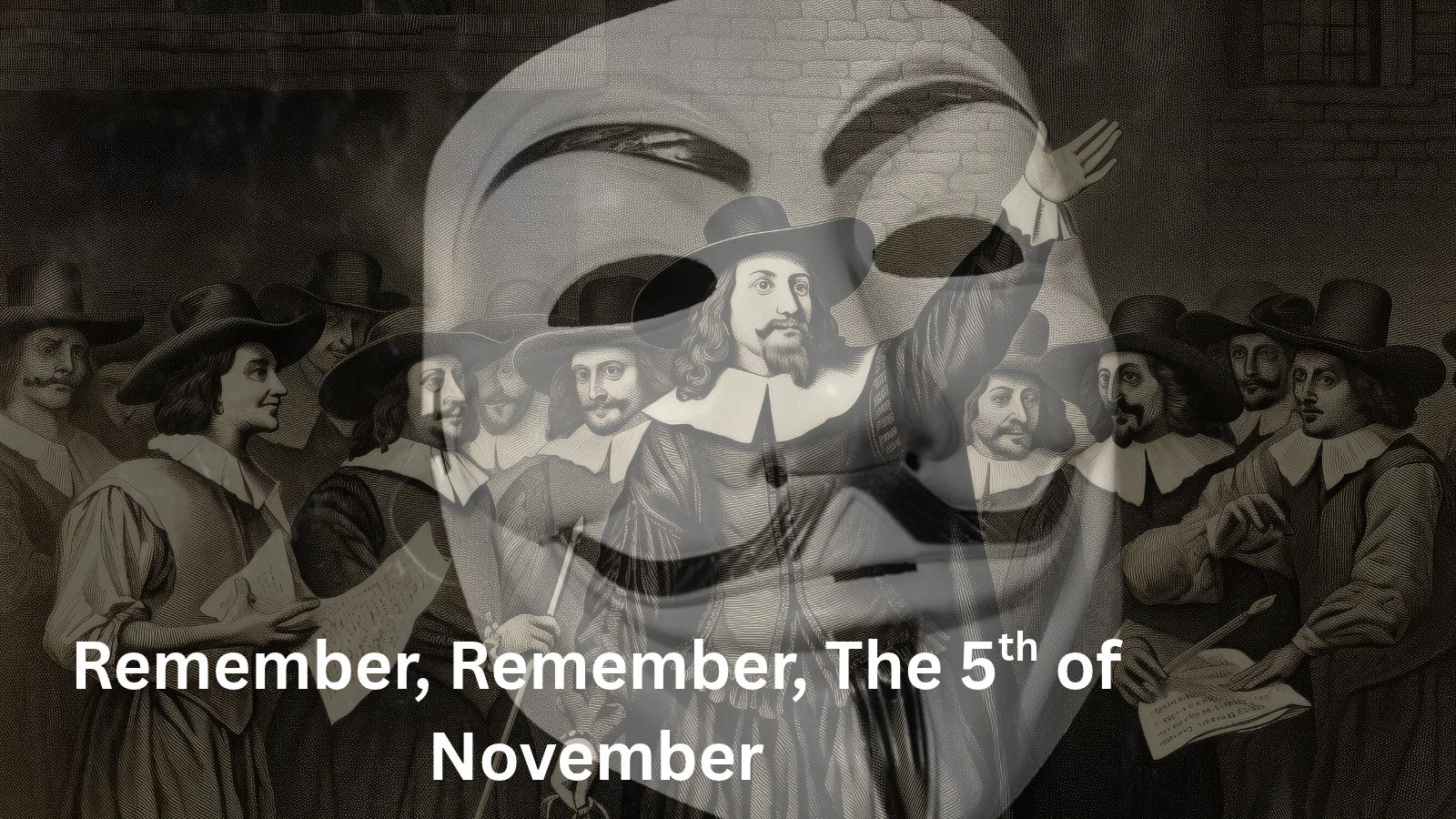
The conspirators concealed 36 barrels of gunpowder beneath the House of Lords. On November 5, 1605, they intended to kill James I and much of the governing establishment during the State Opening of Parliament. Afterward, they hoped to rally Catholic supporters and seize the king’s daughter Elizabeth, whom they intended to put on the throne. The plan promised a Catholic restoration. It offered little reason to believe that freedom would belong equally to everyone afterward.
Wanting Catholics to worship without persecution was a worthy cause. We should be able to say that without making excuses for mass killing. The humanity of the people the plotters hoped to liberate didn’t cancel the humanity of the people they intended to kill. That’s where conviction has to bear the weight of conscience. Being wronged doesn’t give us ownership of other people’s lives. Their plan also leaves us with a deeper problem. Installing a ruler of your own faith doesn’t establish everyone’s freedom of conscience. The next reversal of power can put your community in danger again.
An anonymous warning prompted searches of Parliament, and Fawkes was discovered on the night of November 4–5. He was interrogated and tortured, then convicted of treason and executed in January 1606. His capture didn’t make the state’s brutality righteous, either.
And beyond the conspirators were the Catholics who had never agreed to their plans and had no part in them. The plot deepened suspicion of their community and brought further restrictions. Peaceful people lived with the consequences of a conspiracy they’d never joined.
Responsibility for persecution belonged to the authorities who imposed it. No government acquires the right to punish an entire community because some of its members commit a crime. Yet the failed attack gave those already disposed to distrust Catholics a powerful event around which to organize that distrust. The people the plotters hoped to liberate were left more vulnerable.
Centuries later, fiction helped give Fawkes another life. Alan Moore and David Lloyd’s V for Vendetta placed a stylized version of his face on a revolutionary fighting an authoritarian state. Anonymous and Occupy protesters helped make the mask an international symbol of resistance.
People found something in that face they needed: a way to say that those who govern us can be challenged. I understand that need. I feel it when I think about the country my children will inherit, and about how much of their safety will depend on whether people are willing to stand up for children who aren’t their own.
I want them to grow up knowing that a person’s dignity survives every ugly thing a politician says about them. That a government’s power to frighten someone doesn’t establish its right to do so. That they can refuse to participate in cruelty even when cruelty has become popular.
Those convictions have to hold when defending someone is inconvenient. When our neighbors disagree with us. When the person whose rights are being violated is someone we would never have voted for, worshipped beside, or invited into our home. The measure of our commitment is what we’re willing to protect when affection and agreement offer us no help.
That’s the standard I want us to bring to the Trump administration. We must resist its abuses, demand due process, and insist that public officials answer for what they do to people. A promise of order cannot excuse cruelty. A claim of authority cannot put a president beyond accountability.
But our demand has to reach beyond the next reversal of power. Immigration shows how public frustration can become a mandate for a dramatic change of direction. In 2024, dissatisfaction with the Biden administration, economic anxiety, and support for tougher immigration enforcement helped Trump return to office.
We should demand a system that can make fair, timely decisions and protect people’s rights. A contest over who can sound tougher leaves those practical obligations unanswered. When one administration’s answer becomes something the next promises to sweep away, families have to plan their lives around what the next election might take from them.
A democracy needs disagreement. It fails people when disagreement becomes permission to treat each other as enemies, and when winning power matters more than solving the problem that brought people to the polls. That is the broken cycle we have to confront.
This week, voters elected Democratic majorities to the House and Senate amid frustration over high prices, the Iran war, and government corruption. Another reversal, another chance to demand something better. There is reason to feel relief and hope. To everyone who voted, organized, and helped someone else participate: thank you. To anyone who crossed a party line because conscience asked more of them than loyalty did: thank you, too.
Trump retains the presidency. The incoming Congress will have to use its authority, and we will have to insist that it does. The people we elected owe us more than the comfort of seeing different names above the committee doors. They owe us the work.
That means pursuing protections that can endure beyond a single administration: fair procedures for immigration decisions, safeguards against arbitrary detention, and oversight that applies to officials from either party. We should judge their work by whether people become safer and problems become more manageable. A system that can keep changing the governing party while leaving people exposed to the same abuses is failing them.
I want my children to inherit something sturdier than the hope that the next president will be kinder.
Building that country requires courage, organization, and enough wisdom to keep the people we’re defending at the center of our decisions. Violence can deepen the danger around them, give officials an excuse for further repression, and leave grieving families to bear a cost they never chose. We owe those families more care than that. Peaceful resistance requires us to turn anger into something useful: protection for a neighbor, evidence that exposes wrongdoing, public pressure that an official can no longer ignore.
That means showing up peacefully and helping one another keep showing up. It means supporting credible journalism, documenting abuses carefully, and checking information before we pass it along. It means helping organizations that provide legal assistance and practical support, so a frightened person has somewhere to turn.
It means calling our representatives with specific demands, attending public meetings, and insisting on investigations when officials abuse their authority. A hearing, a record, a question asked again after somebody tries to evade it: these are ways to make power answer.
Choose one action you can sustain. Make the call. Attend the meeting. Find out which local organization needs help and what kind of help it actually needs. Help someone else participate when work, disability, childcare, or exhaustion makes it difficult. And keep going after the relief of an election victory wears off. Ask what has changed in people’s lives, what protection has been secured, and what will keep it from being taken away again. The people we put in office need to hear from us when they disappoint us, too. Winning our votes doesn’t earn them our silence.
There is nothing passive about this work. It asks us to pay attention when we’re
exhausted, cooperate with people we disagree with, and keep showing up when change is painfully slow. History asks us to think beyond the moment when resistance feels righteous. It asks what our actions will accomplish, who will bear their consequences, and whether the freedom we demand will extend to people outside our own community.
I want our children to know they have a voice. I also want them to learn how to use it: to protect someone, to challenge a lie, to build enough public pressure that the powerful can no longer comfortably ignore them.
We can carry that determination into the streets, the voting booth, the courtroom, and every room where decisions are made about our lives. We have work to do, and we need one another to do it.
If this piece gave you something to think about, please share or restack it. Paid subscriptions help support our independent writing and the family adventures behind it. Thank you for helping us keep showing up.
Excellent! Thank you for the history lesson. We mustn't let history repeat itself. Let's hope that the next two years are healing for our Country.
This is another of your best reviews of the relationships between responsibility and repect. We each want respect. Our fellow humans have the same wants but neither of us has helped our fellow human learn enough about us or for us to learn enough about them to avoid misunderstandings. Your wonderfulness is your ability to make your wants reasonable while seeking
to tell me enough about myself to reassure me that you listened attentively. Thank you.