


Good morning! Just to be clear, the Supreme Court did not end Donald Trump’s tariff agenda yesterday. It ended the shortcut. In barely a year back in office, Trump has treated trade policy like a light switch, invoking a 1977 emergency statute to impose sweeping tariffs with the speed of a press release. Fast and flexible, it allowed markets to swing between breakfast and dinner depending on mood and message. On Friday, it was ruled illegal. It ruled that emergency powers are not a blank check for economic improvisation.
Within hours, Trump reached for another lever: a 10 percent global tariff under Section 122 of the Trade Act of 1974, a provision no president has ever used. It lasts 150 days. After that, Congress must vote to extend it.
One hundred and fifty days carries this straight into midterm season. The difference now isn’t about trade philosophy; it’s about fingerprints. If tariffs continue beyond this temporary window, Republican incumbents, many already navigating uneasy conversations about inflation and affordability, may have to cast recorded votes to keep them in place.
All of this comes after more than $200 billion in tariff revenue has already been collected in less than a year, even as the United States posted a record goods trade deficit. Businesses are now waiting to see whether courts could force refunds that analysts estimate might reach $120 billion. The dollar slipped on the news. Bond markets blinked but did not panic. Economists largely concluded that tariffs are likely to remain, one way or another.
That may be the most revealing development of all. Allies are not celebrating and corporations are not planning windfalls. Instead, they are adapting to volatility as a policy feature.
The Supreme Court ruling doesn’t dismantle the tariff structure. It removes the ability to operate it by reflex. Governing the long way, through investigations, statutory constraints, policy debates, and congressional votes, is slower. It requires persuasion instead of proclamation.
Can the administration sustain the political cost of sustaining tariffs without the emergency lever that made them effortless? When the shortcut disappears, the bill still comes due, and this time, the receipt may have signatures on it.
I’ve written more detail on Section 122 that should post tomorrow. Suffice it to say, it is not a magic wand. It is a 150-day timer that allows a temporary tariff of up to 15 percent on countries with trade imbalances. After that, Congress must extend it, which means hearings, recorded votes, and television ads.
It is one thing to announce a tariff in the morning and blame Beijing by lunch. It is another to ask a swing-district Republican in September to vote to keep consumer prices elevated while running on “cost-of-living relief.”
Voters, inconveniently, have learned something over the past year. Tariffs do not fall from a magical schmoo tree in Geneva. They are paid by importers, passed along supply chains, and eventually show up in grocery aisles and on dealership stickers. The United States collected more than $200 billion in tariff revenue in less than a year. That money did not materialize from the ether. It came from transactions that began overseas and ended in American wallets.
Still, the record goods trade deficit stubbornly refused to shrink. China rerouted exports. Europe inked new trade agreements without the United States. Global trade rose four percent anyway. In what may be the quietest rebuke of all, the world did not collapse; it adjusted.
The administration insists the tariff agenda survives on “new legal foundations.” Perhaps it does. But new foundations require new scaffolding: investigations under Section 301, national security findings under Section 232, consultation, statutory limits. None of those tools are as flexible as the emergency authority the Court just struck down. They cannot be dialed up or down based on who rubbed whom the wrong way at a diplomatic reception.
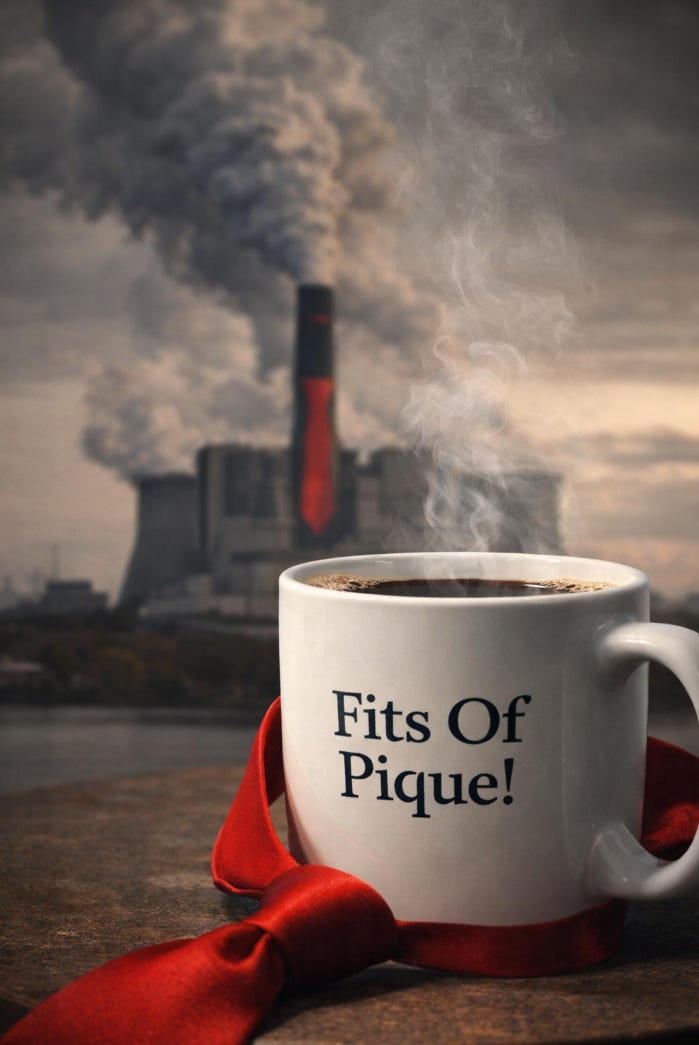
While the tariff lever was being yanked back and forth, environmental rules were being loosened under the banner of “energy freedom.” The Mercury and Air Toxics Standards, the kind of regulatory mouthful that rarely trends on social media, were weakened. These rules were designed primarily to limit emissions from coal-fired power plants, those aging industrial workhorses that send invisible particulates into the sky and call it electricity.
Mercury, unfortunately, does not remain politely suspended above the smokestack. It settles, falls with rain, seeps into rivers and lakes. It moves through the food chain, concentrating in fish, landing eventually on dinner plates and in drinking water. From there it enters bodies, especially the smallest and most vulnerable ones.
Mercury is a neurotoxin. It accumulates and interferes with brain development in children. It increases cardiovascular risk in adults and worsens respiratory conditions in communities already managing asthma, COPD, and under-funded clinics. Pollution is cheap only at the point of production. The invoice arrives later, in pediatric wards, dialysis centers, and cardiology offices.
If the theory is that deregulation lowers costs, the arithmetic grows complicated when healthcare access has narrowed and insurance protections have thinned. You can weaken a mercury standard with rule-making. You cannot weaken mercury itself; it obeys chemistry, not ideology.
In Texas this week, records released through watchdog litigation revealed that an ICE-affiliated officer fatally shot a U.S. citizen in March, months before similar incidents in Minnesota sparked national outrage. The federal involvement was not initially clear. It took a lawsuit to surface the documents.
It is not the place of a roundup to adjudicate a chaotic roadside shooting. But it is fair to note a pattern: executive action moves quickly; disclosure moves slowly. Messaging comes first; documentation follows under court order.
Some on the right, Trey Gowdy for one, quickly dismissed the ruling as meaningless. Other trade statutes remain available, they argued. Sections 232, 301, and section 122. The arsenal is still stocked.
True, but those authorities are slower, much narrower, and in some cases temporary. They require investigations, findings, and statutory limits. They involve procedural steps. The difference between instant emergency tariffs and a 150-day bridge followed by congressional votes is not symbolic; it is political.
If the ruling truly “meant nothing,” there would have been no need to scramble within hours to announce a new 10 percent global tariff under Section 122. Urgency is rarely deployed in defense of irrelevance.
One hundred and fifty days ticks straight toward midterms. Markets have already priced in volatility. Businesses have adapted to unpredictability. Voters have adapted, reluctantly, to higher prices. Republican lawmakers, however, have not yet had to cast a recorded vote extending a global tariff regime that economists openly acknowledge functions as a domestic regressive tax.
There is another uncomfortable question hovering over all of this: what, precisely, has the tariff experiment delivered?
The United States posted a record goods trade deficit last year even as tariffs piled up. China rerouted exports. Allies shifted supply chains. Global trade grew anyway. The promised rebalancing has been elusive.
And while tariffs have generated more than $200 billion in revenue in less than a year, that influx has not meaningfully dented the national debt. If anything, markets are now fretting over the possibility that courts could require up to $120 billion in refunds, adding another layer of fiscal uncertainty to an already swollen balance sheet.
If tariffs were meant to shrink the trade gap and stabilize federal finances, the scoreboard is less triumphant than the rhetoric.
Of course, just as I am wrapping up this morning’s essay, the Trump administration signaled it would raise the levy to the statutory maximum of 15 percent, because why not?
We can only hope the SCOTUS members have seen the light and are ready, willing, and able to proceed to do the work they were appointed to do and not allow the whim's of an insane man and his followers to be their North Star.
My new favorite adage;
"(insert noun) doesn't just fall from a magical shmoo tree in Geneva!"
Thank you Mary Geddry.
They flood the zone with horrors. You provide insight and comic relief.