


I’m bracing myself for a kind of grief people don’t take seriously until it happens to them: losing a home that holds your whole life inside it. This is where I married my husband, where I first met my stepson who taught me it’s not blood that makes someone your family. Where I brought my two kids home from the hospital, still sore and stunned and in love, moving through the doorway like it was a threshold into the rest of my life. Now I walk from room to room and feel the edges of panic, quiet but constant, like a low hum under my skin. The thought of this place slipping out of my hands doesn’t arrive as a dramatic breakdown. It arrives as a tightening in my throat when I look at the kitchen table. As a sudden, irrational urge to memorize the way the light lands on the floor at 4 p.m. As the fear that I will leave, and the world will keep moving as if nothing happened.
The cruel thing is, I always knew it could happen. I knew my landlady could sell and that I might not be ready when she did. I knew stability could be rented, not owned, borrowed, not promised. And then the day came anyway, because knowing something can happen is not the same as being able to live through it. My mother taught me that even when it’s painful, you fight anyway, not because fighting always works, but because giving up without trying changes you. It makes you smaller than you were.
So, I’m trying. I’m making calls, running numbers, and sitting with possibilities I don’t want. Some days I feel brave, other days I feel like an animal guarding a den that’s already been marked for removal. But while I’m fighting, I keep thinking about the people who don’t get that kind of fight.
Not because my situation is the same, it’s not. Mine is not floodwater rising while you’re still grabbing your child’s shoes. Mine is not fire moving faster than your body can. Mine is not a storm that arrives and leaves your neighborhood unrecognizable, your family scattered, your life reduced to whatever you can carry without dropping your hand from someone you love.
Still, there’s a thread that connects these losses. And once you feel it in your own chest, it’s hard to pretend it belongs to someone else. Across the world, people are being pushed from their homes by a planet that’s getting hotter and less predictable. Sometimes the leaving is sudden, sometimes it’s slow and grinding, sometimes it’s one disaster, and sometimes it’s the way disasters begin to stack, again and again, until “temporary” becomes a way of living. Some people get warnings and still can’t escape, other people don’t get warnings at all. And when they leave, they don’t just lose a roof, no, they lose the neighbor who keeps their spare keys, the school that knows their child, the route to work, the shop where the owner asks how your mom is doing. The ordinary “before” that makes a life feel like something you can plan.
We have a clean word for this: displacement. But displacement is what it looks like from far away. It’s what you call it when you’re looking at a map, or a report, or an aerial photo. Up close, it’s a woman folding a wet blanket around a toddler, it’s an older man standing in the doorway of a house that smells like mold and smoke, trying to decide whether the memories are worth the risk, it’s a family moving again, because the last “safe” place wasn’t safe for long. Up close, it’s not a statistic, at its core, it is grief with luggage.
And that’s where my story stops being only personal. Because who gets to stay, and who is forced to run, has everything to do with wealth and power. Even my housing crisis isn’t random. It lives inside an ecosystem that produces all kinds of displacement: an economy built on constant growth, extraction, and profit, one that treats land as an investment, housing as a commodity, and suffering as an acceptable side effect.
We’re told the American dream is available if you work hard and do everything right. But I’m 27, I’ve worked my way up all kinds of ladders, I’ve become educated, I’ve found a career path, and a family but the truth is working hard can still mean you can’t afford a home, can’t outrun rent hikes, can’t buy stability. That’s not a personal failure; it’s a design. And if that’s true here, where there are at least some options, some protections, some legal language that pretends to care, what does it mean for people with fewer resources and less power, standing in the path of disasters they did the least to cause?
Climate displacement is, in its simplest sense, an inequality story. It’s the difference between a warning that comes with a credit card and a hotel reservation, and a warning that comes with nowhere to go. It’s whether your home was built to withstand the storm, whether your neighborhood has drainage, whether your government invests in prevention instead of only reacting afterward. Whether your family has savings, insurance, time, transportation, documents, whether you can leave without losing everything that makes leaving possible. A siren doesn’t help if the only place you can go is another unsafe place, a forecast does nothing if leaving means losing your job, your crops, your rent, or your right to return.
This is why “resilience” can feel like a cruel word when it’s thrown at people who are being asked to survive what they didn’t choose. The deeper question isn’t whether individuals can be tough enough, it’s whether societies will make it less necessary for people to be tough at all. There’s a framework for this, climate justice, but at heart it’s a simple moral question: who benefits from the world as it is, and who pays for it when the planet sends an invoice?
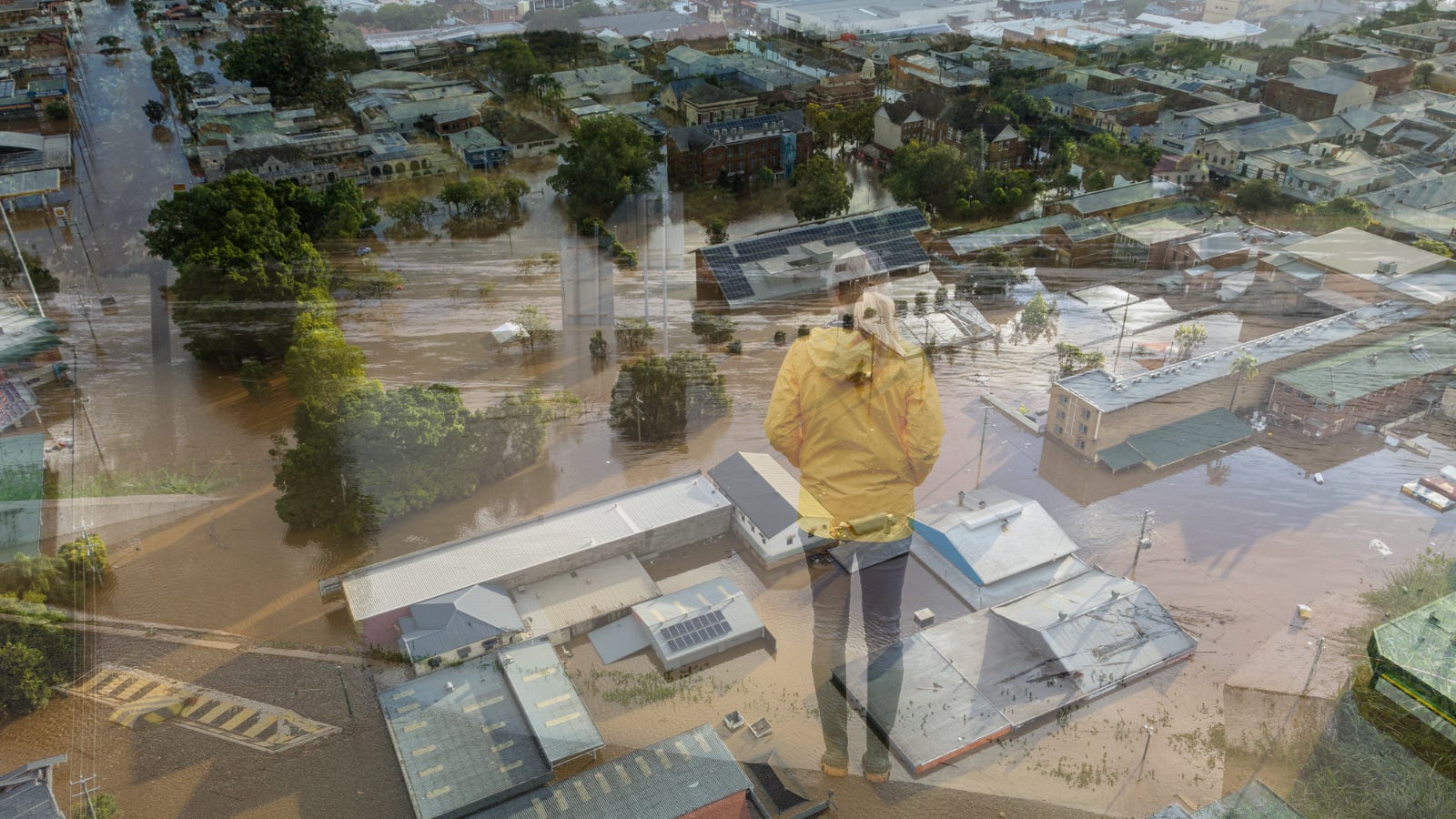
We talk about emissions like they’re evenly shared, like “humanity did this,” but the truth is more jagged. A relatively small slice of the world, and the investments that serve them, has driven a disproportionate share of the pollution heating the planet. Some people take more than their share of the sky, while others, are told to absorb the damage. Sometimes it’s loud: the flood, the fire, the cyclone, the landslide. Sometimes it’s quiet: drought that makes the soil stubborn, saltwater creeping into farmland, heat that turns outdoor work into a hazard, the slow unraveling of a place until leaving becomes less a decision than a last breath. And because displacement is traumatic even when it saves a life, the harm is not only physical. It’s psychological. It’s the constant vigilance of people who have learned the world can change overnight, children switching schools until they stop trying to make friends, elders losing the streets their bodies know by heart. It’s the ache of a temporary life, always waiting, always adjusting, never arriving.
This is why it’s not enough to treat climate displacement as only a humanitarian problem. Humanitarian aid is built for the after. But the crisis lives in the before and the during: in the systems that create vulnerability, in the policies that decide whose homes are protected, and in the funding that determines whether rebuilding is real or just a phrase. Consider what happens after the headlines fade. A catastrophic flood becomes global news for a moment, then slips out of view. But families keep living inside it, they live in the months of damp mattresses and borrowed rooms. In the debt taken on just to eat, the paperwork that doesn’t bring back a school or a job. They live in the way a damaged house stops feeling like shelter and starts feeling like a warning.
Disaster doesn’t only destroy property. It destroys momentum. It steals time, stability, and the belief that planning for a future is worthwhile. And when people return, they often return to a home that is not truly a home anymore, it is, unsafe, weakened, surrounded by the evidence that it can happen again. And sometimes the second disaster comes before the first one is finished.
That’s the part that doesn’t fit neatly into reports: displacement compounds. A lost home is the loss of the address that anchors everything else, work, school, healthcare, community networks, and political voice. In many places it intersects with discrimination, land rights, and informal housing. When you don’t have a deed, when your neighborhood is treated as illegal, when your government doesn’t fully count you, it becomes easier for the world to look away, as if what’s happening is unfortunate rather than unjust.
So, what would it mean to take climate displacement seriously as a justice crisis? It would mean telling the truth: preventing displacement is not merely about individuals “adapting.” It’s about whether societies invest in protection, and whether the global economy stops rewarding the activities creating the danger in the first place. It would mean admitting that underfunding adaptation isn’t neutral, it decides who gets to stay. It decides whose evacuation becomes permanent, decides who is forced to rebuild on the same fault line over and over until they finally break.
It would also mean recognizing that some losses cannot be adapted away. There are places where staying will become harder no matter how brave people are, coastlines that keep eroding, islands that keep shrinking, regions pushed into chronic drought. For years, vulnerable countries demanded that global negotiations stop treating these losses as side notes. Slowly, imperfectly, the architecture of climate policy has begun to acknowledge that harm is already here, and responsibility can’t be shrugged off as “just the weather.”
But justice is not only something negotiated at summits. It’s also the everyday policy choices that determine whether people have to start over alone. The ethical question isn’t simply: will we help after the disaster? It’s: will we build a world where fewer people are forced to lose their homes in the first place, and where, when loss happens, people are not punished for being poor?
That’s where my own housing story returns, not as a comparison of suffering, but as a mirror. My situation is not a flood nor a fire. But it is rooted in a similar logic: a system where the basic need for shelter is filtered through profit first. Where stability is not guaranteed by work, but increasingly by wealth, by class, by who you know. Where homes become investment vehicles and communities become markets, and displacement becomes a byproduct no one powerful is held responsible for. When someone sells the roof over your head, it’s described as a business decision. When climate-driven disasters push people out, it’s described as a tragedy. In both cases, language quietly removes accountability.
And that’s why it can feel too easy, dangerously easy, for society to watch displacement across the globe and call it inevitable. “What can we do?” becomes a shield we hold up against grief we don’t want to carry. But we can name what’s happening. We can refuse the story that this is random misfortune. A warming planet is linked to choices, industries, and policies that have winners and losers. And when the people least responsible are forced to move, it is not just a humanitarian crisis, it is a justice failure, a development failure, and a political failure.
Justice doesn’t just mean sending help; it means building power where power has been withheld. It means resources flowing to the places bearing the greatest harm, so safer housing, flood protection, heat resilience, and reliable services exist before the next emergency. It means communities aren’t treated as passive recipients of charity but as decision-makers, especially when relocation is on the table, because relocation without consent becomes another form of dispossession.
And it means recognition: the world stops treating cultures, land ties, and local knowledge as collateral damage. A home is not just walls, it’s the stories that happened inside them, and the people who know your name. It’s the river you learned to swim in, and the place someone brought you food when you were struggling. Recognition means we stop acting like that can be replaced with a tent and a shrug.
In the end, my fear of losing this home is only one thread in a much larger fabric. But it has taught me something I can’t unlearn: stability is fragile. It is not a moral reward. It can vanish even when you do everything “right.” And if I’m honest, part of what scares me isn’t just moving. It’s the grief of losing a place that knows me. Once you let yourself feel that grief, it becomes a bridge. It makes it harder to turn away from the families forced to move because the climate is changing faster than their governments can protect them, and faster than the world has been willing to act.
Maybe that’s what an emotional plea is really asking for: not pity, but recognition. Not a moment of sadness, but a refusal to normalize loss. A refusal to accept a world where some people get time to fight and others don’t. Where some people get insurance and others get tents. Where some people get hearings and buyouts and rebuilding grants, and others get silence. I don’t know yet whether I’ll be able to keep my home. I’m still trying. But I do know this: the ease with which we look away from climate displacement is not because it’s inevitable. It’s because we’ve been trained to see it as someone else’s problem, someone else’s grief, someone else’s home.
So, I’m done pretending homes are nothing more than replaceable goods sold to the highest bidder, I’m done pretending communities are disposable, and I’m done accepting a future where the people who did the least to cause this crisis are asked to carry the heaviest weight of it. Today I will be thankful that my version of disaster is one where I have time to try, time to make the phone calls, but I will remember, if we can feel the devastation of losing a home in our own lives, then we can understand what the world is asking millions of people to endure, again and again. The only question is whether we will keep treating that loss as background noise, or whether we will finally build the kind of justice that makes staying possible, and makes recovery real when staying is no longer safe.
There is an unrecognized fact about any move, forced or even voluntary. At any given moment of “now,” we are an event of integration of all the causal threads that constitute the integration that we experience. When certain features are constantly repeated, such as our house, they literally become a part of who we are. So, we are in danger of losing our felt-identity when the change happens. That’s why it can cause temporary dis-identification, very unsettling until we have enough other experiences to fill the gaps. If it’s forced, even when necessary. There should be community supported relocation grief groups.
Shanley, another beautiful and true and thought-provoking piece. Thank you! I think a lot about the overlap of migration and climate. As the climate chaos deepens, more and more people will be forced to flee their homes and create new lives in a strange place. How will we, the privileged of this earth, respond? It's certainly one of the moral issues of our times. I admit I'm not very optimistic, given the current situation in our country.