

Good morning! Welcome to another edition of the global economy getting strangled by one man’s ego while he insists everything is going beautifully, with Trump handling the world economy much as he handled his other failed ventures: bluffing through disaster, lying about the numbers, and expecting everyone else to absorb the losses. Donald Trump spent Friday doing what he does best: lurching between triumphalism, threats, gibberish, and contradiction while the real world continued to catch fire behind him. He floated the possibility of “winding down” the war with Iran even as the Pentagon moved additional Marines and warships toward the region, bringing the visible buildup to roughly 5,000 troops and sailors headed into the theater.
Because this administration is physically incapable of choosing one lie at a time, Trump also spent the day bragging that Iran had already been militarily crushed, rejecting calls for a ceasefire, and scolding NATO and U.S. allies for not rushing in to help clean up the mess. Asked about Pope Leo’s call for a ceasefire, Trump replied, “We can have dialogue, but I don’t want to do a ceasefire,” before adding, “You don’t do a ceasefire when you’re literally obliterating the other side.” In his en route gaggle, he declared that Iran’s navy, air force, radar, anti-aircraft systems, and leadership were basically gone, insisted the Strait of Hormuz was a “simple military maneuver,” and whined that Europe, Japan, Korea, China, and NATO lacked the “courage” to do more. He even mused about bases in Spain and Germany after Lindsey Graham suggested revisiting them. The official line now appears to be that the war is already won, might be winding down, requires more Marines, and is also somehow everyone else’s responsibility. So coherent. So very stable genius.
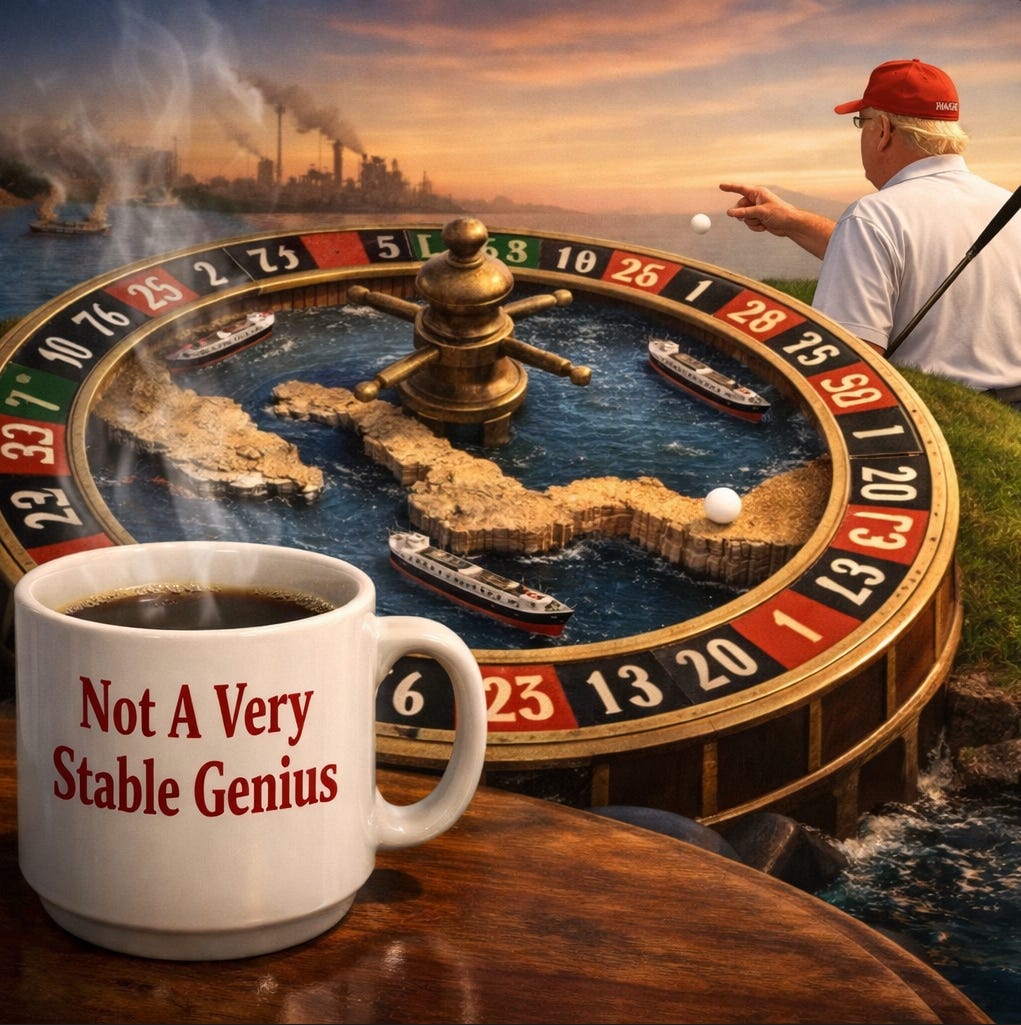
Reality, unfortunately, exists, and reality continues to be extremely rude. The Strait of Hormuz remains one of the most critical energy chokepoints on Earth, carrying roughly a fifth of global oil consumption and more than a quarter of seaborne oil trade. Trump can babble that “we don’t use it” all he wants, but globally priced oil does not care about his talking points. When Hormuz gets choked, Americans feel it at the pump, Europeans feel it in utilities, Asian importers feel it in industrial supply, and everybody gets a front-row seat to what happens when a narcissist decides to cosplay as Churchill with a lighter and a gas can.
That wider damage is no longer theoretical. Reuters reported within the last hour that Iraq has declared force majeure on all oil fields developed by foreign companies after the disruption of Hormuz largely halted the country’s crude exports. Iraq’s oil ministry ordered shutdowns at affected areas and acknowledged the resulting strain on a state budget that depends overwhelmingly on crude revenue. That is the moment this stops being just a market panic and starts becoming a genuine structural wound. Not satisfied with bankrupting his own businesses, he now aims to bankrupt the world.
The Financial Times editorial board put the point bluntly, warning that this war is “metastasising into a global economic calamity” and that “the worst-case scenarios for investors and policymakers are now coming into view.” Even if the bombs stopped tomorrow, the damage would not simply vanish. The scar is the lesson markets have now relearned: one of the world’s most important energy chokepoints can be weaponized again and again whenever reckless men decide history is a toy. Once shipping, investment, and insurers absorb that lesson, they do not just forget it because Trump posts something about victory on social media between rounds of golf.
If you needed a more tactile picture of that damage, shipping experts have been spelling it out in language even this White House might understand if it stopped screaming for fifteen seconds. Sal Mercogliano explained that military dominance and commercial safety are not the same thing. As he put it, “you don’t need a navy to exert an anti-ship campaign,” and that is exactly the problem: the U.S. can dominate the skies and still fail to make shipping feel safe. Around 20,000 seafarers and roughly 3,200 vessels have been affected in the region, with ships stuck, ports refusing entry, supplies dwindling, and crews trapped in a floating humanitarian crisis while insurers and shipowners conclude that a one-percent chance of disaster is still far too high when the cargo is essentially a giant explosive cylinder of global necessity. Mercogliano’s formulation was devastatingly simple: “a military guy” hears a 99 percent success rate and calls it a slam dunk, but “a commercial shipping guy” hears there is a 1 percent chance “I’m not going to get through.” That is what happens when the circulatory system of world trade gets a clamp on its femoral artery.
Which makes what Treasury did next somehow even more absurd. In a move so breathtakingly contradictory it almost deserves applause for sheer farce, the Trump administration issued a short-term authorization allowing the sale of roughly 140 million barrels of Iranian oil already loaded onto tankers. Treasury Secretary Scott Bessent said the idea was to relieve supply pressure and help cool the market. So yes, the same administration bombing Iran, boasting about obliterating Iran, and threatening further escalation is now partially unsanctioning Iranian oil because its own war is wrecking the global energy system. Nothing says total victory like quietly needing your enemy’s oil to stop your own war from detonating the world economy.
Europe, for its part, is increasingly sounding like the last adult at the table. Spanish Prime Minister Pedro Sánchez has condemned the conflict as an “illegal war,” warned that it could become “a serious crisis” depending on how it evolves, and stressed that “this is not our war.” He has now announced an emergency package of roughly €5 billion and 80 measures to shield Spanish households and businesses from the fallout. Spain’s message has been refreshingly clear: we do not support this war, and we are now spending public money to protect our people from a crisis Washington helped unleash. It is a remarkable contrast with Trump’s demand that allies show “courage” by volunteering to shoulder the costs of his own recklessness.
Even Saudi voices that loathe Iran are sounding more alarmed than enthusiastic. The emerging Gulf line is essentially this: Iran is dangerous, yes, but the United States “actually started this war,” and the region is now stuck trying to survive the blaze. Saudi-aligned commentary has emphasized that “the last thing we want actually is to enter this war” and that “we want a political solution by any way,” while also warning that Iran should not force Riyadh into the conflict because “Saudi Arabia should never be in war with Iran” and that if it is, the result would be “literally devastating for the Iranian regime.” In other words, nobody with skin in this game actually wants more of Trump’s war. They just want to deter being dragged deeper into it.
Since authoritarianism is never content to merely break foreign policy when it can also take a swing at the First Amendment for fun, there was at least one genuinely good legal development: a federal judge struck down key parts of the Pentagon’s restrictive press policy, finding that it violated the Constitution. Judge Paul Friedman rejected language that treated Pentagon access as a “privilege,” blasted the vague restrictions on “soliciting” information, and found the policy appeared designed to chill critical reporting and weed out disfavored journalists. The Pentagon does not get to dress viewpoint discrimination up in a national security costume while the country is stumbling through war. That is excellent news, because a free press is not there to contort presidential gibberish into statesmanship or to help Pete Hegseth look less reckless on television. If Hegseth is worried about coming off badly in public, he may just have to try the unthinkable: clean up his own act instead of relying on “patriotic” press to polish the delivery. The job of journalism is not to flatter these people. It is to report what they are doing before they get more people killed.
Because this is still America in 2026 and the carnival always runs two rings at once, here is your well-deserved side dish of schadenfreude: A California jury found that Elon Musk defrauded Twitter investors during the 2022 buyout circus. The jurors concluded that his tweets claiming the deal was “temporarily on hold” over bot concerns were misleading, since he had already signed a binding agreement and waived due diligence. Those posts helped drive down Twitter’s stock price, costing investors money before the deal eventually closed at the original $44 billion price anyway.
The jury did not go so far as to say Musk pulled off a full fraudulent scheme, but they did find that he misled shareholders while trying to wriggle around the deal he had already agreed to. After years of acting like posting is a substitute for responsibility, Musk has now received the extremely funny news that tweets can, in fact, have consequences.
As the administration is doing its level best to dress aggression up as virtue, this next contrast belongs here too, exactly as written: An update to my earlier essay on Trump, Hegseth, and the sanctification of force: new reporting on Pope Leo XIV offers a striking counterpoint. While this administration continues to aestheticize violence and wrap militarism in the language of providence, civilization, and strength, Leo is warning that “war is back in vogue” and that the postwar taboo against imposing dominion through force is being deliberately eroded. That matters, especially in light of Hegseth’s efforts to fuse American military power with explicitly Christian rhetoric. Leo’s position makes clear that this administration’s worldview is not some broad expression of Christian teaching, but a far narrower and more dangerous blend of nationalism, militarism, and moral self-anointment. In plain terms: Trump admires the firepower, Hegseth blesses it, and Leo is warning the world not to confuse that with righteousness.
That same corruption of public morality is showing up at home in smaller but still telling ways. One of the more useful pieces circulating this morning notes how far our political culture has fallen in just a decade. Trump entered national politics railing against corruption, promising to “drain the swamp.” Now the presidency itself has become a licensing platform, a checkout page, a branded shopping channel with Bibles, watches, guitars, phones, and a thousand little disclaimers in fine print. The old scandal was that politicians privately profited from access. The new scandal is that they do it out loud, on camera, and dare you to call it scandalous while the checkout cart processes your order.
Astonishing how much damage one man has been able to wrought, though the tragedy is that he has never done it alone. He has had a party, a media ecosystem, a donor class, a court faction, and a cult of grievance helping him sand down each new atrocity until it feels like weather. But this morning’s story is what happens when the weather starts wrecking ports, budgets, alliances, markets, supply chains, and press freedom all at once. At a certain point even propaganda cannot hide the smell of smoke.
Marz and I slept in a little this morning after staying up late for a longer moonbeam vigil, sending love from Oregon’s South Coast.
Always good to have a voice of sanity on the day's madness. Thank you.
P.S. I think the present tense of 'wrought' is 'work' - bizarre though it may seem. Not 'wring', in any event, but not 'wrought' either. Maybe what Trump has wrought is what one man can do, or create, or even wreak.
Thank you, Mary. I appreciate you dissecting the events of the day for those of us who can no longer stand the sound of tRump's voice or his "version" of the news. At any rate, anything tRump says is literally suspect. That is one thing, possibly the only thing, we can count on from this administration.