


A lot of you have asked me to repost this draft Bill of Rights I first published as a note almost one year ago. This feels like a good moment to bring it back.
This was never meant to be a finished legal document or a piece of polished constitutional law. It was meant to provoke thought, spark conversation, and push us to ask bigger questions about what a real democracy should guarantee. Not just in theory, but in practice and for the benefit of everyone.
We spend so much time arguing over what is politically possible inside a broken system that we rarely stop to ask what is actually necessary for a just society. It asks us to consider which rights belong to people simply because they are human, and which freedoms should be protected from government overreach, corporate power, economic coercion, ecological collapse, and technological abuse. It asks what we owe one another, what we owe the future, and what it would mean to build a democracy that treated dignity, survival, participation, and truth as non-negotiable.
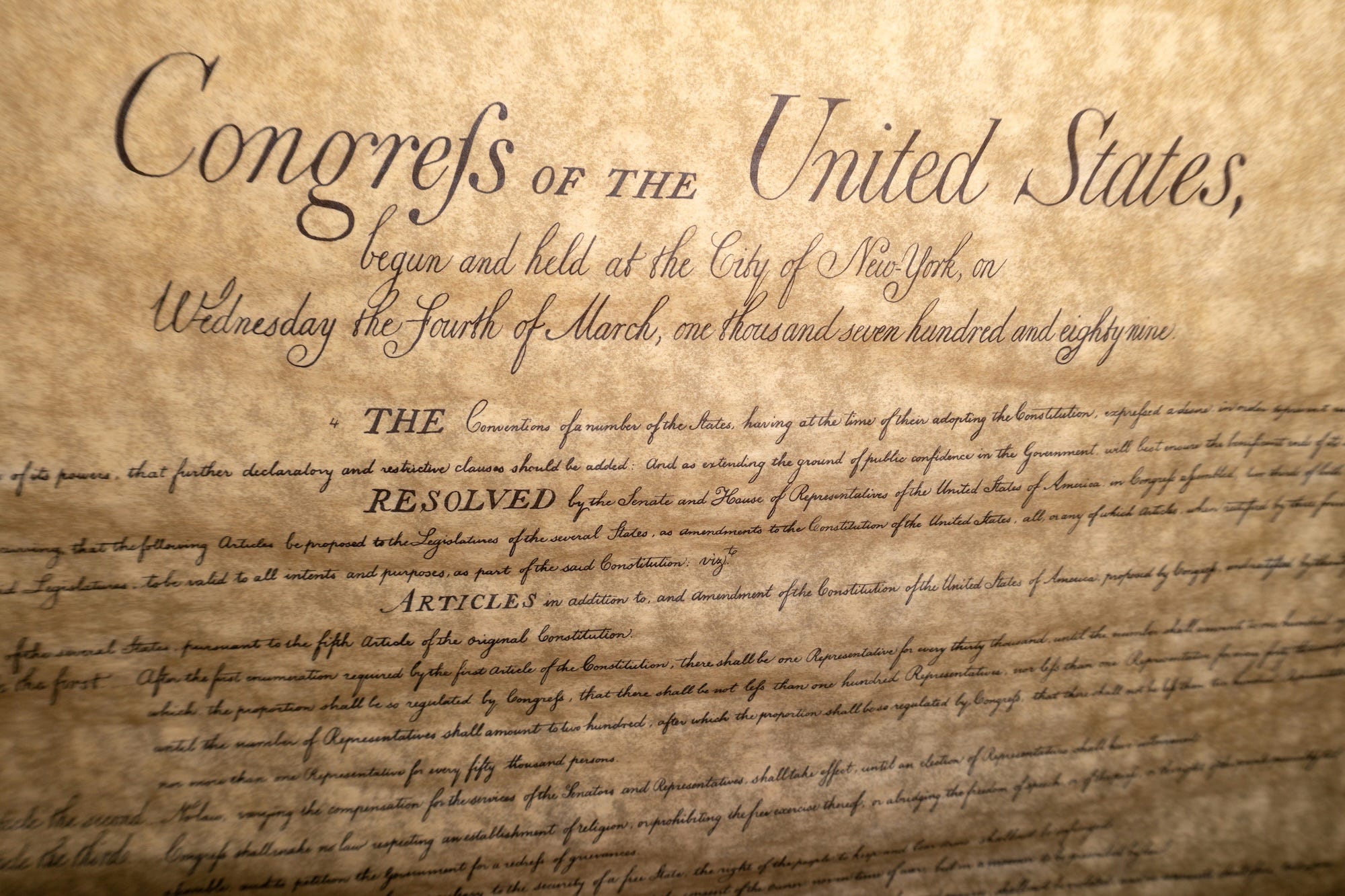
I’m reposting it not because I think exercises like this matter. They help us imagine beyond the narrow limits we’ve been handed. They remind us that democracy is not supposed to be a machine for managing decline or rationing dignity. It is supposed to be, at least in my humble view, an expression of shared moral purpose.
So read this as an invitation. Argue with it, build on it, challenge it, tear parts of it apart and suggest something better. The point is to start a deeper conversation about the kind of country, the kind of society, and the kind of future we actually want to create together, and from that, to articulate clear demands. A resistance without concrete goals is too easy to diffuse, too easy to divide, and too easy to exhaust. If change is ever going to be more than reaction, we have to name the principles and protections we are actually trying to build.
A New Bill of Rights
Preamble We, the people, in pursuit of a just, sustainable, and equitable society, do ordain and establish this Bill of Rights to enshrine the fundamental liberties of all people, the dignity of future generations, and the integrity of the natural world. These rights shall be protected against all forms of domination—political, economic, technological, or environmental—and shall serve as the moral foundation of a free society.
Article I: The Right to Privacy Every person shall be secure in their body, home, communications, thoughts, and data. No entity—governmental or corporate—shall intrude upon, surveil, exploit, or manipulate individuals without freely given, informed, and revocable consent. Privacy is the foundation upon which all other liberties rest.
Article II: The Right to Free Expression and Assembly All individuals shall have the freedom to speak, write, publish, gather, organize, and dissent peacefully. These rights shall not be abridged by public or private actors.
Article III: The Right to Bodily Autonomy Every person has the inviolable right to control their own body, including decisions related to health, reproduction, identity, and medical care.
Article IV: The Right to Shelter, Nourishment, and Care All people have the right to safe shelter, nutritious food, clean drinking water, and comprehensive healthcare. No one shall suffer from deprivation in a society capable of meeting these needs.
Article V: The Rights of Nature Nature possesses the inherent rights to thrive, regenerate, and evolve. Ecosystems and species shall be protected for their own sake and for the health of all life. Any person or community may defend these rights in a court of law.
Article VI: The Right to a Livable Planet All people, present and future, have the right to clean air, stable climate, fertile soil, and unpolluted water. Governments and institutions shall act as stewards of the Earth, safeguarding ecological balance and environmental justice.
Article VII: The Right to Democratic Participation Every person has the right to participate fully in civic life. Voting shall be accessible, secure, and protected from manipulation. Districts shall be drawn fairly, and representatives shall be accountable to the people—not to parties or donors.
Article VIII: The Right to Education and Knowledge All individuals have the right to a free, high-quality education that fosters critical thought, civic understanding, and meaningful participation in society. Knowledge shall be freely shared and shielded from distortion.
Article IX: The Right to Meaningful Work and Fair Compensation All people have the right to contribute to society through dignified labor, and to receive just compensation, safe working conditions, and the freedom to organize collectively.
Article X: Economic Sovereignty and the Public Good No person shall accumulate wealth or power beyond what can be justified in a democratic society. Billionaire wealth shall be abolished. Corporations shall not be treated as persons, nor granted rights equal to those of human beings. The economy shall serve the public good, not private empires.
Article XI: The Rights of Future Generations Future generations have the right to inherit a just world, a stable climate, and resilient ecosystems. Present policies must reflect our duty to posterity.
Article XII: Equal Protection and Justice for All All people shall be equal before the law, regardless of race, gender, identity, origin, class, or belief. Justice shall be accessible, impartial, and restorative. No one shall be deprived of liberty without due process.
This Bill of Rights shall be upheld by democratic institutions, defended in law, and held sacred by all who inherit its promise.
A good start, but we must also tackle gun rights, and severely restrict in the president’s pardon power!
Mary, I’m glad you started this
–
it’s got a strong framework that shifts from abstract freedoms to concrete rights like healthcare, housing, and environmental protection—basically saying “rights should actually feel like rights.” The part about digital privacy rights is refreshingly modern. It also ties democracy to real structural reforms, not just lofty ideals politicians can blow off.
But what’s missing is how any of this would actually be enforced—who guarantees these rights, and who gets in trouble when they’re violated. Some provisions, like abolishing billionaire wealth, read more like a mission statement than something a court could actually enforce.
Overall, though, great job