


There are stories that refuse to stay buried, they surface the way a bruise rises under skin: slow at first, then unmistakable, then impossible to look away from. The Jeffrey Epstein records have become that kind of story again, not because we are learning, for the first time, what Epstein did, but because we are watching, in real time, how the truth around him is still being rationed, curated, and contested. Right now, two developments are crashing into each other.
On one side: members of Congress are being granted access to unredacted versions of Epstein-related Justice Department files, but only under strict conditions, in a secure setting, with no phones, no screenshots, no public transparency that matches the urgency of what the records contain. On the other side: newly public reporting has pulled a sharp, politically volatile detail from inside the government’s own files, an FBI interview memo stating that former Palm Beach police chief Michael Reiter told agents in 2019 that Donald Trump called him in July 2006, at the moment Epstein’s first criminal case became public, to say Epstein’s conduct with teenage girls was widely known and to urge investigators to focus on Ghislaine Maxwell.
Together, these threads turn an already heavy story into something darker: a test of whether our institutions are committed to clarity or merely to control, and a test of how long the country will tolerate the feeling that the most powerful people still get to decide how much the rest of us are allowed to know.
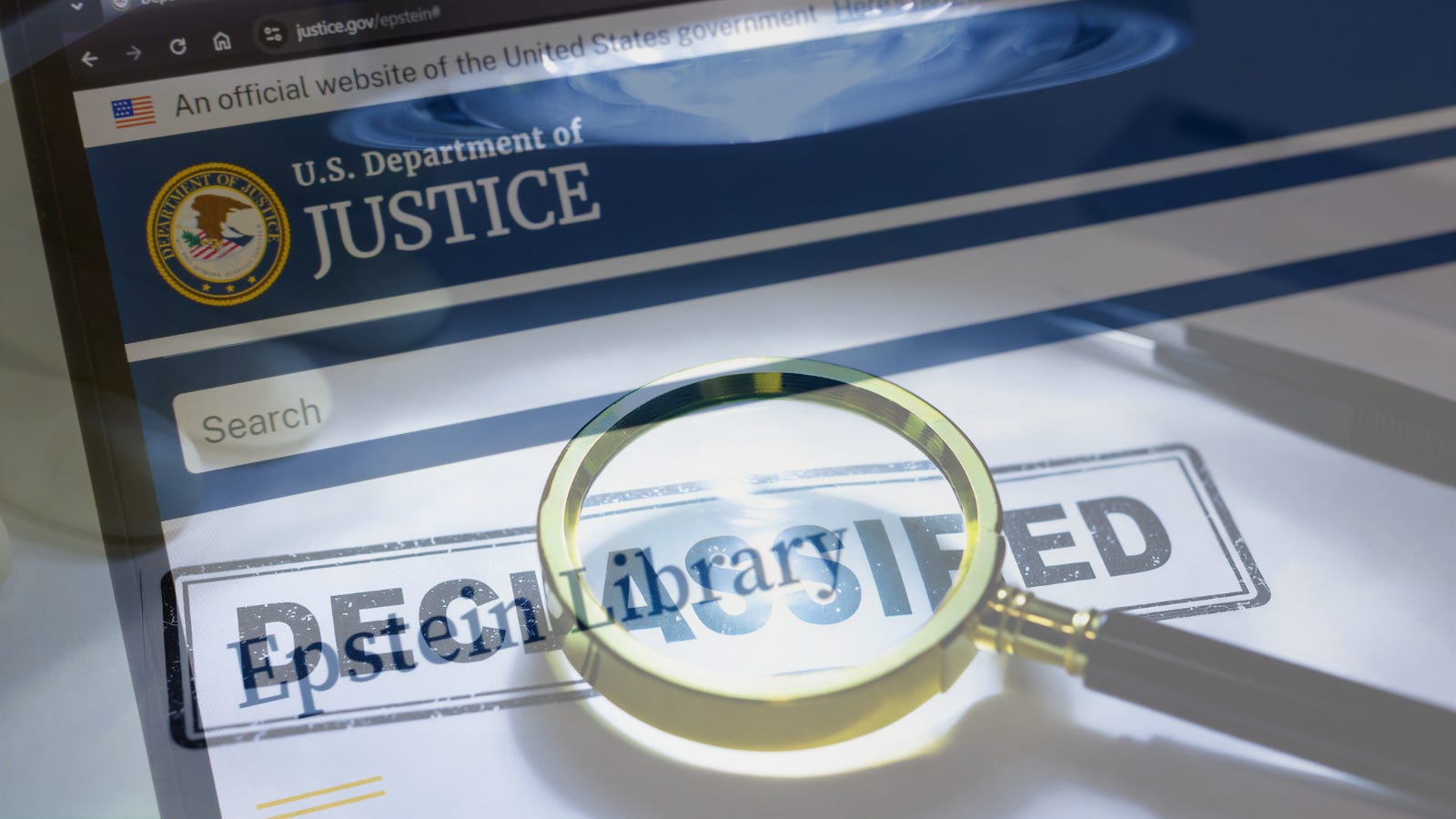
The Justice Department says it has released more than 3 million files in an “Epstein Library” to comply with the Epstein Files Transparency Act, warning that some material is graphic and that more documents may be added as they are identified. But many public postings remain deeply redacted. That is the heart of the fight: the redactions may protect victims, and they must, but lawmakers now argue that the black bars may also be protecting something else: reputations, relationships, and the quiet comfort of those who prefer this story to stay blurry.
Under the DOJ process described in reporting, lawmakers can review unredacted versions of already released files only in a controlled environment. In the first wave of reviews, Reps. Thomas Massie (R-Ky.) and Ro Khanna (D-Calif.) said they identified at least six men whose names had been redacted in public releases and whom they described as “likely incriminated,” a phrase that landed like a match dropped near gasoline, immediate heat, immediate speculation, immediate pressure on DOJ to explain its choices. Massie and Khanna argue that the law’s intent was to stop redactions that exist to spare embarrassment or political fallout, while still safeguarding victims’ identities and legitimate investigative sensitivities.
But the public is still stuck outside the door. This is the cruel geometry of the moment: Congress is being shown what the rest of the country cannot see. The people who were harmed, and the people who pay the taxes, and the people who were told “trust the process” for decades, are left with secondhand accounts and selective glimpses. We are asked, again, to accept the outline of a truth we aren’t allowed to inspect for ourselves.
Into that gap steps the newly surfaced FBI memo involving Michael Reiter. The document, an FBI FD-302 report from a 2019 interview, has become public via DocumentCloud. In it, Reiter recounts the Palm Beach Police Department’s Epstein investigation: the early surveillance, the reports, the grinding work, and the gut-punch of watching legal power bend away from accountability. He also describes the movement of case materials, including two boxes of Epstein-related records he turned over to agents, one of which, he said, contained an imaged copy of a laptop from Epstein’s kitchen counter with phone messages Reiter had not seen before.
Those details matter not because a box is dramatic but because boxes are how history is carried: not in speeches but in paperwork, not in slogans but in evidence that can be misplaced, delayed, or quietly boxed into irrelevance.
The lines that have seized attention sit near the end of the memo. Reiter told FBI agents that Trump said he threw Epstein out of his club, and that Trump called the Palm Beach Police Department to say, “thank goodness you’re stopping him, everyone has known he’s been doing this.” The memo further states that Reiter said Trump described Maxwell as Epstein’s “operative,” adding that she was “evil” and that investigators should focus on her. Reiter also told the FBI, according to the memo, that Trump said he had been around Epstein once when teenagers were present and “got the hell out of there.”
If accurate, it is a stunning collision with Trump’s widely reported public statements in July 2019, after Epstein’s later arrest, when Trump said he had “no idea” about Epstein’s abuse. That is not a small discrepancy. In a story defined by adults failing children, the distance between “everyone has known” and “I had no idea” is not political spin, it is moral gravity. But the responsible truth is also this: the memo is not a transcript of a 2006 phone call. It is a summary of what Reiter told FBI agents in 2019, roughly 13 years after the claimed conversation. It is evidence that Reiter reported this account to federal investigators; it is not, on its own, a full public proof that the call happened exactly as described.
And still, even with that caution, the emotional reality does not disappear. Because this is what it feels like to live under a system where power always has one more layer of distance between itself and consequence: not a direct recording, not a clear release, not a clean answer, always a fog.
The Miami Herald reporting includes a crucial dispute that keeps the Reiter account from being treated as settled fact: a federal official said the FBI is not aware of any corroborating evidence that Trump contacted law enforcement “20 years ago.” Other outlets repeating the reporting have noted the same lack of corroboration.
That phrase is doing a lot of work. “Not aware of corroborating evidence” does not mean “it did not happen.” It could mean records are unavailable, or that corroboration exists but is not accessible or not being discussed publicly. Still, it underscores the central limitation: the memo is proof of what Reiter told the FBI, not automatic proof of what Trump said in 2006.
And here is where anger is not only understandable; it is rational. Because Trump is not a bystander in this haze. For years, his public posture has been an invitation to confusion: shifting stories, blanket denials, careful language that drains the oxygen from accountability. If the 2006 call happened as Reiter described, then Trump’s later “no idea” posture is not merely inconsistent, it is a deliberate thickening of the mud, a way of making something simple (children were abused; adults looked away; powerful networks protected themselves) feel complicated enough that nothing ever has to happen.
Even if the 2006 call cannot be corroborated today, the broader pattern remains: Trump has repeatedly placed himself inside the fog, and the fog serves only one kind of person, the person who can afford not to be seen clearly. And while institutions argue over redactions and procedures, the human facts remain unbearably straightforward: girls and young women were harmed, again and again, and the machinery meant to protect them moved slowly, unevenly, and sometimes backwards. That is why this story cannot be reduced to partisan theater. It is about whether truth in America is something the public owns, or something it rents from the powerful.
The renewed attention to Maxwell only sharpens that edge. Maxwell, serving a 20-year federal sentence for sex trafficking-related crimes, is again a focal point of congressional oversight. Recent coverage describes her invoking the Fifth Amendment in a House Oversight Committee appearance, while her attorney suggested she would speak if granted clemency. The very idea carries a chill: the possibility that public truth might become a bargaining chip, traded for political mercy.
That context makes the Reiter memo’s Maxwell detail land harder. The memo portrays Maxwell as central, an “operative,” in a way that tracks the broad outline of her conviction, even though the memo itself is not a charging document and the call it describes remains disputed. If clemency talk continues alongside file releases, the government will face competing pressures: protect victims, maintain trust in the integrity of the record, and avoid any appearance that the story’s final shape is being negotiated in the shadows. The larger theme is hardening now: this is no longer only about what happened in Epstein’s world. It is about what institutions did with what they knew, and when. And it is about what they are still choosing to conceal.
If Trump said those things in 2006, it suggests early awareness that Epstein’s conduct involved teenage girls and was widely rumored, awareness that clashes with later denials. If he did not, the memo still reveals another danger: a politically explosive archive can tilt the public’s understanding before the facts can be fully tested. Either way, it returns us to the same demand: show the work.
Because when the public record is redacted into a silhouette, it becomes a canvas for rumor, and rumor is how justice gets delayed without anyone having to admit they’re delaying it. So, the story now pivots on questions that deserve answers in plain language, not procedural fog:
Was the alleged 2006 Trump-to-Reiter call documented anywhere else?
Phone records, contemporaneous notes, staff recollections, departmental logs, the basic tools of corroboration.What did investigators do with this claim in 2019?
The memo records the statement. It does not show the follow-up steps, if any.What are the “phone messages” on the imaged laptop copy Reiter said he hadn’t seen before?
The memo notes them; it does not disclose what they contain.Why were certain names redacted in public releases if lawmakers say they were not victims?
That question is the difference between protecting the vulnerable and protecting the powerful.What does “likely incriminated” mean in evidence terms?
Without public access to unredacted documents, the public cannot reliably distinguish a name in a contact list from direct evidence of wrongdoing.How will DOJ reconcile transparency with victim protection going forward?
The public needs a consistent standard, not retroactive explanations.
The next phase will be shaped by whether more lawmakers review and corroborate the same concerns; whether DOJ revises its redaction approach and republishes documents; and whether anything emerges that moves beyond document disputes into actual accountability.
For now, the Reiter memo does not settle what Trump knew or when he knew it. What it does settle is that the file releases, and the scramble over what is redacted, what is unredacted, and who is allowed to see which version, are producing rolling revelations faster than they can be verified.
And that may be the most important breaking-news fact of all: the Epstein archive is no longer a closed chapter. It is a living wound in public life, and the country should not accept “muddy” as the final condition of the truth. You don’t have to be a prosecutor or a committee chair to help force clarity. Ordinary pressure, applied steadily, is often what makes institutions move.
Behind every redaction is a person who had to live through what the rest of us only read about. That’s why the goal isn’t gossip, it’s accountability with care. The public deserves a record that protects victims without protecting the well-connected, and it deserves leaders who don’t turn moral clarity into political mud. If you want to help, do something small but real: call your elected officials, support investigative journalism, and file a FOIA request for the rules behind these redactions. Sometimes justice begins the way truth does, with someone refusing to look away. In a case built on secrecy, the most ordinary thing, steady attention, is also the most radical. And if anyone in power wants this to stay muddy, the response is simple: we’re not leaving until it’s clear.
This is a thorough and useful analysis of the new info about the Reiter memo. It is, however, WAY too gentle on Trump, talking as if knowledge of the nature of Epstein's activities on his part in 2006 would be "early". Trump and Epstein were best buddies in the early 90s. The widely publicized New York story of Trump saying that Epstein shared his taste for pretty women and that Epstein "likes them young" was from about 2002.
Chances are that if Trump made that call to Reiter, it was a follow-up to Trump's severing relations with Epstein because of their dispute about buying some attractive Florida real estate, so very little motivated by any desire to rescue girls from Epstein (or Maxwell.) Just vengeance, one of Trump's primary motivators all the time.
Where is Melania in all of this? It is unbelievable to me that no mention of her
has been reported, even if it has been found. Certainly she was an early client
or associate of Epstein and photographed with him. And since rumor has it
that Epstein introduced her to Trump, how is it possible that there is no mention
of her. Why isn't this association whether close or casual cause for her to be called
to testify before Congress, as have the Clintons. Was Melania a guest on the
the private island